
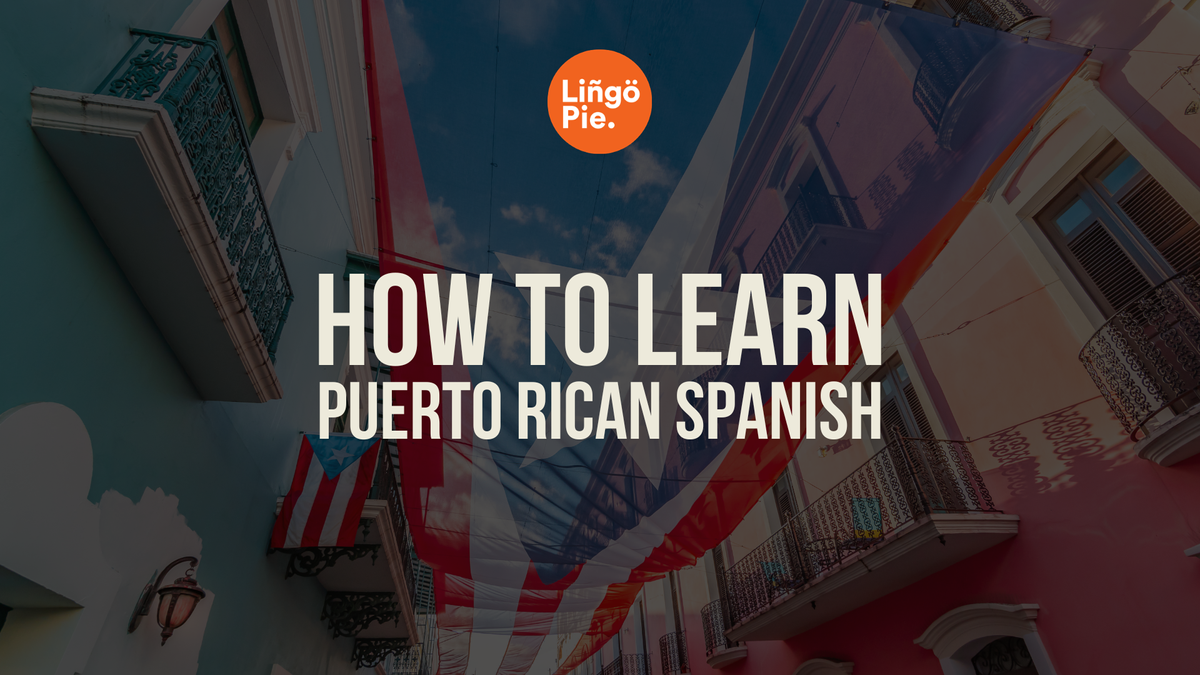
You can know your hola, ¿cómo estás?, and even hold a decent conversation in Spanish, then hear Puerto Rican Spanish and wonder if you missed a few lessons somewhere. The fast pace, shortened words, distinctive pronunciation, and local slang can take some getting used to.
But if you genuinely want to learn Puerto Rican Spanish, you don’t need to start your Spanish journey all over again. In fact, the only trick is training your ear for how Puerto Ricans actually speak.
If you’re wondering how to learn Puerto Rican Spanish once and for all, this guide breaks it down into five practical ways. I'll also share some useful tips to help you hit the ground running from day 1.
- How to Learn Spanish Fluently: 5 Ways to Get Conversational in 90 Days
- Tener Conjugation in Spanish: All Tenses, Forms and Examples
- European Spanish Explained: Pronunciation, Vocabulary, and Grammar Differences

What Is Puerto Rican Spanish?
Puerto Rican Spanish, also known as Boricua Spanish, is the variety of Caribbean Spanish spoken in Puerto Rico and among Puerto Rican communities abroad. For anyone learning Puerto Rican Spanish, note that its distinctive sound comes partly from Taíno and African languages (with English later contributing additional vocabulary).
Despite its distinctive accent, Puerto Rican Spanish isn’t a separate language or a completely different form of Spanish. It follows the same basic grammar and shares most of its vocabulary with other Spanish varieties. The main focus of Puerto Rican Spanish learning is getting used to differences in pronunciation, local words and slang, and the faster, more connected way people may speak in everyday conversations.
Puerto Rican Spanish at a Glance
| Key fact | What to know |
|---|---|
| Language variety | Puerto Rican Spanish is part of Caribbean Spanish and shares many features with other Spanish varieties spoken across the Caribbean. |
| Also called | You may hear it referred to as Boricua Spanish. Boricua comes from Borikén/Borinquen, the Taíno name associated with Puerto Rico. |
| Is it a separate language? | No. It’s a regional variety of Spanish, so the core grammar and much of the vocabulary are shared with Spanish spoken elsewhere. |
| Notable pronunciation | An s at the end of a syllable may be softened to an h-like sound or dropped altogether in casual speech. |
| Another sound to listen for | Syllable-final r can sometimes be pronounced more like an l, although pronunciation varies by speaker and context. |
| Vocabulary influences | Puerto Rican vocabulary reflects the island’s history, including Taíno and English influences alongside its Spanish base. |
| What learners should focus on | You don’t need to relearn Spanish. Focus on recognizing Puerto Rican pronunciation, everyday vocabulary, slang, and natural speech patterns. |
What Makes Puerto Rican Spanish Different?
Puerto Rican Spanish is mainly distinguished by how words are pronounced, shortened, and used in everyday conversation. Like other forms of Caribbean Spanish, speakers may soften or drop certain consonants, use regional vocabulary and Puerto Rican slang, and speak with rhythms that can initially sound fast to learners.
Here are some of the biggest differences to listen for.
1. Some Consonants Get Softened or Dropped
One of the most noticeable features of Puerto Rican pronunciation is what happens to consonants at the ends of syllables. In casual speech, certain sounds may become weaker or disappear altogether.
The aspirated s is a good example. An s at the end of a syllable can sound closer to an English h or disappear, so estás may sound more like ehtá. A final d can also be dropped, turning cansado into something closer to cansao.
| Written Spanish | What you might hear | What’s happening |
|---|---|---|
| estás | ehtá | The s is aspirated or dropped |
| los amigos | loh amigo | Syllable-final s is weakened |
| cansado | cansao | The d is dropped |
| para allá | pa’llá | Sounds and syllables are reduced |
These dropped consonants don’t change the underlying grammar. The challenge for learners is recognizing familiar words when some of the sounds they expect aren’t pronounced clearly.
2. The R Can Sometimes Sound Like an L
Another feature associated with the Puerto Rican accent is lateralization, where an r at the end of a syllable may be pronounced more like an l. For example, Puerto Rico can sometimes sound closer to Puelto Rico.
That doesn’t mean every Puerto Rican speaker replaces every r with an l. Pronunciation varies by speaker, region, age, and situation. For learners, the useful takeaway is simply to recognize the pattern so a familiar word doesn’t suddenly sound unfamiliar.
3. Puerto Rico Has Its Own Everyday Vocabulary and Slang
Knowing standard Spanish vocabulary won't prepare you for every word you'll hear on the island. Puerto Rican slang and regional vocabulary appear constantly in casual conversations.
For example, Puerto Ricans may say guagua for “bus,” chavos for “money,” and janguear for “to hang out.” You’ll also hear expressions such as ¡wepa! to show excitement or enthusiasm.
This is one reason learning slang as isolated vocabulary only gets you so far. Hearing these words used naturally helps you understand when they fit and when a more standard Spanish alternative would sound more appropriate.
4. Taíno Influence Is Still Present
Puerto Rican vocabulary also preserves words with Taíno origins. Taíno was spoken in the Caribbean before Spanish colonization, and its influence remains visible in words connected to the island, its environment, and everyday life.
Words of Taíno origin such as hamaca (hammock), huracán (hurricane), and barbacoa (barbecue) eventually spread far beyond Puerto Rico and even entered English. The term Boricua itself is connected to Borikén, the Taíno name associated with Puerto Rico.
5. Its Spanish Has Strong Canary Islands and Andalusian Connections
Puerto Rican Spanish didn't develop in isolation. Spanish settlement and migration brought linguistic features associated with southern Andalusian Spanish and particularly Canarian Spanish to the Caribbean.
That historical connection helps explain why Puerto Rican Spanish shares features with other Caribbean dialects, including the weakening of syllable-final s and certain patterns of consonant reduction. It’s also why some characteristics that learners think of as uniquely Puerto Rican can be heard elsewhere in the Caribbean and parts of southern Spain.
6. English Has Added Another Layer
Centuries later, sustained contact between Puerto Rico and the United States added another influence: English. English loanwords and Spanglish are common in some Puerto Rican communities, particularly among bilingual speakers.
One well-known example is janguear, derived from the English phrase “hang out.” You may also hear speakers switch between Spanish and English within a conversation, although how often this happens varies considerably from person to person.
7. Music Makes the Accent Heard Around the World
Puerto Rican reggaeton and salsa have given millions of Spanish learners exposure to Boricua vocabulary, pronunciation, and rhythm before they ever formally study the dialect. Artists may use local slang, shortened words, and distinctly Caribbean pronunciation throughout their lyrics.
Music is useful for getting familiar with the sound of Puerto Rican Spanish, but it shouldn't be treated as a perfect model for everyday conversation. Lyrics often exaggerate pronunciation, stretch sounds, or choose words specifically to fit the rhythm.
 Lorena Macedo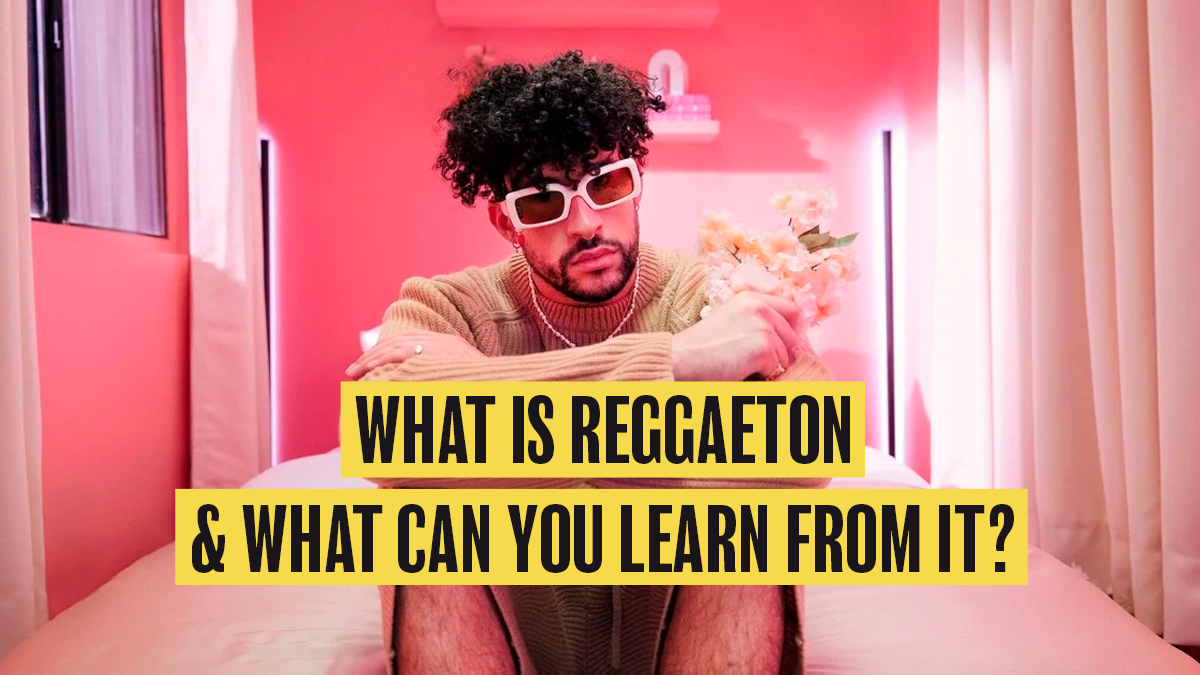
5 Easy Ways to Learn Puerto Rican Spanish
You don’t need to memorize hundreds of slang words or perfect a Puerto Rican accent before you can understand native speakers. A better approach is to gradually train your ear for the sounds, vocabulary, and speech patterns that make Boricua Spanish distinctive. Here’s how to get started.
1. Watch Puerto Rican TV Shows and Movies
If you’ve ever wondered, “How can I learn Puerto Rican Spanish when I don’t live in Puerto Rico?”, native TV shows and movies are one of the easiest places to start. You get to hear Puerto Rican Spanish in context, including how people greet each other, joke, interrupt, and shorten words, while the visuals help you follow what’s happening.
But simply turning on a movie and hoping your Spanish improves isn’t enough. Turn a short scene into an active exercise:
- Watch it once without pausing. Focus on understanding the situation rather than every word.
- Replay it with Spanish subtitles. Look for words you heard differently from how they're written.
- Pick one or two lines. Listen closely to the pronunciation, rhythm, and intonation.
- Repeat the lines aloud. Try to imitate the speaker rather than reading the subtitles in your usual Spanish pronunciation.
- Watch again without subtitles. See whether you can now recognize the words that initially sounded unfamiliar.
For example, if the subtitle says para allá but you hear something closer to pa’llá, make a note of it. The next time you hear the same reduction, you’ll be more likely to recognize it immediately.
2. Train Your Ear to Puerto Rican Pronunciation
You don’t necessarily need to produce every feature of the Puerto Rican accent. First, learn to recognize it.
Start with a few common sound patterns rather than trying to master the entire accent at once:
| Written Spanish | What you may hear | Listen for |
|---|---|---|
| estás | ehtá / etá | Softened or dropped s |
| los dos | loh doh | Aspirated s |
| cansado | cansao | Dropped d |
| para | pa’ | Shortened syllables |
| comer | sometimes closer to comel | Syllable-final r lateralization |
Choose one feature per practice session. If you’re working on the aspirated s, for example, listen to a Puerto Rican speaker for five minutes and note every time an expected s sounds weaker or disappears.
This changes the exercise from “Why can't I understand this person?” to “I'm specifically listening for what happens to the s.” Once you recognize these patterns automatically, fast Puerto Rican speech becomes much easier to decode.
And remember: these are patterns, not rules every Puerto Rican follows all the time. Accent and pronunciation vary between speakers and situations.
3. Learn Puerto Rican Words and Slang in Context
If your goal is to learn how to speak Puerto Rican Spanish, knowing everyday vocabulary matters just as much as understanding the accent. But skip the temptation to memorize a list of 100 slang words. Learning word = definition doesn't tell you when Puerto Ricans actually use it.
Instead, save the entire phrase and situation where you encountered a new word:
| Word/expression | Meaning | Learn it in context |
|---|---|---|
| janguear | To hang out | Vamos a janguear esta noche. |
| chavos | Money | No tengo chavos. |
| guagua | Bus | Voy a coger la guagua. |
| nítido | Cool/great | ¡Está nítido! |
| wepa | Expression of excitement | ¡Wepa! ¡Lo logramos! |
Create a note on your phone with three columns: expression, meaning, and example. Whenever you encounter a useful Puerto Rican word, save the complete phrase and then make one or two sentences of your own with it.
4. Listen to Puerto Rican Podcasts, Music, and YouTube
Once you can follow slower dialogue, add audio where you have fewer clues about what’s being said. Podcasts, interviews, YouTube videos, and music expose you to different Puerto Rican speakers, topics, speeds, and levels of formality.
Each resource is useful for something slightly different:
- Podcasts: Best for following longer conversations and getting accustomed to natural speaking speed.
- YouTube: Useful for everyday speech about topics you already understand, from cooking to gaming.
- Interviews: Great for hearing spontaneous answers rather than scripted dialogue.
- Music: Useful for becoming familiar with rhythm, slang, and cultural references.
Try focused listening instead of leaving Spanish playing in the background. Choose a two-minute section and listen once without stopping. On your second listen, write down what you understood. Then replay the difficult parts and check any words you missed.
Music needs one extra caveat. Puerto Rican reggaeton and salsa can give you plenty of exposure to the sound of the language, but lyrics aren't a perfect model for everyday speech. Singers may stretch syllables, change pronunciation for rhythm, or use highly informal language. Use songs to train your ear and discover expressions, then check how those expressions are used outside the song.
5. Speak With Puerto Rican Spanish Speakers
The most important part of how to learn how to speak Puerto Rican Spanish is eventually having real conversations. A Puerto Rican tutor, language exchange partner, friend, or conversation group forces you to process the accent and respond without knowing exactly what the other person will say next.
You don't need to jump straight into an hour-long conversation. Give each session one manageable goal:
- Session 1: Practice introductions and everyday small talk.
- Session 2: Talk about your weekend and note unfamiliar Puerto Rican expressions.
- Session 3: Ask your partner to teach you three expressions they regularly use.
- Session 4: Retell a short story and ask which parts sound unnatural.
And ask more than “Is this grammatically correct?” Try “Would you actually say it this way in Puerto Rico?” A sentence can follow every grammar rule and still not sound like something a Puerto Rican native speaker would naturally say.
After each conversation, write down three phrases you heard but wouldn't have thought to use yourself. Review them before your next session and try to use at least one naturally in conversation.
Should Beginners Learn Puerto Rican Spanish?
Yes. Beginners can learn Puerto Rican Spanish while building their foundation in standard Spanish. Start with core grammar and everyday vocabulary, then gradually add Puerto Rican pronunciation, expressions, and listening practice. You don’t need to master the accent right away; understanding it should come first.
Start Learning Puerto Rican Spanish With Lingopie
The best way to get comfortable with Puerto Rican Spanish is to hear more of it in context. With Lingopie, you can learn through Spanish-language TV shows and movies while using interactive subtitles to check unfamiliar words, replay dialogue, and practice pronunciation as you watch.
Start with one show, choose a short scene, and put the techniques above into practice. The more real Spanish you hear and actively use, the easier it becomes to understand and speak it beyond the textbook.
FAQs About Learning Puerto Rican Spanish
What is the best way to learn Puerto Rican Spanish?
The best way is to combine basic Spanish study with regular exposure to native Puerto Rican speakers. If you're figuring out how to learn Puerto Rican Spanish, use TV shows, podcasts, videos, and conversations to hear the accent and vocabulary in context.
How can I learn Puerto Rican Spanish at home?
Watch Puerto Rican content, listen to native speakers, practice shadowing, and speak regularly with Puerto Rican tutors or language partners. If you're wondering how can I learn Puerto Rican Spanish without traveling, these activities can give you regular exposure to the dialect from home.
Do I need a Puerto Rican accent to speak Puerto Rican Spanish?
No. You can learn how to speak Puerto Rican Spanish without perfectly copying a Puerto Rican accent. Understanding local vocabulary, pronunciation, and expressions while speaking clearly is more important than trying to sound exactly like a native.
How do I sound more natural in Puerto Rican Spanish?
Learn complete expressions, listen closely to native speakers, and imitate their rhythm and pronunciation rather than memorizing slang in isolation. That's a more practical approach to how to learn how to speak Puerto Rican Spanish naturally because you hear how words and phrases actually fit together.
What is Boricua Spanish?
Boricua Spanish refers to Puerto Rican Spanish, or the variety of Spanish spoken by Puerto Ricans. Boricua is a term for a Puerto Rican derived from Borikén/Borinquen, the Indigenous Taíno name associated with Puerto Rico.


![How To Say Happy Birthday In Spanish: 17+ Easy Ways [GUIDE]](/blog/content/images/size/w300/2026/03/Happy-Birthday-In-Spanish.jpg)