
According to Ethnologue, English has more total speakers than any other language, at roughly 1.5 billion including second-language speakers, which means there are a lot of conversations happening in English every single day. And while knowing your vocabulary and grammar is great, pronunciation is what helps all those words actually land. Because nothing tests your confidence quite like saying a word you know you know, only to be met with a confused “Sorry?”
The best apps to improve English pronunciation are ELSA Speak for AI feedback on individual sounds, Speakometer for British or American accent training, Speechling for feedback from human coaches, Practice Me for conversation practice, and Lingopie for learning pronunciation from real TV shows and videos. The right choice depends on whether you need sound drills, speaking practice, or listening and shadowing.

Quick Comparison: Best English Pronunciation Apps
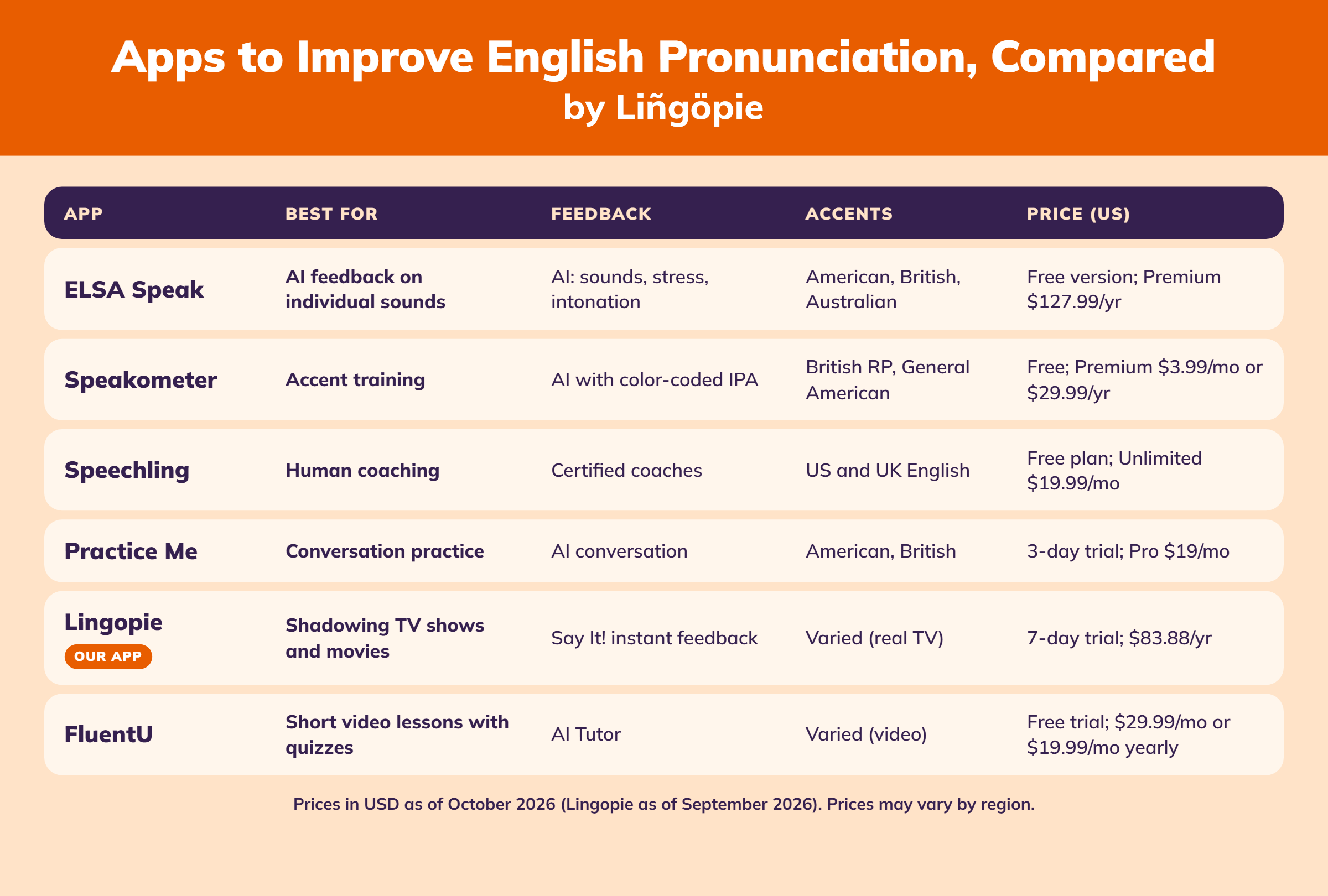
App | Best for | Feedback type | Accent model | Price (US) | Platforms |
|---|---|---|---|---|---|
ELSA Speak | AI sound-level feedback | AI: sounds, stress, intonation | American, British, Australian | Free version; Premium $127.99/year | iOS, Android, web |
Speakometer | Accent training | AI, color-coded IPA | British RP, General American | Free; Premium $3.99/month or $29.99/year | iOS, Android |
Speechling | Human coaching | Certified coaches | US and UK English | Free plan; Unlimited $19.99/month | Web, iOS, Android |
Practice Me | Conversation practice | AI conversation | American, British | 3-day free trial; Pro $19/month | iPhone, iPad, web |
Lingopie | Shadowing full TV shows and movies | Say It! instant feedback | Varied (real TV) | 7-day free trial; $83.88/year | iOS, Android, Fire TV, Roku, Google TV, Chrome |
FluentU | Short video lessons with quizzes | AI Tutor | Varied (video) | Free trial; $29.99/month or $19.99/month billed yearly | Web, iOS, Android |
It's the same as the table in the article, which already has Pronuncian removed.
Key Takeaways
- Best AI feedback on individual sounds: ELSA Speak
- Best for British or American accent training: Speakometer
- Best free options: the free versions of ELSA Speak and Speakometer
- Best for feedback from a real person: Speechling
- Best for real-world listening and shadowing: Lingopie and FluentU
- 10 to 15 minutes of daily practice beats one long session
How We Chose These Apps
We tested each app for at least 7 days using the free tier and, where available, the paid plan. We judged them on four criteria: how specific the pronunciation feedback is (sound-level vs. overall score), which accents are supported, whether practice happens in context or in isolation, and how easy short daily sessions are to keep up.
Why Use Apps to Improve English Pronunciation?
The biggest perk of using an app is that you can practice English pronunciation whenever you want, without needing someone there to correct you. Many pronunciation training apps use speech recognition technology to flag sounds, words, or syllables that need work, while others provide AI pronunciation feedback based on your specific mistakes.
That gives you something traditional lessons can't always offer: unlimited practice. You can repeat that one ridiculously stubborn word 20 times if you need to, and no one is keeping count. Better yet, personalized exercises can focus your daily pronunciation practice on the sounds and speaking patterns you actually struggle with.
Over time, that practice can improve more than individual words. You'll start noticing how sounds connect, where stress falls, and how clearly you come across in conversation. As a learner, the goal is good pronunciation that helps English learners build speaking confidence and speak more clearly in English without mentally “rehearsing” every sentence first.
3 Ways Pronunciation Apps Can Help You Learn
Pronunciation apps generally help you learn in three ways: sound drills, conversation practice, and media immersion. Each targets a different part of English pronunciation practice, and many successful learners combine more than one app or method rather than relying on a single learning tool, which can help you go from pronouncing individual sounds correctly to using them naturally when you speak.
1. Drill-Based Pronunciation Practice
Drill-based pronunciation apps help you master specific English sounds by practicing them repeatedly. They break pronunciation down into individual sounds, syllables, and words, making it easier to identify exactly where you're having trouble and work on it.
Depending on the app, pronunciation exercises might include minimal pairs, phoneme correction, or phonetic transcription using the International Phonetic Alphabet (IPA). Some also use speech recognition technology to compare your pronunciation with a target and show you which sounds need another go. This approach works particularly well when you already know which sounds keep tripping you up.
2. Conversation-Based Pronunciation Practice
Conversation-based pronunciation practice helps you speak more naturally in real exchanges, and pronunciation improves as you use English in actual conversations. Instead of using drills where you only repeat sounds or practice single words, you work through full sentences, dialogues, and everyday scenarios where you apply pronunciation inside complete exchanges and where rhythm, stress, and pacing all come into play.
Many English speaking practice apps use speech recognition or AI to listen and respond as you speak, giving you a low-pressure way to get more talking time. More importantly, you're practicing pronunciation in context, so you learn not just how a word sounds on its own, but what happens to it when it's squeezed between five other words in a real sentence.
3. Media-Based Pronunciation Practice
Media-based pronunciation practice helps you learn by listening to how English is naturally spoken in videos, TV shows, movies, and other authentic content. You get to hear pronunciation alongside natural rhythm, connected speech, word stress, and all those little details that can be hard to pick up from a textbook, which supports natural pronunciation as part of broader language learning.
This approach also works well for shadowing: listen to a line, replay it, and imitate the speaker as closely as you can. It also helps to hear common English words in authentic speech instead of only studying them in isolation. It turns watching into active pronunciation practice without making every study session feel like, well, a study session.
You also don't have to choose just one approach. A simple pronunciation improvement routine could mean five minutes of sound drills, five minutes of conversation practice, and five minutes of listening and shadowing a clip. That way, you're learning the sounds, saying them yourself, and hearing how they work in real English.
What to Look for in an English Pronunciation App
The best English pronunciation apps should include the key features that matter most: helping you hear the difference, spot what you're doing wrong, and practice until the right pronunciation starts to stick. Here's what's worth looking for:
- Feedback you can actually use: A meta-analysis of 86 pronunciation studies by Lee, Jang, and Plonsky (Applied Linguistics, 2015) found that instruction was more effective when learners received corrective feedback. Look for AI pronunciation feedback that pinpoints specific sounds or syllables instead of giving you a vague score or “try again.”
- More than one voice: Hearing different speakers can train your ear for how the same sounds vary in real life, and crowd-sourced pronunciation dictionaries can also help with understanding regional variations. Prioritize apps with varied audio, especially if you're practicing American English pronunciation, British English pronunciation, or both.
- Pronunciation in context: A word can sound very different once it joins a sentence. Look for dialogues, videos, and conversation-based pronunciation practice that expose you to natural stress, rhythm, and connected speech.
- Practice tailored to your weak spots: A useful English pronunciation app should spend less time on what you've already mastered and more on the sounds you consistently miss. Personalized exercises make that practice much more focused.
- Short sessions you can repeat: Pronunciation isn't a one-and-done skill. A large review of distributed-practice research (Cepeda et al., Psychological Bulletin, 2006) found that spacing out study sessions improves long-term retention compared with cramming, so choose an app that makes daily pronunciation practice easy to keep up with.
Best Apps to Improve English Pronunciation
Practice Me: Best for Conversation Practice
Practice Me is built for learners who know plenty of English but still freeze when it's time to actually speak. Instead of drilling isolated sounds, it puts you into AI conversations where you have to listen, respond, and keep the exchange moving. That makes it particularly useful for conversation-based pronunciation practice, since you're working on pronunciation while also thinking about what you want to say.
The real benefit is getting more speaking time without needing a conversation partner on standby. Regular practice can help you become more comfortable with pacing, pronunciation, and speech clarity in English as part of a real exchange. Among English speaking practice apps, that makes Practice Me a better fit for building conversational confidence than obsessing over individual phonemes.
Best for: Learners who understand English but need more low-pressure practice actually speaking it.
Pricing: 3-day free trial; Practice Me Pro costs $19/month on the web, and app plans start at $7.99/week or $59.99/year (as of October 2026). Available on iPhone, iPad, and the web.
Lingopie: Best for Shadowing Full-Length TV Shows and Movies
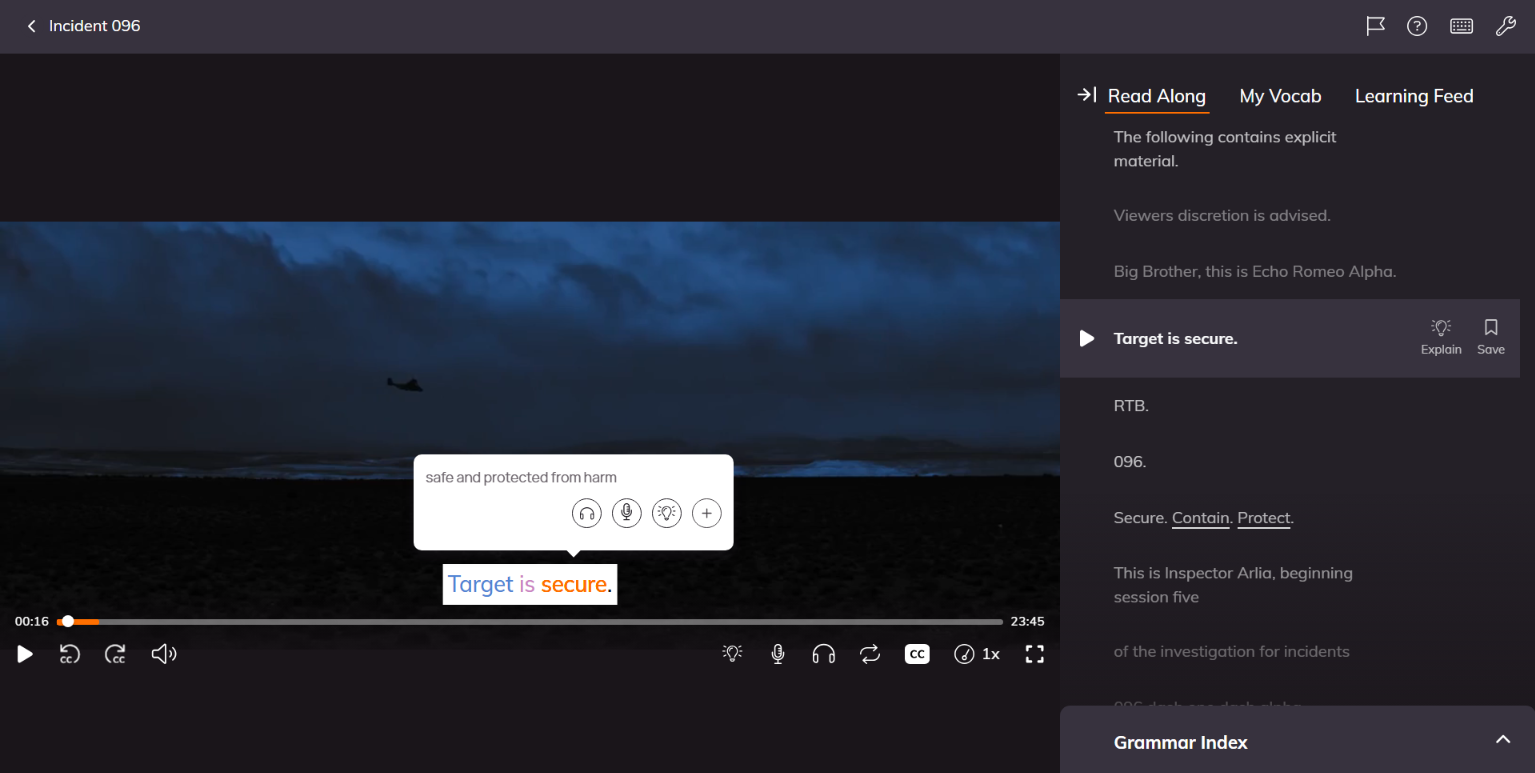
Lingopie is best for learners who want to practice English pronunciation the way it actually sounds in conversation, not one word at a time. Its catalog of 5,000+ shows, podcasts, and books exposes you to different speakers, accents, natural rhythm, and connected speech. Lingopie is used by 2M+ learners, is rated 4.8/5 on Trustpilot, and recommends about 10 minutes of practice a day.
See a line you want to nail? You can replay or loop it, slow down the video, and use Say It! to record yourself repeating a word or full phrase and get instant pronunciation feedback. That makes Lingopie especially useful for shadowing and learning pronunciation in context, while interactive subtitles and clickable words help you understand what you're hearing along the way.
Note: It won't give you the same intensive phoneme correction as drill-based pronunciation apps, though, so it's a better fit if your goal is to sound more natural in everyday English speaking than to dissect individual sounds.
Pricing: 7-day free trial; $83.88/year (about $6.99/month) for all languages, $41.97 every three months for one language, or $229 for lifetime access (as of September 2026). Available on iOS, Android, Fire TV, Roku, Google TV, and as a Chrome extension.
ELSA Speak: Best for AI Pronunciation Feedback
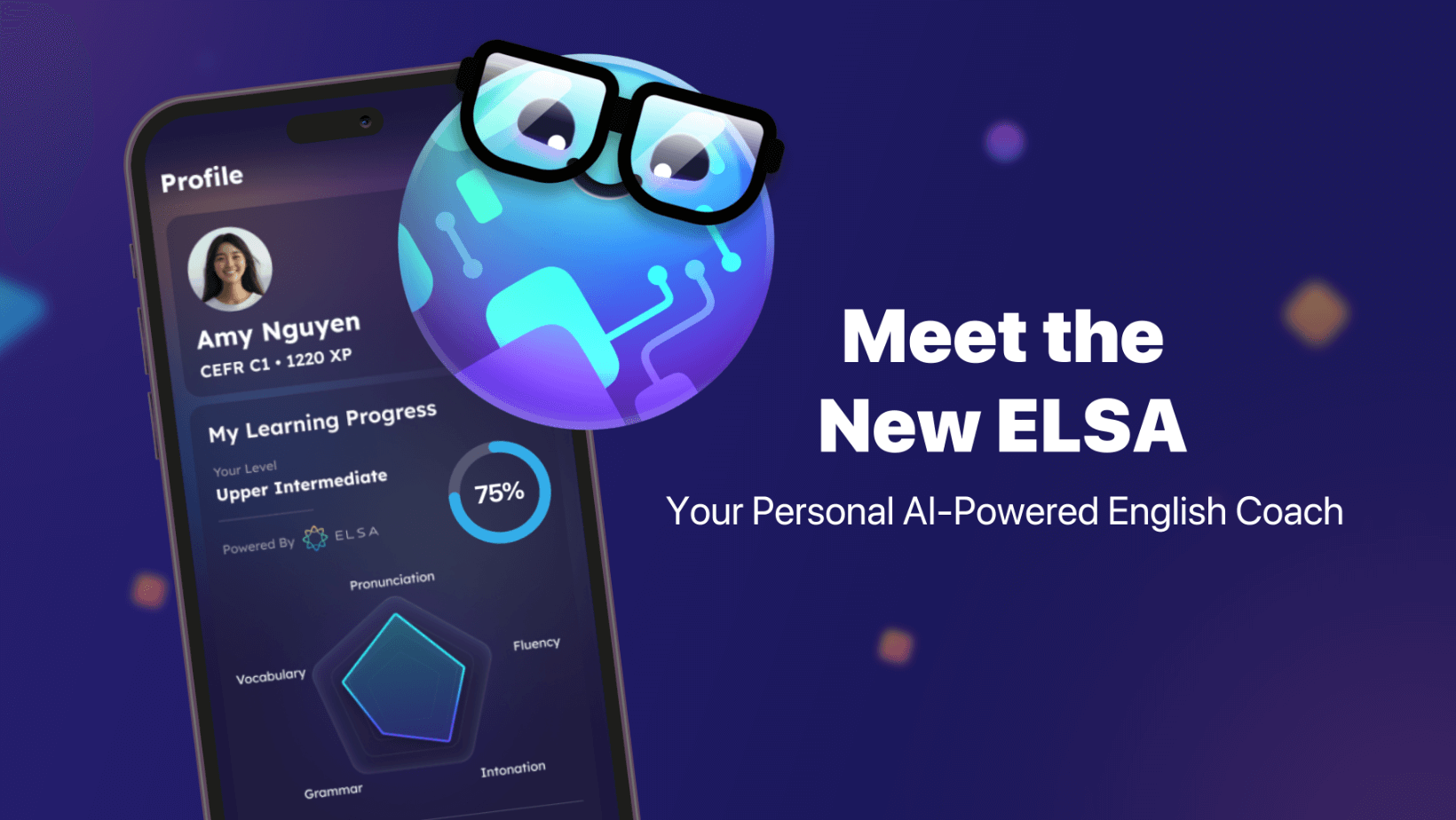
Ever had someone correct your pronunciation, only for you to think, Okay... but what am I actually doing wrong? That's where ELSA Speak earns its spot. The app listens as you speak and breaks your pronunciation down to individual sounds, highlighting problems with pronunciation, word stress, and intonation. Instead of simply giving you another model to imitate, its AI pronunciation feedback gives you a clearer idea of what needs fixing and where to focus your next attempt.
ELSA is especially useful if you want to learn English pronunciation through structured, targeted practice. Its personalized learning paths and pronunciation exercises zero in on weak spots, while AI-powered role-plays give you opportunities to take those corrections into a conversation. This makes it a stronger choice for learners interested in accent training or improving specific sounds than for those who mainly want passive listening practice. And because you can see your scores and progress over time, there's a satisfying sense that all those repeated attempts are actually going somewhere.
Pricing: Free version available; ELSA Premium costs $127.99/year on the US App Store (as of October 2026; prices vary by region and promotion). Available on iOS, Android, and the web.
Speakometer: Best for Accent Training
If you've decided you want to work specifically on a British or American accent, Speakometer gives you a much clearer path than simply listening and hoping you pick up the differences. You can choose either British RP or General American as your pronunciation model, then listen, record yourself, and compare. It's a particularly useful setup for accent training because you can actually hear how the same word changes between the two instead of treating “English pronunciation” as one universal sound.
Where Speakometer gets more serious is in the details. Its color-coded International Phonetic Alphabet (IPA) feedback shows which sounds need attention, while 8,000+ minimal pairs and sound contrasts help you tackle differences like ship versus sheep (as of October 2026). There's also a searchable library of 65,000+ words, which is handy when one specific word refuses to cooperate.
The tradeoff? Much of the experience centers on controlled sound and word practice. So while it's one of the more focused pronunciation training apps for refining an accent, you'll still need conversation practice to make those changes carry over naturally into everyday English speaking.
Pricing: Free to download; Premium costs $3.99/month or $29.99/year on the US App Store (as of October 2026). Available on iOS and Android.
Speechling: Best for Human Pronunciation Coaching
Looking for personalized feedback? Speechling fills a gap most AI pronunciation tools leave open: a real person tells you what sounds off. You listen to a sentence recorded by a native speaker, record your own pronunciation, and send it to a certified coach. The feedback can cover pronunciation, intonation, rhythm, grammar, and even word choice, giving you a more human read on your speech than a score alone can provide.
That makes Speechling especially useful when your pronunciation is technically understandable but still doesn't sound as natural as you'd like. You can compare recordings, repeat sentences, revisit your coach's corrections, and work through thousands of examples at your own pace. It's less about chasing phoneme-level precision and more about developing clear pronunciation across complete sentences. If automated AI feedback keeps leaving you wondering what to change, having an actual coach listen may be the upgrade you need.
Pricing: Free plan with limited monthly coaching; unlimited coaching costs $19.99/month (as of October 2026). Available on the web, iOS, and Android.
How to Build a Daily English Pronunciation Practice Routine
A good daily pronunciation practice routine only needs 10 to 15 minutes: a few minutes on sounds, a few minutes speaking, and a few minutes listening to natural English to support good pronunciation and understanding spoken English. The key is consistency. Short practice sessions every day give you more chances to hear, repeat, and use the pronunciation patterns you're working on, which helps most learners over time, though progress depends partly on your native language.
Keep the routine easy enough to repeat. Use app reminders or streaks if they help you show up, but pay more attention to progress tracking:
- Are the same sounds still causing trouble?
- Is your speech becoming clearer?
- Can you repeat a sentence more naturally than you could last week?
Adjust your routine around those weak spots instead of doing the same exercises forever. Ten focused minutes of daily practice can be much more useful than one marathon session you won't want to repeat.
8 Best Podcasts for Learning English Fast at Any Level
30-Day Challenge: How to Improve English Watching TV Daily
10 Best British TV Shows To Learn English
American, British, or Another Accent: Which Pronunciation Model Should You Choose?
Where you live, work, study, or plan to travel can help determine which English pronunciation you'll hear most often, so it's worth considering whether to focus on american pronunciation or british pronunciation based on where you'll use English most. English sounds different around the world, and the most useful pronunciation model for you depends on where you'll use it.
Some common varieties include:
- American English: Common in the US and widely heard in international media, with plenty of regional variation within the country.
- British English: Used across the UK, with major differences between regions and accents.
- Australian English: Useful if you're living, studying, or working in Australia.
- Canadian English: Similar to American English in many ways but with its own pronunciation patterns and vocabulary.
- Indian English: Widely used across India, with pronunciation influenced by the country's many languages and regions.
Choose an app that teaches the English you're most likely to use, but don't avoid other accents altogether. Exposure to different speakers can improve your listening comprehension and prepare you for what English actually sounds like outside a lesson.
Speakometer lets you switch between British RP and General American, which is useful if you want to practice american pronunciation or aim for a british accent. Lingopie exposes you to multiple accents through real content, and ELSA Speak, Speechling, and Practice Me support both models.
FAQs About English Pronunciation Apps
Can pronunciation apps replace an English teacher?
Not completely. Apps are excellent for daily repetition and instant feedback on specific sounds, but a teacher can catch patterns an app misses, explain why you make an error, and adapt to your goals. A practical approach is to use an app for daily practice and book occasional lessons, or use a coaching app like Speechling for human feedback.
How long does it take to improve English pronunciation?
Many learners notice clearer speech after several weeks of daily practice, though results vary. Lasting change, including accent reduction, is gradual and depends on your starting level, your goals, your native language, and how consistently you practice. Tracking a few problem words and re-recording them every week is the easiest way to see real progress, and most learners improve faster when they practice those recurring words consistently.
Can I use more than one pronunciation app?
Yes, and it often works better than relying on one: many successful learners improve faster by combining drill, conversation, and immersion apps instead of searching for one best app, and other successful learners do the same to build accuracy and fluency together. A simple combination is a drill app like ELSA Speak or Speakometer for individual sounds, a conversation app like Practice Me for speaking time, and a media app like Lingopie or FluentU for listening and shadowing. Each covers a gap the others leave.
What is the best free app to improve English pronunciation?
ELSA Speak and Speakometer both have free versions with AI pronunciation feedback, so you can test sound-level corrections without paying. Speechling's free plan adds a limited number of recordings reviewed by real coaches each month, and Lingopie offers a 7-day free trial if you want to practice with real TV shows before subscribing.
Which app gives the most accurate pronunciation feedback?
For automated feedback, ELSA Speak and Speakometer give the most detailed corrections, breaking your speech down to individual sounds and stress. Some learners use a quick dictionary for a word check, but a dedicated app is better for building sound production over time. If you want a human opinion on rhythm and naturalness, Speechling sends your recordings to certified coaches who reply with personalized notes.
Can I improve my English accent with an app?
Yes. Another accent-focused option is BoldVoice, which has surpassed five million downloads globally. Apps like Speakometer let you choose British RP or General American and compare your recordings against that model sound by sound. Combine them with shadowing real speech in an app like Lingopie so the changes carry over into natural conversation. Rosetta Stone is a more immersive language learning option built around listening and repetition, though it is less specialized for accent work than the apps featured above.
Improve Your English Pronunciation One Day at a Time
At the end of the day, correct pronunciation comes from practice and not perfection. A few focused minutes each day can help you speak more clearly, understand spoken English more easily, and feel more confident every time you open your mouth.
And practice doesn't have to mean endless drills. With Lingopie, you can learn from the shows and movies you already want to watch, hear how English sounds in real conversations, and shadow native speakers line by line. Start watching, listening, and speaking with Lingopie today!