
Textbooks sit on shelves. Flashcard apps get deleted after a week. Grammar drills feel like homework you never asked for. If traditional study methods haven't stuck, there's a reason: they're designed around learning in isolation, and real English doesn't work that way.
This 30-day challenge takes a different approach. Thirty minutes of English TV a day, every day, with a method that turns passive watching into active English listening practice. No classroom. No drills. Just a daily English practice routine built around content you actually want to watch, and a clear structure that tells you exactly what to do each week.
By day 30, you won't be perfect. But you'll understand more, follow conversations faster, and feel noticeably more comfortable with the language. Here's how to improve English the way people actually do it.
- 10 Best British TV Shows To Learn English
- How to Teach English to Adults: A Guide For Beginners
- 18+ Miami Slang Words And Phrases You’ll Hear In The 305

Why the 30-Day TV Challenge Works for English Learners
Binge-learning English through TV works because it exposes you to how native speakers actually speak. They contract words, drop syllables, reference things you'd never find in a coursebook, and speak at a pace no classroom prepares you for.
So technically, 30 minutes of English immersion at home through real TV content covers all of that, daily, in a way that stacks up fast!
However, watching one random episode a week won’t move the needle. A consistent English learning challenge with a daily commitment does. In fact, research consistently shows that learners who regularly supplement their studies with native-speaker media improve their comprehension and word-segmentation skills significantly faster than those who rely solely on classroom instruction.
What You Need Before Starting the Challenge
Before day one, get two things sorted: the right platform and the right show. Getting these wrong is the fastest way to quit before week two.
Choosing the right platform
For the platform, Lingopie is the best option for this challenge. It's built specifically for learning English by watching TV, with interactive dual-language subtitles, instant word lookup, and a built-in flashcard system. Every word you save gets added to a deck you can review later. It turns passive watching into structured English immersion at home.
For a broader look at what’s possible with film-based learning, the Lingopie guide on how to learn English with movies is worth reading before you start. It covers how to choose content that fits your level and how to get the most out of every session.
Choosing the right English TV shows for your level
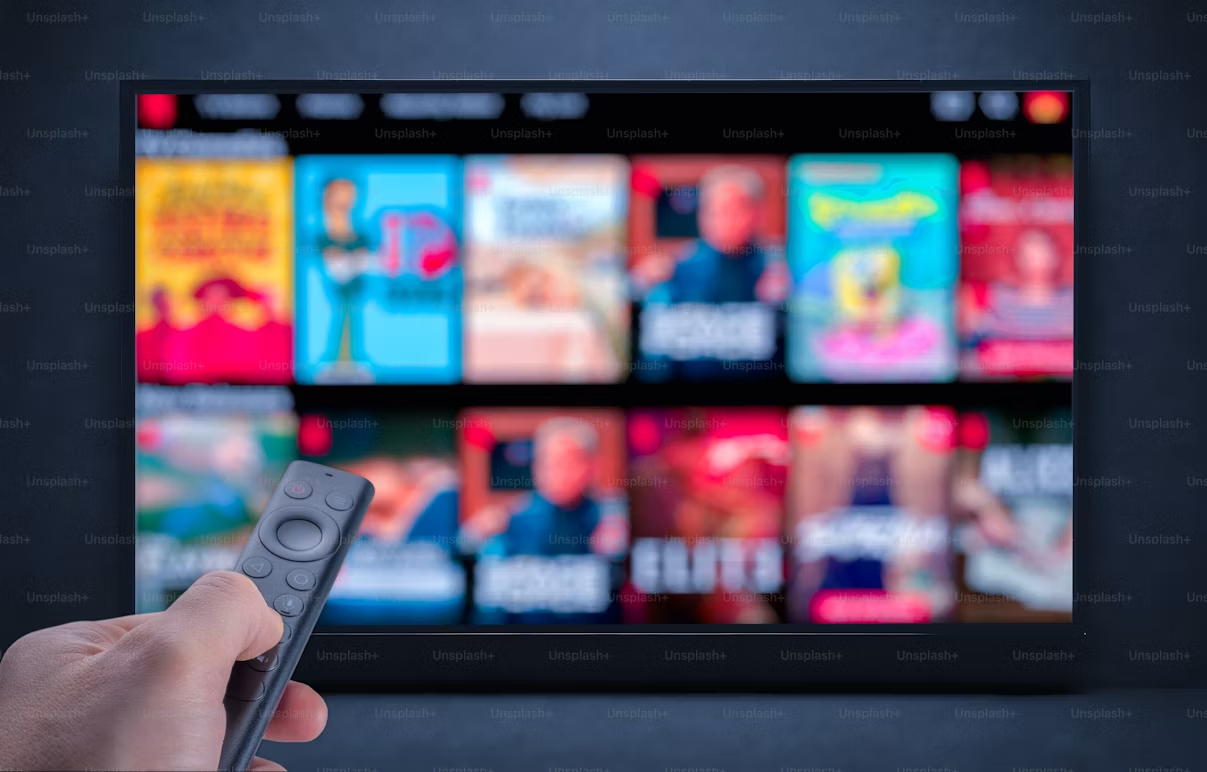
As a language learner myself, I can attest to how mismatches in levels can kill motivation. A show that’s too hard leaves you lost. A show that's too easy teaches you nothing new. The goal is content where you understand roughly 70 to 80% without subtitles. The remaining 20 to 30% is where the learning happens.
- Beginner: Slow-paced shows with clear speech — Friends, Modern Family, Peppa Pig (seriously, it works).
- Intermediate: Drama and procedural shows with natural dialogue — The Crown, Suits, Brooklyn Nine-Nine.
- Upper intermediate: Fast dialogue, accents, and cultural references — Succession, Fleabag, The Wire.
Stick with one show per week in the first two weeks. Consistency with one accent and one set of characters builds familiarity faster than jumping around.
How to Improve English With the 30-Day TV Challenge Plan
How to improve your English level with TV comes down to structure, as watching randomly for 30 days produces random results. This week-by-week plan gives each phase a specific focus so you're building on what came before.
Week 1: Building the Habit (Days 1-7)
Watch 30 minutes of your chosen show every day with English subtitles on. Don't stop to look everything up. Let the language wash over you and focus on following the plot.
At the end of each episode, write down three words or phrases you heard but didn't fully understand. Look them up, add them to your Lingopie flashcard deck, and review them the next morning before your session. That’s your entire week-one routine.
Week 2: Going Deeper With Vocabulary (Days 8-14)
By day eight, the show’s rhythm should feel familiar. Now start using Lingopie’s dual-subtitle feature during episodes. Hover over any unfamiliar word mid-episode for an instant translation, and save every word you look up. Watch TV shows in English this way, and your passive vocabulary grows every single session.
Increase your daily flashcard review to ten words. Five from the current episode, five from the previous week's saves. Spend five minutes on this before each session. Improving English skills daily at this stage is about building the habit of actively collecting vocabulary.
Week 3: Training Your Ear for Natural Speech (Days 15-21)
Switch your subtitles off for the first five minutes of each episode. Just listen. Don't panic when you miss things. Your brain is adjusting to native speech patterns, which takes repeated exposure before it clicks.
After the subtitle-free opening, turn English subtitles back on for the rest of the episode. Then rewatch the opening five minutes with subtitles to check what you caught and what you missed. This technique targets the gap between what you can read and what you can hear, where most English-language progress stalls for intermediate learners.
Start noticing how characters shorten words in speech. 'Going to' becomes 'gonna', 'want to' becomes 'wanna', 'kind of' becomes 'kinda'. These aren't lazy speech. They're standard conversational English. Recognizing them is a core part of real English listening practice.
Week 4: Pushing Toward Fluency (Days 22-30)
Watch each episode twice. First, without subtitles. Then, with English subtitles to check comprehension. By now, your ear has enough exposure to the show’s rhythm that the no-subtitle run will feel easier than week three’s five-minute test.
Add one new activity this week: after each episode, say three sentences out loud summarising what happened. In English. Messy is fine. This bridges the gap from English listening practice to English speaking practice, and it's where passive comprehension begins to become active fluency.
For extra reading on how to accelerate this final push, read our guide to the best way to learn English fast, which covers additional strategies that complement the TV challenge well.
How to Watch Actively (Not Just Passively)
Thirty minutes of passive watching, where you zone out and follow the plot without engaging with the language, won’t produce the same results as thirty minutes of active watching. The difference is intentional attention.
Here's how to make every session count.
Using Dual Subtitles the Right Way
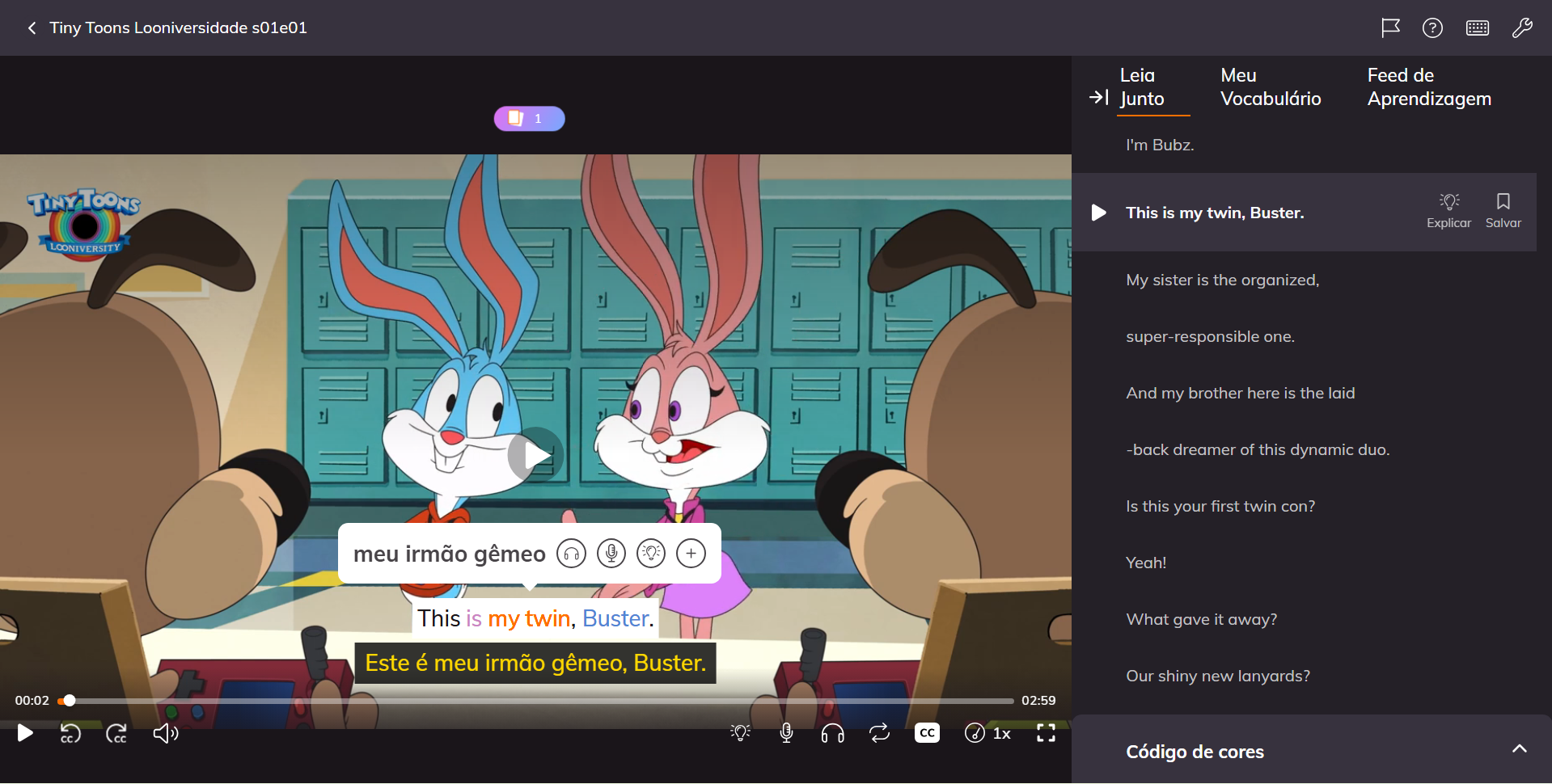
Dual subtitles show your native language alongside English simultaneously. Used correctly, they're one of the fastest tools for improving your English through content. Used incorrectly, they become a crutch that stops you from processing English at all.
The rule: look at the English subtitle first, every time. Give your brain two seconds to process the English before dropping to the translation. Over time, you’ll find yourself needing the translation less and less. That move is what building English fluency through watching actually feels like.
Saving words and reviewing flashcards daily
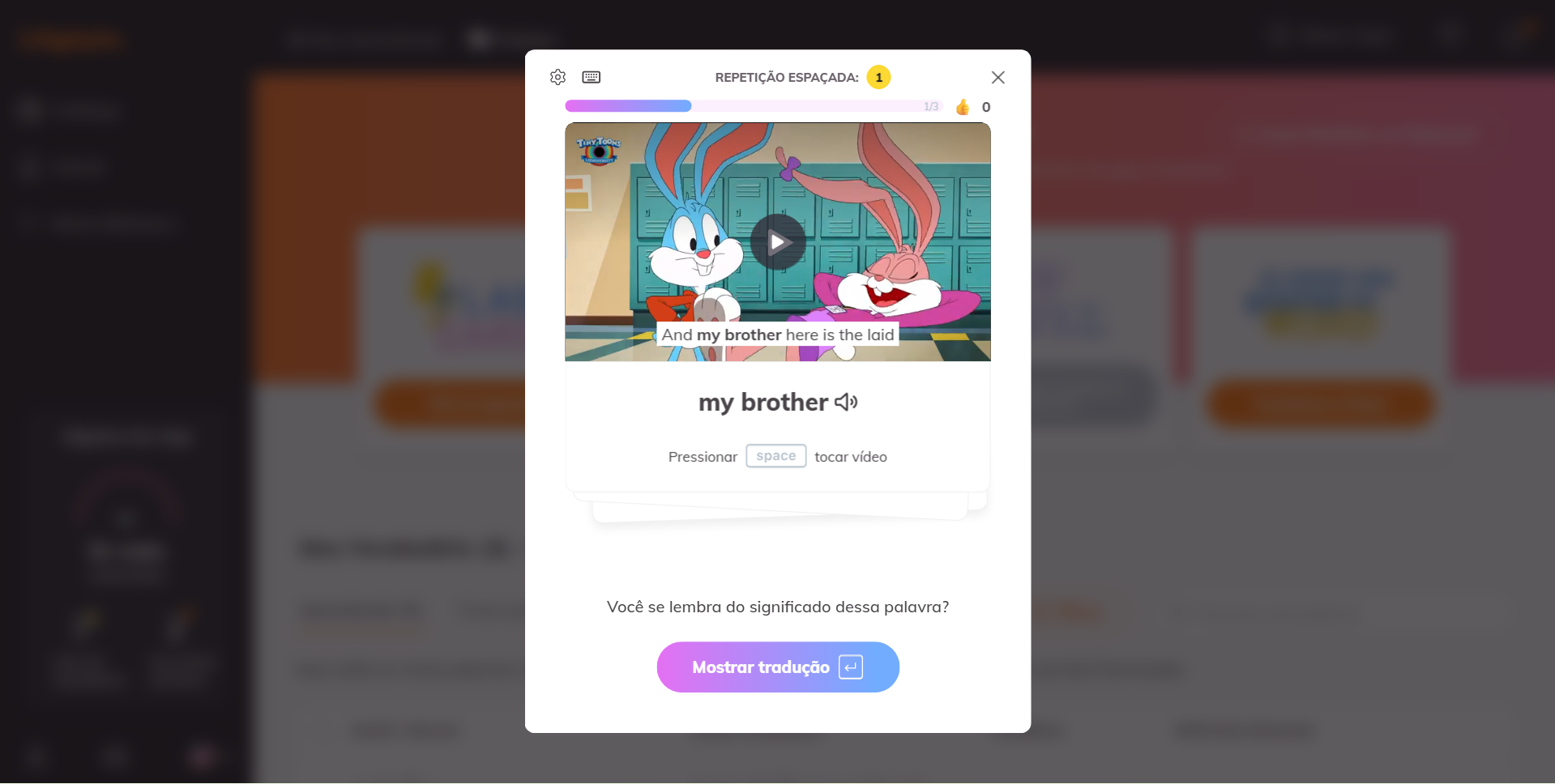
Click any unfamiliar word mid-episode, and Lingopie saves it to your flashcard deck instantly. The next morning, spend five to ten minutes reviewing what you saved. That’s your natural English-learning method running alongside content you’re already watching.
Aim to save five to eight words per episode — enough to build vocabulary without turning every session into a dictionary exercise. Words learned in the context of a scene you remember stick better than words drilled from a list. That's the core principle behind the binge-learning method for English.
What Progress to Expect After 30 Days
Thirty days of consistent practice won't make you fluent. Here's what it will do.
- Your listening comprehension will improve noticeably. Conversations that felt like noise in week one will start to parse into words and sentences.
- Your passive vocabulary will grow by 150 to 200 words if you've been saving and reviewing consistently.
- You'll recognize natural speech patterns, including contractions and informal grammar, that standard learning materials don't cover.
- English will feel less foreign. Thirty hours of real exposure builds familiarity in a way that textbooks can't replicate.
The 30-day challenge is a starting point, and a good one. Most learners who finish it want to keep going, because the method finally feels like it's actually working. That's the goal of how to learn English fast: not a finish line, but a habit that sticks.
Start the 30-Day Challenge With Lingopie
Lingopie is built for exactly this challenge. Real English-language TV shows and films, interactive dual-language subtitles, instant word saving, and a flashcard system that keeps your vocabulary reviews connected to content you've actually watched. It's the daily English practice routine made into a platform.
Start your free Lingopie trial today, pick your first show, and begin day one. The 30-day challenge is free to start.
FAQs
Which English TV shows are best for language learners?
It depends on your level. Beginners do well with sitcoms like Friends or Modern Family, where dialogue is clear, and situations are relatable. Intermediate learners get more out of drama series like The Crown or Suits, which use more varied vocabulary.
For a deeper breakdown, the Lingopie guide on learning English with movies covers how to match content to your level in more detail. The best show is the one you'll actually watch every day.
What level of English do I need to start the 30-day challenge?
Any level works, but complete beginners should start with slow, simple content like children's shows or learner-friendly sitcoms. Keep both subtitles on and don't stress about understanding everything. Learning English for beginners through TV is about exposure first, comprehension second.
Is this challenge good for improving speaking, or just listening?
The foundation is English listening practice, but it feeds directly into speaking. You can't produce language naturally until you can process it naturally. Add the week-four step of summarising episodes out loud and you've got English speaking practice built into the same 30 minutes.
What if I miss a day? Does the challenge reset?
No. Missing a day doesn't undo your progress or restart the challenge. Pick up where you left off the next day. The point of the 30-day frame is daily English practice routine a perfect streak. Consistency over time matters far more than any single missed session.
Is there a free trial so I can start the 30-day challenge without paying first?
Yes. Lingopie offers a free trial that gives you full access to the platform’s shows, dual-language subtitles, and flashcard system. You can start day one of the challenge today without a paid subscription. Sign up at Lingopie and pick your first show.
What's the difference between watching with subtitles and watching without?
Subtitles help you connect spoken words to written English, which is useful early on. Watching without forces your brain to process English purely by ear. Both matter — the challenge uses subtitles in weeks one and two, then pulls them back progressively so you're building real English listening practice without leaning on text as a safety net.
Can I do this challenge with any streaming platform, or does it need to be Lingopie?
Any platform works for the watching part. Lingopie adds the layer that makes it a proper improve English skills daily routine — interactive subtitles, instant word saving, and a flashcard system tied to what you've actually watched. Without that, you're watching TV. With it, every session builds vocabulary you can review and retain.