


You've probably googled how to learn a new language at least three times in your life. Maybe you downloaded an app, did a week of lessons, felt proud, then life happened. Perhaps work got busy, motivation faded, and the app icon just sat there judging you every time you unlocked your phone.
Now, what if the problem was never your motivation to learn, but the method? Most people aren’t lacking discipline. What if the problem is that they’re following advice that was never built for a real, busy adult life?
That’s exactly what this article is here to fix! We’ll show you how to actually learn a new language into a schedule you already have. By the end, you’ll know exactly which habits to start with, how much time each one takes, and how to turn daily “free time” moments into real language fluency.
- How to Learn Spanish Fluently: 5 Ways to Get Conversational in 90 Days
- 10 Best Language Learning Apps Reviewed by Language Experts
- 30-Day Challenge: How to Improve English Watching TV Daily
Why Most People Fail at Language Learning
Most people fail at language learning because they treat it like school. They memorize vocabulary lists, drill grammar rules, and rarely speak out loud, so when a real conversation happens, they freeze. Nobody ever taught them how to start to learn a new language the right way: through daily use!
That gap shows up in a few common patterns. Here are some examples (you might relate to!):
- Starting too big.
An hour of study a day sounds great until day three, when life gets in the way and the whole plan collapses. - Prioritizing memorization over language exposure.
Flashcard decks feel productive, but they rarely prepare you for how people actually talk. - No consistency system.
Motivation is unreliable. Without a routine built into your day, momentum dies the moment things get busy. - Fear of making mistakes.
Many learners avoid speaking until they feel "ready" — a moment that never actually comes. - Passive learning disguised as progress.
Half-listening to a podcast while scrolling your phone feels like practice, but your brain isn't actually absorbing much.
The people who actually get fluent aren’t smarter or more disciplined than everyone else. They just stopped following the same recycled how to learn a new language tips and started building small habits that compound over weeks instead of one big push that fizzles out. That shift is what separates people who quit in month one from people who are holding real conversations by month six.
12 Habits to Learn a New Language in 2026

Before anything else, allow me to be frank with you. There's no single strategy for how to best learn a new language...it really just comes down to stacking small, consistent habits that fit into your actual day. The good news is that none of the ones I listed below requires quitting your job or spending 3 hours a night with a textbook.
1. Attach Language Practice to Something You Already Do
One of the simplest tips on how to learn a new language is to stop trying to find extra time for it and start attaching it to the time you already have. This is called habit stacking: linking a new behavior to an existing routine so it doesn't need its own willpower or schedule slot. Instead of asking "when will I study today," you're asking "what do I already do every day that I can attach this to?"
Think about your commute, your morning coffee, or the ten minutes you spend scrolling before bed. If you drive to work, that’s 20 minutes of listening practice. If you make coffee every morning, that's two minutes to review five words while it brews. If you scroll your phone before sleeping, swap five minutes of that for a quick native-language video instead.
None of these require new time. They just repurpose time you're already spending.
2. Watch Native Content With Intent, Not as Background Noise
If you want to know how to really learn a new language, the answer isn't watching more content. It's about watching native content differently. This means you shouldn’t be consuming content passively. Active viewing, where you follow along, notice new words, and repeat phrases out loud, is what actually builds retention.
This is where a tool like Lingopie helps, since it turns everyday shows into structured practice with interactive subtitles you can click for instant translations, rather than leaving you to guess and rewind constantly.
In practice, this could be a Spanish crime drama, a French sitcom, a K-pop music video, or even a cooking show in Italian. Pick something you'd genuinely enjoy watching even in your own language, since motivation matters more than "correct" content. Start with 15–20 minutes, pause when a phrase catches your ear, repeat it out loud, and let the story pull you back in rather than treating it like a lesson.
- Passive Learning: Absorb the language naturally through regular background exposure.
3. Talk to Yourself Out Loud Before You Talk to Anyone Else
One of the quiet truths about how best to learn a new language is that you don't need another person in the room to practice speaking. Self-talk lets you rehearse sentences, work through mistakes, and build muscle memory for pronunciation, all without the pressure of being understood by someone else. It's a low-stakes way to close the gap between knowing words and actually producing them out loud.
Try narrating small parts of your day in your target language, using simple prompts like these to get started:
- "What am I doing right now?" (e.g., making coffee, walking to the car, checking email)
- "What am I about to do next?"
- "How do I feel today, and why?"
- "What did I eat for breakfast/lunch?"
- "What's one thing I'm looking forward to this week?"
4. Set a "Good Enough" Bar for Grammar
A big part of how to properly learn a new language is knowing when to let go of perfect grammar and just speak. Many learners stay stuck at the same level for years because they wait until every sentence is correct before opening their mouth, but that moment never comes.
Set yourself a simple rule instead: if the sentence is understandable, it's good enough to say out loud. Save the fine-tuning for later, after you've actually built the habit of speaking.
Here's what that looks like in practice:
| Situation | Perfectionist Approach | Good Enough Approach |
|---|---|---|
| Ordering food | Stays silent, unsure of the correct verb tense | Says "I want the pasta" even if the grammar isn't perfect |
| Asking for directions | Rehearses the sentence in their head for a full minute | Just asks, mistakes and all, and adjusts based on the response |
| Texting a native speaker | Deletes and rewrites a message five times | Sends it as-is, then learns from any correction |
| Speaking practice | Skips the exercise, unsure of the right conjugation | Says the sentence anyway and moves on |
5. Turn Your Phone's Idle Moments Into Micro-Reps

Every idle moment on your phone, like waiting in line or riding an elevator, is a chance to practice without setting aside extra time. Instead of opening social media out of habit, open a language app for 60 seconds and get in one quick rep. Frequency matters more than duration here. Small, repeated exposure throughout the day builds real language immersion, even on days you never sit down to formally study.
Here are a few micro-reps you can try, ranked by how easy they are to start with:
- Easy: Review 3 flashcards while waiting for coffee to brew.
- Easy: Say one sentence out loud describing what you're doing right now.
- Medium: Send yourself a voice memo translating a thought into your target language.
- Medium: Read one native-language headline or caption while waiting in line.
- Harder: Reply to a text or comment in your target language instead of your own.
None of these take more than a minute or two, but stacked over a week, they quietly add up to real language progress.
6. Learn Phrases in Chunks
Native speakers don't build sentences word by word in their heads. They pull from whole chunks of language they've heard a thousand times, like "can I get," "let me know," or "no worries." Learning phrases rather than isolated vocabulary trains your brain to speak the way people actually talk, making real conversational practice feel far less intimidating.
A few chunks worth learning early on:
- Greetings and small talk starters: "How's it going," "Long time no see"
- Ordering or requesting: "Could I get," "Do you have"
- Reacting in conversation: "That makes sense," "I see what you mean"
- Softening disagreement: "I get that, but," "Not necessarily"
These phrases show up constantly in everyday interactions with native speakers, and learning them as full chunks also gives you a window into cultural immersion, since the way people phrase things often reflects how they think and relate to each other.
7. Get Comfortable Being Corrected
Correction is one of the fastest ways to improve, yet most learners treat it like a personal failure and shut down when it happens. Research on language acquisition shows that second language learning happens best through comprehensible input paired with feedback, meaning you need to hear and read things slightly above your level, then get corrected when you get it wrong.
Remember this: Avoiding correction to protect your ego just means the same mistakes keep repeating. Getting corrected regularly is what pushes you out of your comfort zone and into real progress.
There are plenty of low-pressure ways to get that feedback:
- Sign up for an online class or tutor session once a week, even just 30 minutes.
- Use a language exchange app to chat with native speakers who can correct you casually.
- Post short writings or voice recordings in language-learning communities for feedback.
- Ask a bilingual friend or coworker to correct you mid-conversation instead of letting mistakes slide.
8. Track Streaks
Long study sessions feel productive, but they rarely beat daily practice done consistently. What actually moves the needle is showing up every day, even for five minutes, because streaks build momentum that a single intensive study weekend never will. A study plan built around consistency, not marathon sessions, is what turns learning into an actual language routine instead of a one-off effort.
Here's what a streak-based routine might look like across a week:
| Day | Activity | Time Needed |
|---|---|---|
| Monday | Watch 10 minutes of native content | 10 min |
| Tuesday | Review 5 vocabulary chunks | 5 min |
| Wednesday | Talk to yourself about your day | 5 min |
| Thursday | Send a voice memo in your target language | 5 min |
| Friday | Read one short article or caption | 10 min |
| Saturday | Chat with a language exchange partner | 15 min |
| Sunday | Quick recap of the week's new phrases | 5 min |
9. Find One Native Speaker Interaction a Week
Even one conversation a week with a real person can move you further than a month of solo study. Talking to a native speaker forces you to process your target language in real time, which builds immersive listening skills no app can fully replace on its own. It also exposes your language mistakes immediately, so you can fix habits before they become permanent instead of practicing them alone unnoticed.
You don't need to move abroad or find a study partner in person to make this happen. One example is using language exchange apps to connect you with native speakers looking to practice their language in return. You can also do this by booking a session with an online language tutor, which gives you structured, judgment-free conversation practice.
10. Keep a Notebook for What You're Learning
A simple notebook, physical or digital, gives your learning somewhere to live instead of scattering across apps and memory. Writing down new words and phrases as you encounter them turns passive exposure into active vocabulary building, since the act of writing forces your brain to process the word more deeply than just reading it once.
The best part about this habit? It also gives you a running record you can review, rather than relying on perfect recall the first time.
You can also use it for more than just word lists. You can jot down full sentences you hear or read to practice reading comprehension, then try rewriting them in your own words as a light form of writing in a foreign language. Even a few lines a day add up to real language output over time, turning your notebook into proof of how far you’ve actually come.
11. Set a Weekly "No English" Hour
Pick one hour a week where you avoid your native language completely, no exceptions. This forces real speaking practice instead of falling back on English the moment something feels hard, which is usually when the most useful learning happens.
Use the hour for anything: cooking while narrating in your target language, texting a language partner, or watching one of many foreign language movies without subtitles as a stretch challenge.
If speaking feels rough at first, don’t worry about sounding perfect. Focus on a couple of pronunciation tips, like exaggerating vowel sounds or slowing down, rather than trying to fix everything at once.
Many language learning apps now include pronunciation feedback features, so pairing your "No English" hour with one is an easy way to combine two habits at once. Small language tips like these compound fast when practiced weekly instead of occasionally.
12. Teach What You Learned to Someone Else
Explaining something forces you to actually understand it, not just recognize it. Teaching one new word, phrase, or rule to a friend, partner, or even to yourself out loud works like a form of spaced repetition, since it pushes you to recall and re-explain what you learned instead of just reviewing it passively. If you can't explain it simply, that's usually a sign you haven't fully learned it yet.
This habit also works well if you're raising kids toward bilingualism or learning alongside a partner, since teaching each other turns solo study into shared progress. Even without someone to teach, narrating your explanation out loud to an empty room still counts.
Best Tools to Build These Habits
You don't need ten different apps, just a handful that each support a specific habit from the list above, from immersive watching to real conversation practice. Here are five worth having in your corner.
1. Lingopie
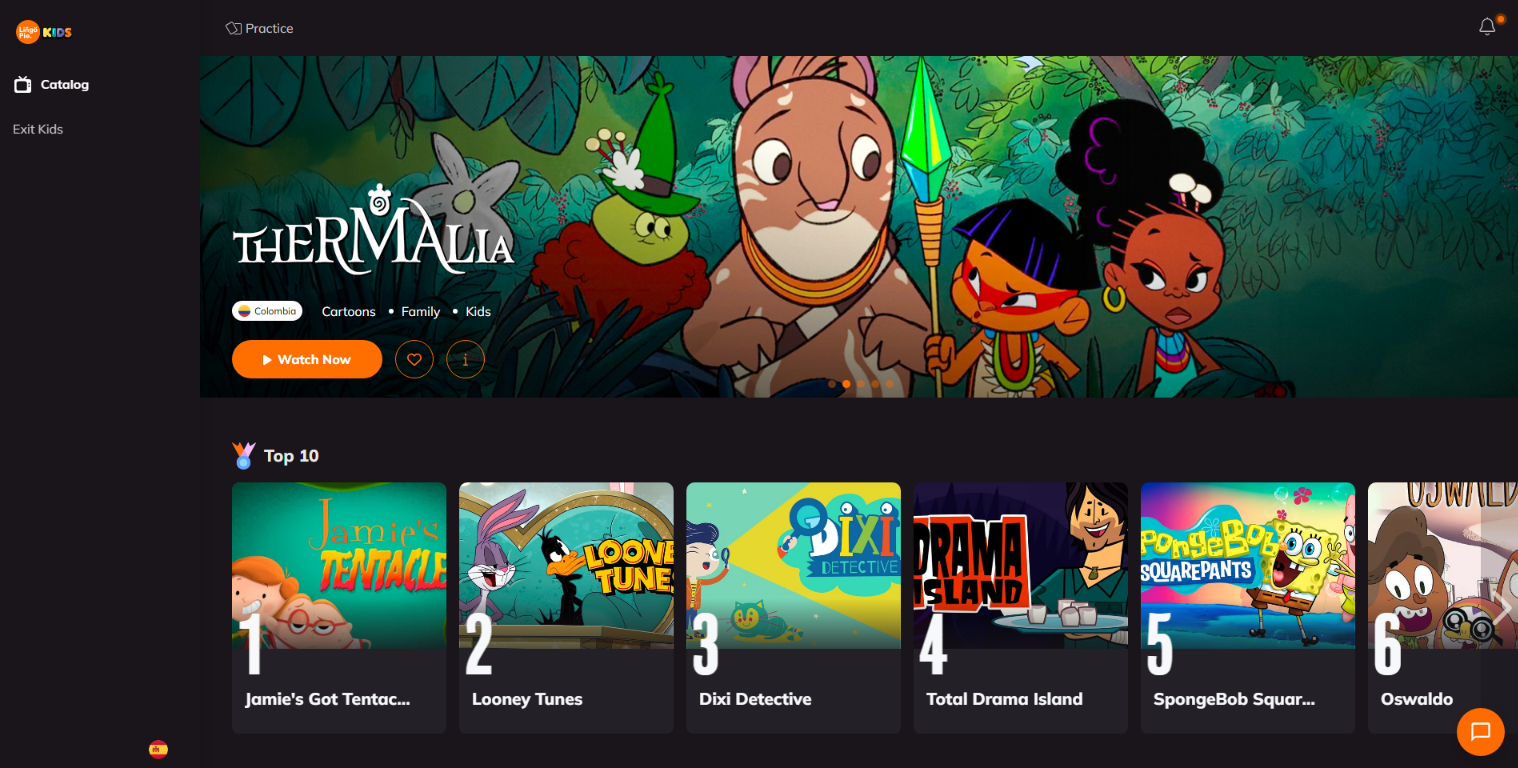
Lingopie is a language learning app built around watching real TV shows and movies in your target language, with interactive subtitles that let you click any word for an instant translation. It's best for the "watch native content with intent" and "subtitles as training wheels" habits, since it turns shows you'd want to watch anyway into structured, click-to-learn practice instead of passive background noise.
If you want to bring this habit into your browser while watching content elsewhere, the Lingopie extension extends that same word-lookup experience across other sites too. For a deeper look at how the platform works, this breakdown of what Lingopie is covers it in more detail.
2. Anki
Anki is a flashcard app built on spaced repetition, showing you words right before you're likely to forget them. It's best for the "notebook" and "vocabulary building" habits, since anything you jot down can be turned into a flashcard deck that resurfaces automatically over time.
3. Tandem
Tandem connects you with native speakers looking to practice your language in exchange for helping with theirs. It's best for the "one native speaker interaction a week" and "no English hour" habits, since it removes the awkwardness of finding a real person to talk to from scratch.
4. italki
italki lets you book sessions with tutors or teachers for live, one-on-one conversation practice. It's best for the "get comfortable being corrected" habit, since a tutor can catch mistakes in real time that you'd otherwise repeat unnoticed for months.
5. Duolingo
Duolingo is a gamified app built around short daily lessons and streak tracking. It's best for the "track streaks, not hours" habit, since its streak system is specifically designed to keep daily practice consistent even on low-motivation days.
Common Mistakes That Slow Down Language Learning
Even with the right habits in place, a few common mistakes quietly undo progress without learners noticing. Spotting these early can save you months of effort spent going in circles. Here are eight worth watching for, along with what to do instead.
1. Studying Only Grammar Rules
Grammar drills feel productive because they're structured and easy to measure, but they rarely translate into the ability to speak naturally. Many learners can conjugate a verb perfectly on paper yet freeze the moment they need to use it in conversation.
Instead, learn grammar in context through sentences and phrases you actually hear or read, then confirm the rule afterward if you're curious. Let usage come first and the explanation come second.
2. Chasing a New App Every Month
Jumping from app to app looking for the "best" one wastes more time than it saves, since every switch means starting over with a new system, new vocabulary sets, and no built-up history. The constant searching becomes its own form of procrastination.
Pick two or three tools that support different habits, like one for watching content and one for spaced repetition, and stick with them for at least a few months before evaluating whether to switch.
3. Waiting Until You're "Ready" to Speak
Many learners delay speaking until they feel fully prepared, but that moment rarely comes and the wait only builds more hesitation over time. Confidence in speaking comes from speaking, not from more preparation beforehand.
Set a rule that you'll say something out loud, even imperfectly, at least once a day, whether that's to yourself, a language partner, or a tutor. Treat mistakes as data, not failure.
4. Overloading on New Vocabulary
Trying to learn 50 new words a day might feel ambitious, but most of it won't stick without repeated exposure, and cramming vocabulary rarely holds up once the excitement fades. Quantity without repetition just becomes forgotten effort.
Focus on a smaller batch of words each week and revisit them across multiple days using spaced repetition, so they move into long-term memory instead of disappearing after a single study session.
5. Relying Only on Translation
Constantly translating every sentence back to your native language slows down your thinking and prevents you from developing an intuitive feel for the new language. It also makes real-time conversation exhausting, since you're doing double the mental work.
Practice thinking in short phrases directly in your target language, even simple ones like ordering food or describing your day, so your brain starts skipping the translation step over time.
6. Ignoring Listening Practice
Many learners focus heavily on vocabulary and grammar but barely train their ears, then get caught off guard by how fast native speakers actually talk. Reading a language and understanding how it is spoken are two very different skills.
Build in regular listening practice through shows, podcasts, or conversations, even in short bursts, so your ear adjusts to natural speed and pronunciation instead of only the slowed-down audio found in textbooks.
7. Comparing Your Progress to Others
Watching other learners hit fluency milestones faster can feel discouraging, especially on social media, where progress is often shown at its best moments. This comparison drains motivation more than it drives it.
Track your own progress instead, using tools like a notebook or weekly review, and measure yourself against where you started rather than against someone else's timeline or starting point.
8. Taking Long Breaks After a Strong Start
Motivation is highest in the first few weeks, which often leads to overcommitting early, followed by burnout and an extended break that's hard to return from. The break itself becomes the biggest obstacle to progress.
Build a routine that's sustainable from day one, even if that means starting smaller than you'd like, so consistency holds up long after the initial motivation fades.
Can Adults Learn a New Language Successfully?
Yes, adults can absolutely learn a new language successfully, and age is far less of a barrier than most people assume. While children may pick up native-like pronunciation more easily, adults actually have several advantages that make learning faster and more efficient in other ways.
- Stronger analytical skills let adults recognize patterns in grammar and vocabulary faster than young children.
- Existing knowledge of at least one language gives adults a framework to compare new structures against, instead of starting from zero.
- Clearer personal motivation (career, travel, relationships) often drives more consistent effort than a child forced into lessons.
- Better self-discipline and planning ability make it easier for adults to build and stick to a routine.
- Access to more resources, from apps to tutors to real content, gives adults more tools than were available to language learners even a decade ago.
The idea that "you're too old to learn a language" is one of the biggest myths holding people back, not an actual limitation. What matters far more than age is consistency, the right habits, and giving yourself permission to progress at your own pace instead of comparing your journey to anyone else's.
Small Habits, Big Fluency
Andf there we have it! As you can see, fluency was never about finding one perfect method. It has always been about consistently showing up in small ways that fit your actual life.
The 12 habits in this article, from watching content with intent to tracking streaks instead of hours, are proof that you don't need hours of free time or a total lifestyle overhaul to make real progress. What you need is a system you can actually stick to, built around habits small enough that skipping them feels harder than doing them.
If you're ready to put these habits into action, start with the one that’s easiest for you to build into today, not next month. Watching native shows with intent is one of the simplest places to begin, and Lingopie makes that habit effortless with interactive subtitles that turn every episode into real practice.
Want to give it a try? Sign up for a FREE trial today!
FAQs
Can I learn a new language on my own without classes?
Yes, many people reach conversational fluency without ever taking a formal class. Consistent exposure through shows, podcasts, reading, and speaking practice can build real skill on its own, especially when paired with occasional feedback from a tutor or native speaker. Classes can help, but they're not required, particularly if you're consistent with daily habits like the ones covered in this article.
How many hours a day should I practice a new language?
There's no fixed number, but 15–30 minutes of consistent daily practice tends to beat one long weekly session. What matters more than total hours is frequency, since daily exposure keeps vocabulary and grammar fresh in short-term memory long enough to move into long-term memory. Even 5–10 minutes a day, done consistently, adds up significantly over a few months.
Does watching TV shows in another language actually help?
Yes, watching TV shows in your target language is one of the most effective ways to build listening comprehension and pick up natural phrasing. It exposes you to real pronunciation, slang, and pacing that textbooks rarely capture. The key is watching with intent, following the dialogue and repeating phrases, rather than letting it play passively in the background.
What is Lingopie and how does it work?
Lingopie is an immersive language app that teaches through real TV shows, movies, and other native content instead of scripted lessons. Its dual subtitles let you click any word for a definition and translation, and each word you tap becomes a flashcard you can review later. You can learn more about how Lingopie works here.
What languages can you learn with Lingopie?
Lingopie currently offers Spanish, French, German, Italian, Portuguese, Japanese, Korean, Chinese, Russian, Turkish, Polish, Greek, Dutch, and Hebrew, along with English for speakers of several of these languages. New languages and content are added regularly, so it's worth checking Lingopie's site for the most current list.
How long does it take to become fluent in a new language?
It depends on the language, your starting point, and how consistent you are, but conversational comfort often takes anywhere from 6 months to 2 years of steady practice. Languages closer to your native one, like Spanish for English speakers, tend to move faster than more distant ones like Japanese or Arabic. Consistency matters more than intensity, so daily small habits usually get you there faster than occasional long study sessions.
What's the best way to practice speaking if I don't have anyone to talk to?
Talking to yourself out loud is a surprisingly effective starting point, since it builds pronunciation and sentence-forming skills without needing another person present. From there, language exchange apps and online tutors make it easy to find real conversation partners, even for just 15–20 minutes a week. Watching native content and repeating lines out loud is another low-pressure way to practice speaking on your own.
Is it better to focus on one language at a time or learn multiple at once?
For most learners, focusing on one language at a time leads to faster, more consistent progress, since splitting attention across multiple languages slows down habit-building and increases the chance of mixing up vocabulary. Once you reach a comfortable conversational level in one language, adding a second becomes much easier, since you'll already have strong learning habits in place.
If you're determined to learn two at once, keep them from the same family sparingly, since similar languages, like Spanish and Italian, can cause more mix-ups than very different ones.