
More than 316 million language learning apps were downloaded in 2024 alone, making language learning one of the fastest-growing categories in education technology. Yet despite the popularity of language learning apps, many learners still struggle to move beyond beginner-level conversations.
The reason is simple: not all apps teach languages the same way.
Some focus on vocabulary drills. Others emphasize grammar, speaking practice, AI tutoring, or immersion. While many platforms promise fluency, relatively few explain what they're actually designed to help you achieve.
To identify the best language learning apps, we tested the most popular platforms and reviewed the latest research on language acquisition, learner retention, and app effectiveness. The result is a practical guide to the best apps for language learning in 2026, whether you're a complete beginner, an intermediate, or someone comparing subscriptions before making a commitment.
- How To Learn A Language With The Lingopie Extension
- 6 Best AI Language Learning Apps For Beginners
- 5 Best Language Apps For Cultural Immersion
How We Tested the Best Language Learning Apps
To create this language learning apps review, we evaluated more than a dozen popular platforms across five core categories:
- Learning effectiveness
- Speaking practice
- Motivation and retention
- Ease of use
- Value for money
Rather than focusing solely on popularity or app-store ratings, we examined how well each platform aligned with current language acquisition research and the needs of real learners.
What Makes a Language Learning App Actually Work?
The best language app isn't necessarily the one with the most lessons, the most languages, or the longest feature list. It's the one that keeps you learning long enough to reach real-world proficiency.
We found that successful language apps consistently do three things well: they expose learners to meaningful language, encourage active participation, and make it easier to stay consistent over time.
What Most Language Apps Get Wrong
Research shows that language-learning apps can effectively improve vocabulary, reading, and listening skills. However, speaking remains one of the biggest weaknesses because learners often practice scripted exercises instead of real conversations.
This creates a frustrating gap wherein learners know the words but struggle to use them when speaking with another person.
Another challenge is that some apps optimize for engagement rather than progress. Streaks and rewards can keep learners opening the app, but they don't necessarily help them understand native speakers or communicate confidently.
Features That Actually Help You Learn Faster
The strongest language apps help learners move from studying the language to experiencing it.
Look for features that:
- Expose you to authentic language rather than isolated vocabulary
- Give you opportunities to speak, write, or interact
- Provide feedback when mistakes happen
- Make it easy to build a daily habit
These features matter because they address the three factors most closely associated with long-term success: exposure, practice, and consistency.
That’s why many of the top-rated apps now combine immersive content, conversation tools, and AI-powered feedback rather than relying solely on flashcards or translation exercises.
Quick Comparison of the Best Language Learning Apps
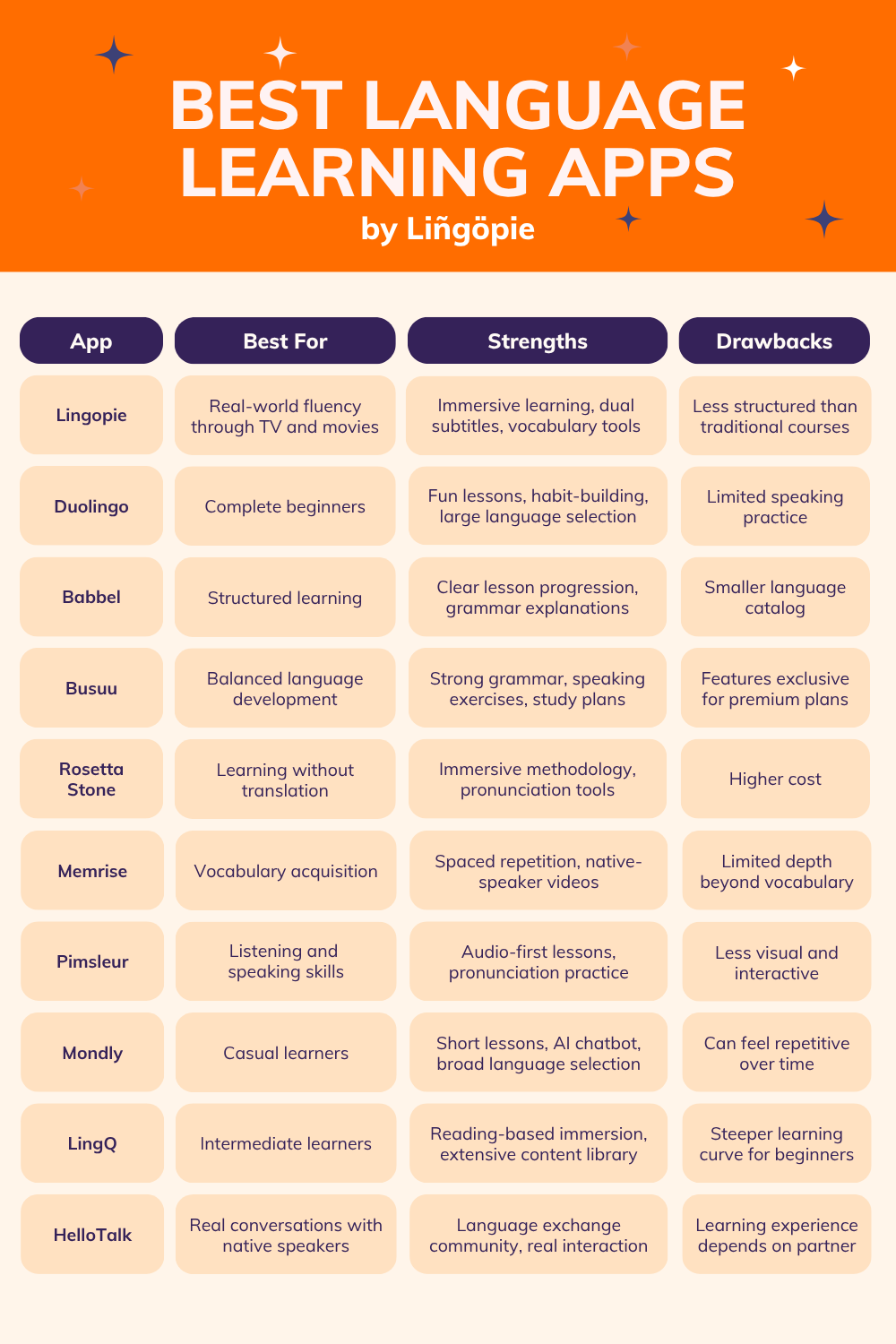
One of the biggest surprises from our testing was that popularity and effectiveness weren’t always the same thing. Sure, Duolingo remains the most downloaded language-learning app in the world, but smaller platforms like Lingopie may produce stronger outcomes in reading and oral proficiency.
The comparison below shows where each app stands out and who will get the most value from it.
| App | Best For | Strengths | Potential Drawback |
|---|---|---|---|
| Lingopie | Real-world fluency through TV and movies | Immersive learning, authentic content, subtitles, vocabulary tools | Less structured than traditional courses |
| Duolingo | Complete beginners | Fun lessons, habit-building, large language selection | Limited conversational practice |
| Babbel | Structured learning | Clear lesson progression, grammar explanations | Smaller language catalog |
| Busuu | Balanced language development | Strong grammar, speaking exercises, study plans | Some features locked behind premium plans |
| Rosetta Stone | Learning without translation | Immersive methodology, pronunciation tools | Higher cost than many competitors |
| Memrise | Vocabulary acquisition | Spaced repetition, native-speaker videos | Limited depth beyond vocabulary |
| Pimsleur | Listening and speaking skills | Audio-first lessons, pronunciation practice | Less visual and interactive |
| Mondly | Casual learners | Short lessons, AI chatbot, broad language selection | Can feel repetitive over time |
| LingQ | Intermediate learners | Reading-based immersion, extensive content library | Steeper learning curve for beginners |
| HelloTalk | Real conversations with native speakers | Language exchange community, authentic interaction | Learning experience depends on partner quality |
After testing the leading language learning apps, a few clear standouts emerged. Our favorites include:
- Lingopie — Best Overall for Real-World Fluency
- Duolingo — Best for Complete Beginners
- Busuu — Best for Structured Learning
- Pimsleur — Best for Speaking and Pronunciation
- LingQ — Best for Intermediate Learners
- HelloTalk — Best for Real Conversations
Below, we break down exactly where each app excels, where it falls short, and which type of learner will benefit most.
Best Language Learning Apps Overall
Most language apps promise the same thing: faster learning, better conversations, and eventual fluency. In practice, they take very different paths to get there. The reviews below focus on what each app actually does well, where it falls short, and who will get the most value from it.
Lingopie: Best Overall for Real-World Fluency
Languages: 10+ languages
Free Trial: Yes
Starting Price: Varies by plan
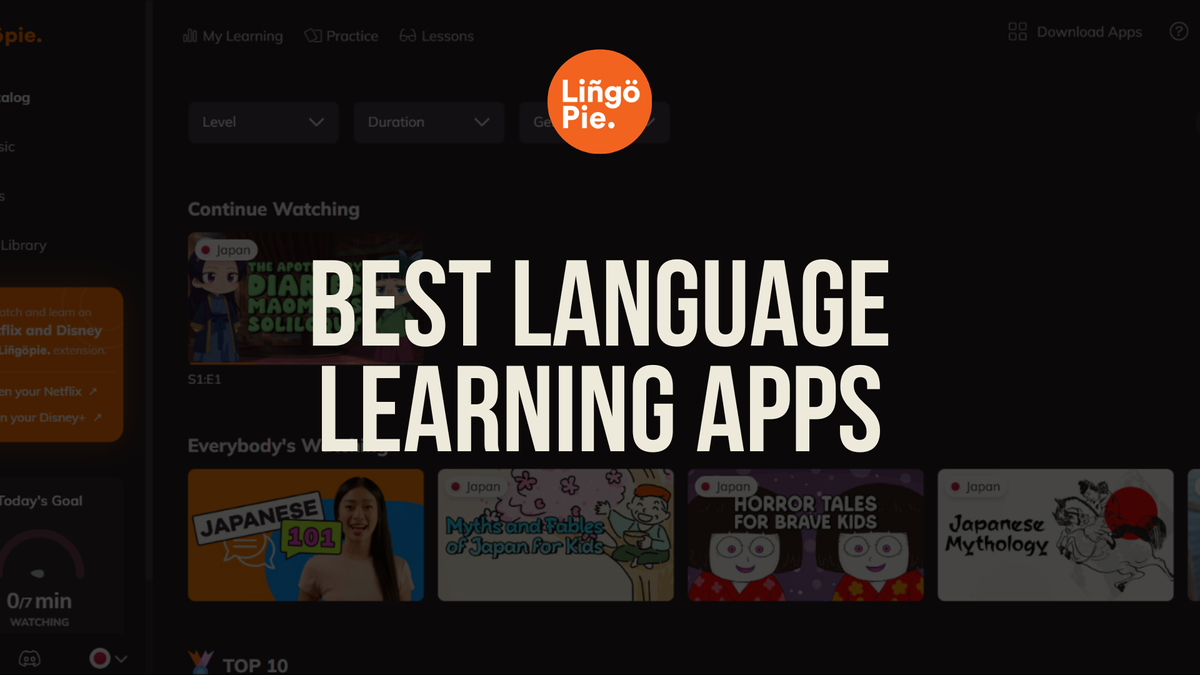
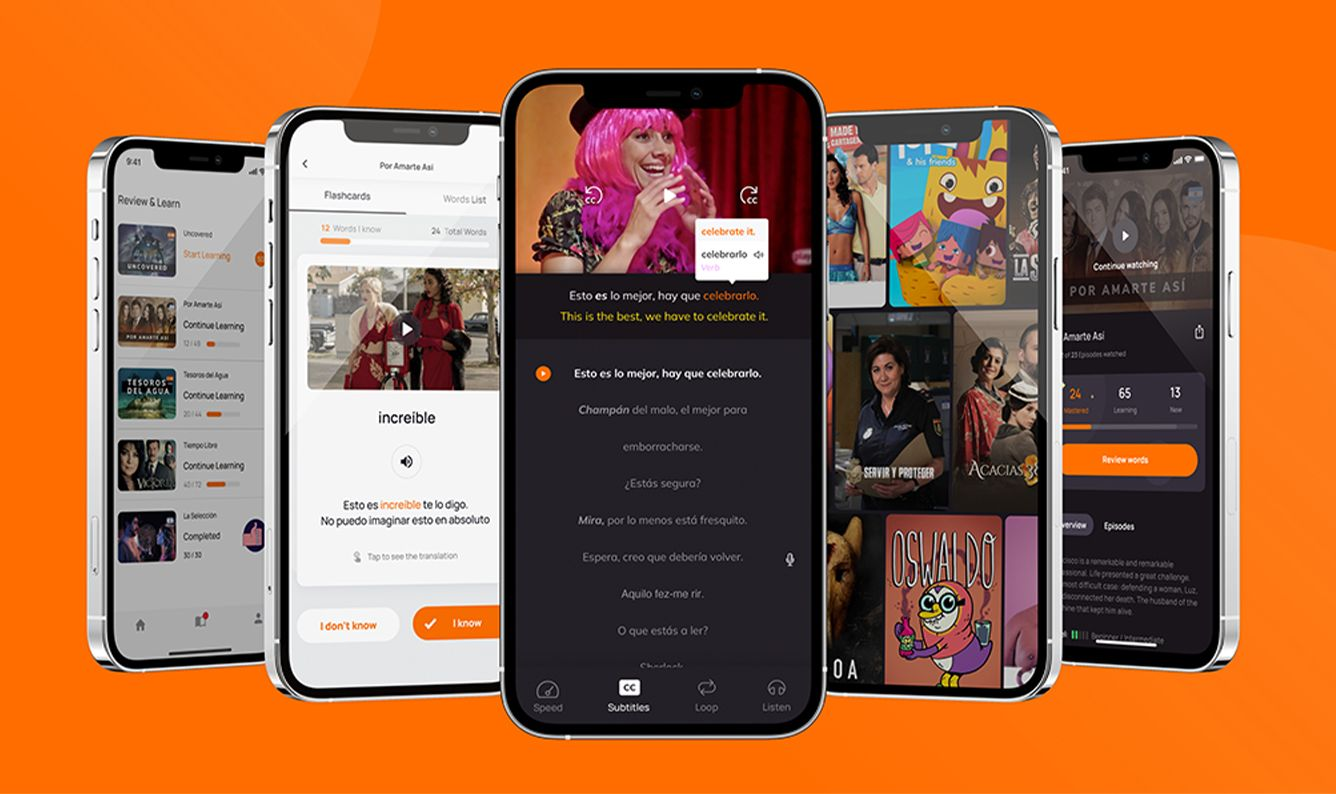
If your goal is to understand how people actually speak, Lingopie stands out from most traditional language-learning apps. Rather than teaching primarily through vocab drills and translation exercises, it uses real TV shows, movies, podcasts, and videos to expose learners to authentic language in context. This approach closely mirrors how people encounter language in everyday life, making Lingopie one of the strongest options for learners who want to move beyond textbook phrases.
What impressed us most during testing was how naturally vocabulary, listening comprehension, pronunciation, and cultural knowledge develop together. Interactive dual subtitles, instant word lookups, review tools, and speaking exercises all work together to transform entertainment into structured learning.
While complete beginners may initially prefer a more guided course, learners who want to understand native speakers, improve listening skills, and build practical fluency will find few apps that match Lingopie’s immersive experience.
| Pros | Cons |
|---|---|
| Uses real TV shows and movies instead of scripted lessons | Less grammar-focused than some traditional apps |
| Excellent for listening comprehension and real-world vocabulary | Can feel less structured for learners who prefer step-by-step courses |
| Interactive subtitles make learning effortless | Some content availability varies by language |
| Supports multiple learning styles through video, reading, and review tools | |
| One of the most immersive language-learning experiences available |
Duolingo: Best for Complete Beginners
Languages: 40+ languages
Free Trial: Yes
Starting Price: Free plan available; premium plans available
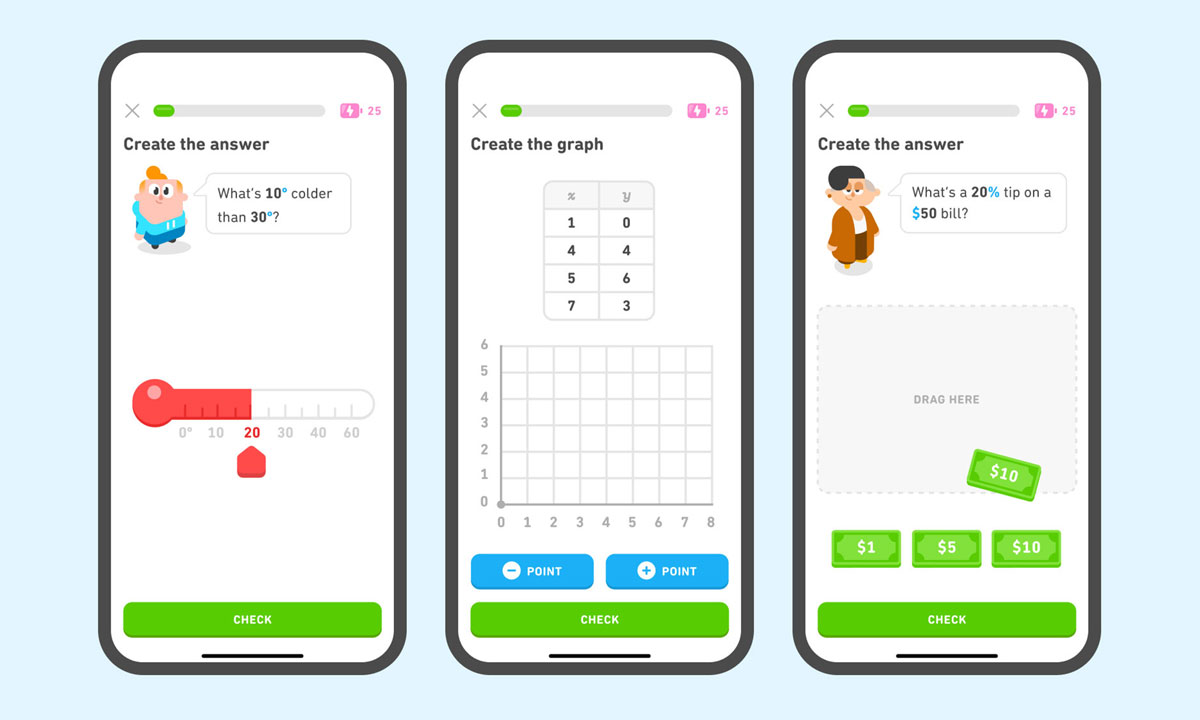
Few language learning apps have had a bigger impact on the industry than Duolingo. With more than 50 million daily active users, it remains the most popular language-learning app in the world and is often the first platform people try when learning a new language. Its biggest strength is accessibility: lessons are short, beginner-friendly, and designed to make language learning feel less intimidating.
During testing, we found that Duolingo excels at helping learners build a daily habit. The app’s gamified approach makes it easy to stay consistent, and research has shown that learners can make measurable gains in vocabulary, reading, and listening through regular use. However, its greatest strength can also be its limitation.
Seeking conversational fluency? Well, you'll likely need additional speaking practice and exposure to authentic content as they progress.
| Pros | Cons |
|---|---|
| Extremely beginner-friendly | Limited spontaneous speaking practice |
| Large selection of languages | Can become repetitive at higher levels |
| Strong habit-building and motivation features | Less exposure to authentic language |
| Generous free version | Grammar explanations vary by course |
| Short lessons fit busy schedules | Advanced learners may outgrow it |
 Jonathan Del Prado
Busuu: Best for Structured Learning
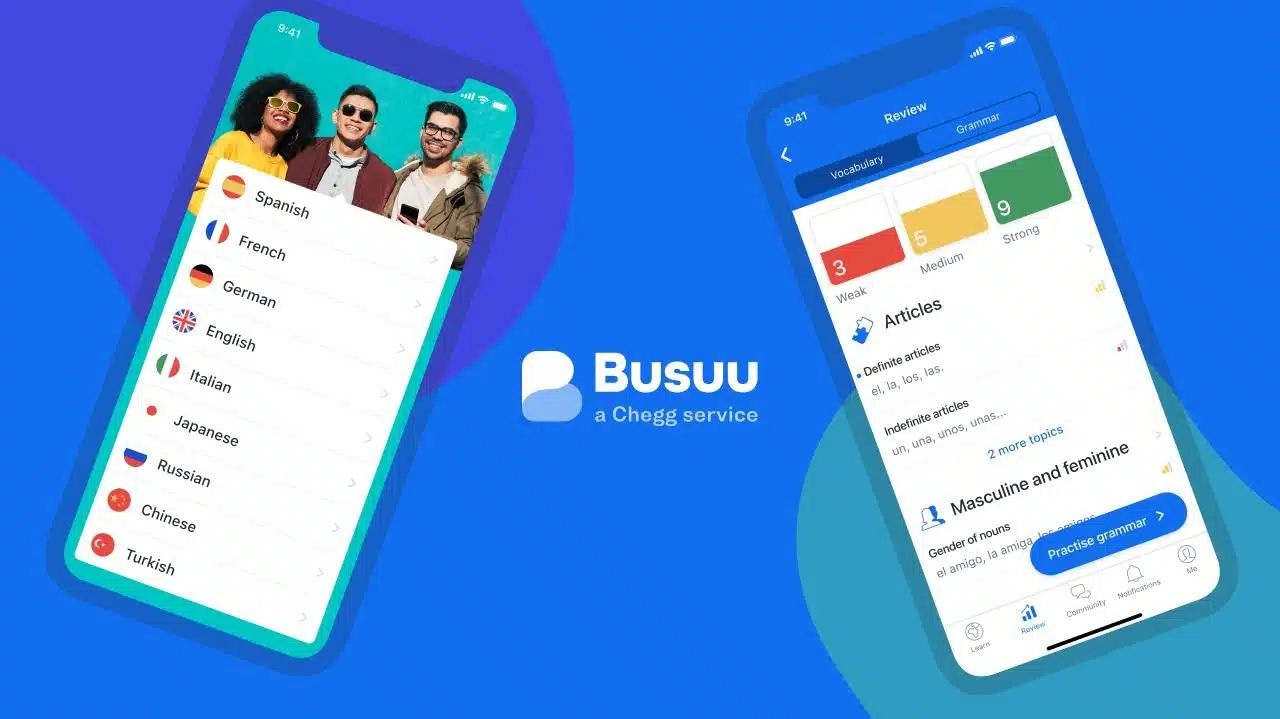
Languages: 14+ languages
Free Trial: Yes
Starting Price: Free plan available; premium plans available
Need a clear roadmap for learning? Busuu strikes a strong balance between guided lessons and practical language development. While many apps focus heavily on either gamification or immersion, Busuu combines structured coursework with speaking, listening, reading, and writing activities designed to build well-rounded language skills.
What particularly impressed us was how closely Busuu aligns with findings from language-learning research. In a comparative study examining major language-learning platforms, Busuu produced the strongest overall results across reading, grammar, and oral proficiency, outperforming both Duolingo and Babbel in several areas.
| Pros | Cons |
|---|---|
| Well-structured learning path | Smaller language selection than Duolingo |
| Strong grammar explanations | Some features require a premium subscription |
| Includes reading, writing, listening, and speaking practice | Less immersive than video-based platforms |
| Personalized study plans | Interface can feel more academic than playful |
| Research-backed learning outcomes |
Pimsleur: Best for Speaking and Pronunciation
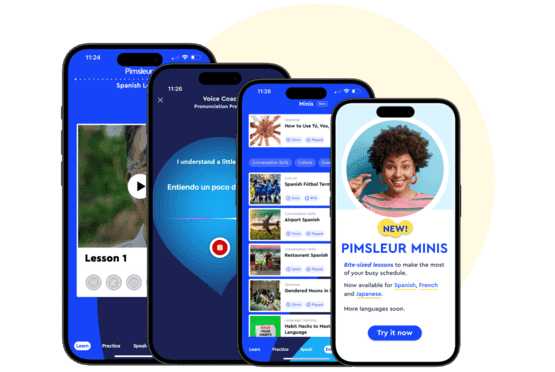
Languages: 50+ languages
Free Trial: Yes
Starting Price: Subscription required after trial
Pimsleur has been around far longer than most modern learn language apps, and its approach remains refreshingly simple: listen, respond, and speak. Instead of relying heavily on flashcards, games, or grammar exercises, Pimsleur uses audio-based lessons designed to help learners think and respond in their target language.
For people who spend a lot of time commuting, exercising, or away from a screen, it's one of the most convenient ways to fit language learning into a busy schedule. Just note that it lacks some of the visual features and immersive content found in newer platforms.
| Pros | Cons |
|---|---|
| Strong focus on speaking and pronunciation | Less visual than most modern apps |
| Audio lessons fit easily into busy schedules | Limited grammar explanations |
| Excellent listening practice | Fewer interactive features |
| Encourages active recall rather than passive recognition | Can feel repetitive for some learners |
| Suitable for learning on the go | Less engaging for visual learners |
 Jonathan Del Prado
Memrise: Best for Learning Useful Vocabulary
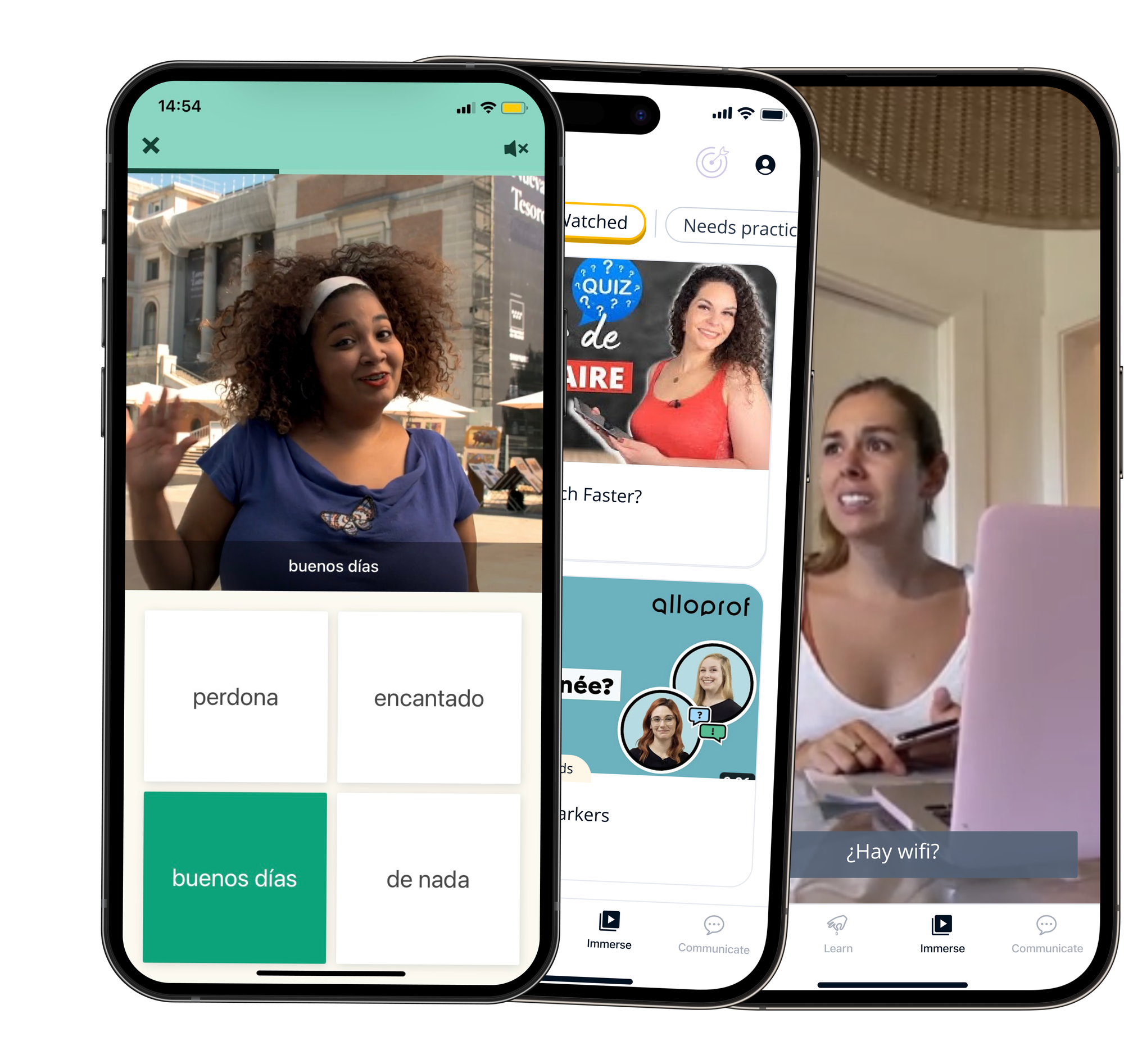
Languages: 20+ languages
Free Trial: Yes
Starting Price: Free plan available; premium plans available
If you've ever learned a few textbook phrases only to discover that nobody actually talks that way, Memrise offers a refreshing alternative. The app focuses heavily on vocabulary and everyday expressions, using thousands of short videos featuring native speakers in real-life situations.
I honestly had a great time using this one because it emphasizes exposure and repetition. It’s particularly effective for building vocabulary, improving listening skills, and learning the kinds of words and phrases you'll actually encounter while traveling, working, or chatting with native speakers.
| Pros | Cons |
|---|---|
| Excellent vocabulary-building system | Less comprehensive than full language courses |
| Large library of native-speaker videos | Limited grammar instruction |
| Useful everyday words and expressions | Speaking practice is relatively limited |
| Easy to fit into short study sessions | Advanced learners may outgrow it |
| Beginner-friendly interface |
 Jonathan Del Prado
LingQ: Best for Intermediate Learners
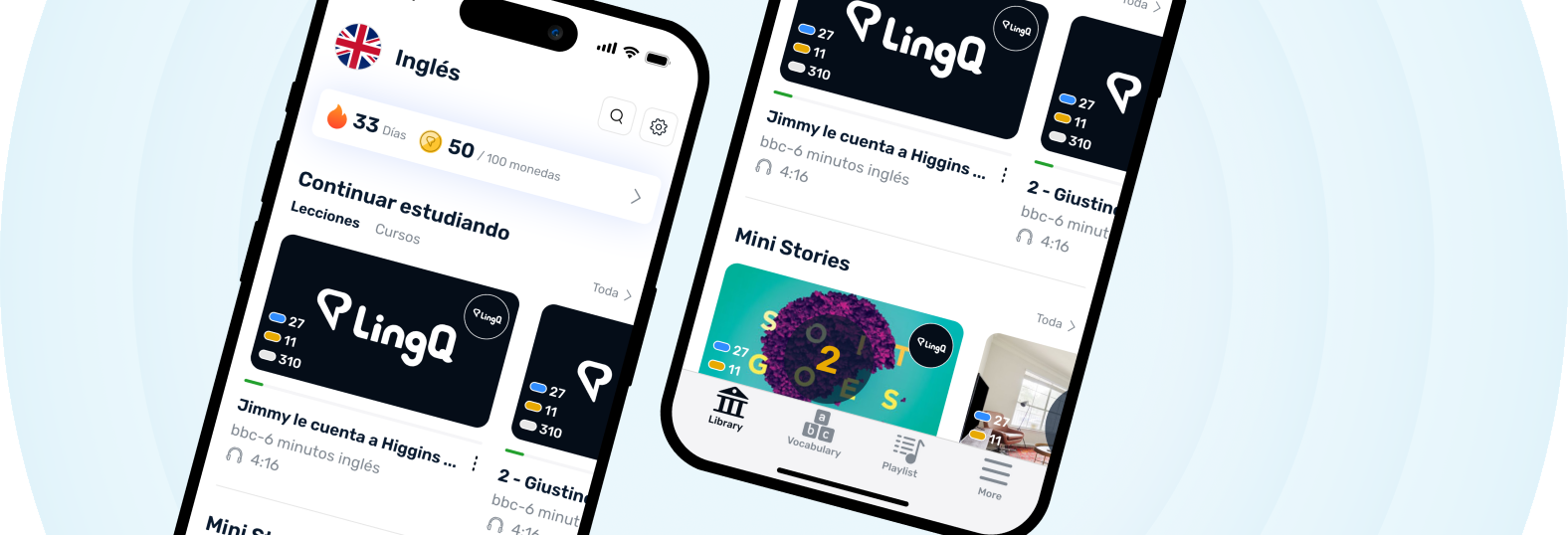
Languages: 50+ languages
Free Trial: Yes
Starting Price: Free plan available; premium plans available
Many language learners reach a frustrating point where beginner lessons feel too easy, but native content still feels overwhelming. LingQ was built specifically for that stage.
Instead of guiding users through traditional lessons, LingQ gives learners access to articles, podcasts, interviews, books, and videos that can be read and listened to directly inside the platform. Unknown words are saved automatically for review, making it easier to consume authentic content without constantly reaching for a dictionary. The experience feels less like studying and more like gradually learning through exposure.
Beginners may find the platform intimidating, and learners looking for step-by-step instruction may prefer Busuu or Babbel. But for independent learners who already know the basics and want to expand their vocabulary naturally, few apps offer a larger library of real-world content. It's also one of the strongest examples of comprehensible input language learning in practice.
| Pros | Cons |
|---|---|
| Massive library of authentic content | Not ideal for complete beginners |
| Excellent vocabulary acquisition system | Steeper learning curve than most apps |
| Supports learning through reading and listening | Limited structured instruction |
| Encourages independent learning habits | Interface can feel overwhelming at first |
| Strong fit for intermediate learners |
 Jonathan Del Prado
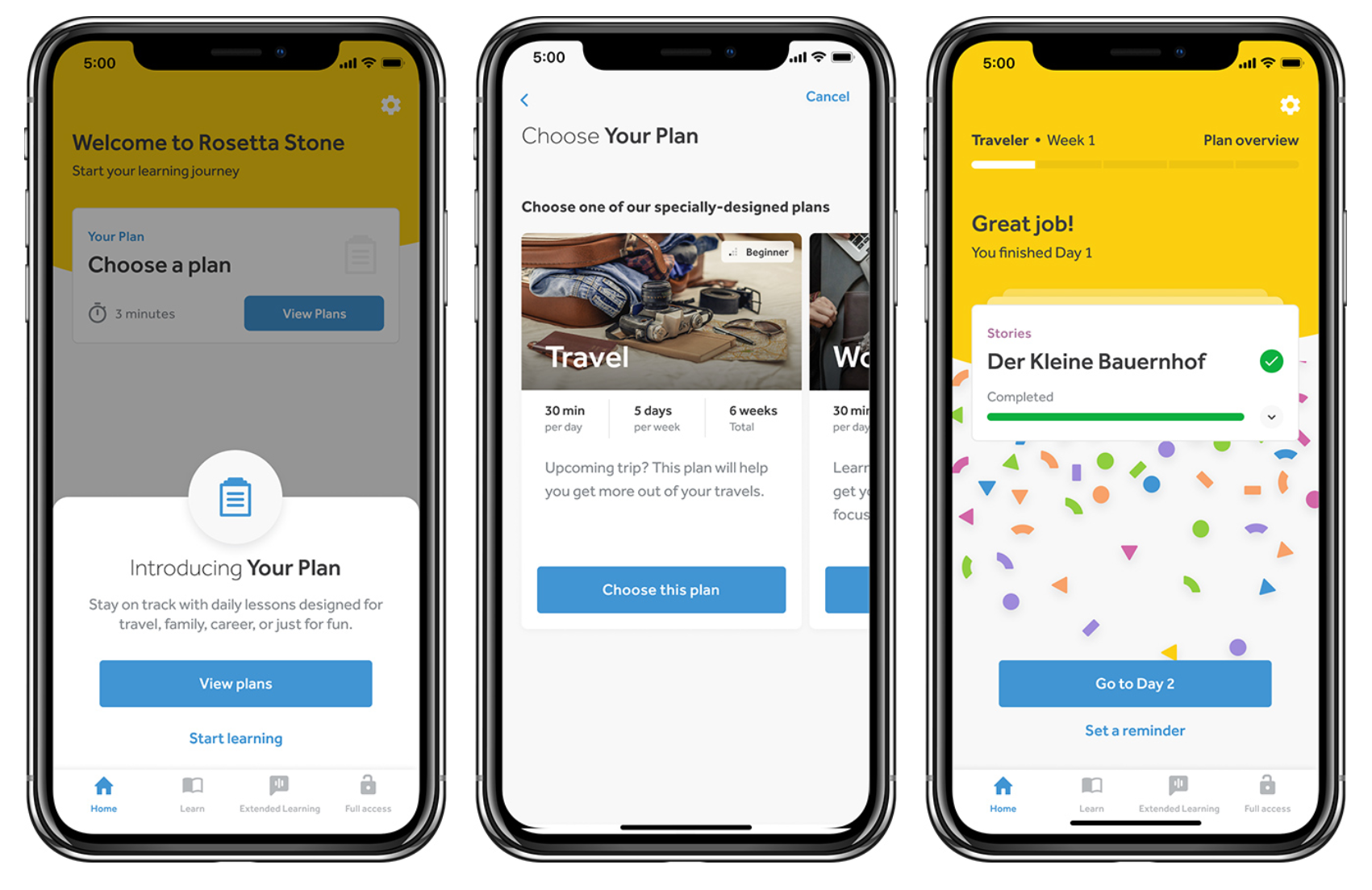
Rosetta Stone: Best for Learning Without Translation
Languages: 25+ languages
Free Trial: Yes
Starting Price: Subscription and lifetime plans available
Long before mobile apps became the norm, Rosetta Stone helped popularize digital language learning. Even today, its core philosophy remains surprisingly different from most competitors: instead of translating words into your native language, it teaches through images, audio, and context.
For learners who want to think directly in their target language rather than mentally translating every sentence, this approach can be highly effective. The app also offers some of the strongest pronunciation tools we tested. However, the lack of detailed grammar explanations means some learners may find the learning curve steeper than apps like Babbel or Busuu.
| Pros | Cons |
|---|---|
| Encourages thinking directly in the target language | Limited grammar explanations |
| Excellent speech-recognition technology | Can feel slow for learners who prefer explicit instruction |
| Clean, distraction-free learning environment | Smaller content variety than some competitors |
| Strong pronunciation practice | More expensive than many language apps |
| Available on desktop and mobile |
HelloTalk: Best for Real Conversations
Languages: 150+ languages
Free Trial: Free plan available
Starting Price: Free; premium plans available
Most language-learning apps simulate conversations. HelloTalk gives you actual ones! The app connects learners with native speakers worldwide for text, voice, and video exchanges. Inside, you can discuss hobbies, daily life, current events, travel, and countless other topics with real people.
The only downside of this one is that the experience is not always predictable. Some language partners become long-term friends, while others may disappear after a few messages. Success depends largely on how proactive you are. However, if your goal is to improve speaking confidence and experience authentic communication, few apps can replicate what HelloTalk offers.
| Pros | Cons |
|---|---|
| Practice with real native speakers | Learning experience depends on finding good language partners |
| Supports text, voice, and video conversations | Less structured than traditional language courses |
| Built-in translation and correction tools | Some users are more interested in socializing than language exchange |
| Exposure to authentic language and culture | Can feel intimidating for beginners |
| Free to get started |
 Jonathan Del Prado
Mondly: Best for Casual Learners
Languages: 40+ languages
Free Trial: Yes
Starting Price: Free plan available; premium plans available
If you're looking for apps to learn a new language without committing to an intensive learning program, Mondly is one of the more approachable options available. The app combines short lessons, quizzes, speech-recognition exercises, and an AI chatbot into a beginner-friendly experience that feels easy to pick up.
It may not offer the depth of Busuu or the immersive experience of Lingopie, but it does a good job of helping learners build basic vocabulary and conversational skills without feeling overwhelmed.
One feature we particularly liked was Mondly's focus on practical situations. Lessons are organized around real-world scenarios such as travel, shopping, work, and dining out, making it easier to learn language that can be used immediately.
| Pros | Cons |
|---|---|
| Beginner-friendly interface | Less comprehensive than top-ranked competitors |
| Wide range of languages available | Limited depth for advanced learners |
| Includes chatbot and speech exercises | Grammar instruction can be inconsistent |
| Short lessons fit busy schedules | Content may feel repetitive over time |
| Good value for casual learners |
Babbel: Best for Practical Conversations
Languages: 14+ languages
Free Trial: Yes
Starting Price: Subscription required after trial
From the moment you start a course, the focus of Babbel is on the language you’ll actually use. Lessons revolve around introducing yourself, ordering food, making travel arrangements, navigating workplace conversations, and handling everyday interactions.
This real-world focus makes Babbel particularly appealing to adults learning for travel, work, or personal enrichment. The lessons are concise, the grammar explanations are clear without becoming overwhelming, and the progression feels logical (although quite fast!) as you move through the course.
While Busuu offers a broader skill-building experience and Lingopie provides greater immersion, Babbel remains one of the most approachable and effective apps to learn language for learners who want structured lessons and useful conversational skills.
| Pros | Cons |
|---|---|
| Strong focus on practical, everyday conversations | Smaller language catalog than Duolingo |
| Clear and beginner-friendly grammar explanations | Limited free content |
| Well-structured lesson progression | Less immersive than content-based platforms |
| Ideal for travel and workplace communication | Speaking practice is relatively limited |
| Easy to follow for self-paced learners |
How to Choose the Right Language Learning App
The best language learning apps aren't necessarily the most popular—they're the ones that match your goals. So before subscribing, ask yourself one simple question:
What do I actually want to do with this language?
- Want to understand native speakers and real-world content? Try Lingopie.
- Need a structured curriculum? Busuu is a strong choice.
- Looking for practical conversations? Babbel excels here.
- Want to improve speaking confidence? Consider Pimsleur or HelloTalk.
- Need something casual and beginner-friendly? Duolingo and Mondly are good places to start.
It's also worth looking beyond price. A good language learning app price comparison should consider features such as speaking practice, AI tools, content quality, and whether the platform offers a language learning app free trial.
Finally, don't underestimate motivation. Features like language learning gamification can help build momentum, but the most important factor is choosing an app you'll genuinely enjoy using.
Tips to Learn Languages Faster with Apps
Choosing one of the best language learning apps is a great start, but the learners who make the fastest progress usually do something else: they use the app as a tool, not the entire learning experience.
Spend More Time With the Language Than the App
Many learners spend months completing lessons without ever hearing how the language sounds outside the platform. A better approach is to pair your app with real content. After finishing a lesson, watch a short video, listen to a podcast, or read a simple article in your target language. This kind of comprehensible input language learning helps you recognize words and sentence patterns in real-world situations, making them much easier to remember later.
Turn Passive Moments Into Study Sessions
You don't always need to sit down for a dedicated study session to make progress. Some of the most productive language practice happens during moments that would otherwise be wasted.
Try:
- Listening to a podcast while commuting
- Reviewing vocabulary while waiting in line
- Watching a five-minute video during a coffee break
- Changing your phone's language settings
Those small pockets of exposure add up surprisingly quickly over the course of a month.
Speak Before You Feel Ready
One of the biggest mistakes learners make is waiting until they're "good enough" to speak.
The truth is that speaking is how you become good enough. Use your app's speaking exercises, record yourself summarizing your day, or practice with an AI conversation practice app. Even a one-minute voice recording can reveal pronunciation mistakes and vocabulary gaps that you would never notice while reading silently.
Build a Learning Routine, Not a Streak
Streaks can be motivating, but they aren't the same thing as progress. Instead of chasing a number, create a routine that fits naturally into your day.
For example, you might:
- Complete one lesson after breakfast
- Review vocabulary during lunch
- Watch 15 minutes of content before bed
This approach is often more sustainable than relying solely on language learning gamification features to keep you engaged.
Learn Phrases, Not Just Words
Memorizing individual words feels productive until you try to use them in conversation.
Whenever possible, learn new vocabulary as part of a complete sentence. Instead of memorizing the Spanish word viajar ("to travel"), learn a phrase such as Me gusta viajar en verano ("I like to travel in summer"). Many immersive platforms and AI language tutor app tools naturally reinforce vocabulary this way, which tends to improve long-term retention.
Use One App as Your Home Base
Many learners jump from app to app every few weeks, hoping the next platform will unlock faster results. In reality, consistency usually matters more than finding the perfect tool.
Choose one primary app and stick with it for at least a month. Then add other apps for language learning only when they solve a specific problem. For example, you might use Busuu for structured lessons, Lingopie for immersion, and HelloTalk for conversation practice.
Test Yourself More Than You Review
Here's a simple rule: spend less time looking at information and more time trying to recall it.
After watching a video or completing a lesson, close the app and see how much you can remember. Try writing five new words from memory or explaining what you just learned out loud. Retrieval practice is one of the fastest ways to strengthen memory and identify weak spots.
Make the Language Part of Your Hobbies
The fastest learners often stop treating language learning as a separate activity. If you enjoy cooking, watch recipes in your target language. If you like sports, follow a foreign-language commentator. If you're into gaming, switch the game's audio or subtitles.
At that point, you're no longer just studying the language—you're using it. And that's usually when real progress starts to happen.
Is Lingopie Worth It?
For learners who want to understand how native speakers actually communicate, yes. What sets Lingopie apart from many language learning apps is its focus on real content rather than simulated conversations. By turning TV shows, movies, podcasts, and videos into interactive lessons, it helps learners build listening skills, vocabulary, and cultural understanding in a way that feels natural and engaging.
It's not the most grammar-focused app on this list, and learners who prefer highly structured courses may lean toward Busuu or Babbel. But if you're looking for one of the best apps to learn a language through immersion and real-world context, Lingopie is well worth considering.
Want to see how it works? Explore what Lingopie is, try the Lingopie Extension, or start with the Lingopie language learning app.
FAQ
Can you become fluent using apps alone?
Probably not. Apps are excellent for building vocabulary, listening, and reading skills, but fluency usually requires conversations with other people and regular exposure to native content. The best language learning apps can get you far, but they work best as part of a broader learning routine.
Which app works best for busy adults?
Babbel and Pimsleur are our top picks for busy adults. Their lessons are short, practical, and easy to fit into a busy schedule, while Lingopie is a great alternative if you’d rather learn through entertainment than traditional study.
What is the easiest language to learn with apps?
Spanish is usually the easiest choice for English speakers because of its straightforward pronunciation and abundance of learning resources. Most apps to learn a language offer their most comprehensive courses in Spanish.
How long does it take to learn a language with apps?
Most learners notice progress within a few weeks, but conversational ability usually takes several months of consistent study. The best apps to learn a new language can speed up the process, but there is no shortcut around regular practice.
Which language learning app gives the fastest results?
Busuu, Babbel, and Lingopie are among the fastest for most learners because they combine structured learning with practical language use. The right choice depends on whether you prefer lessons, immersion, or a mix of both.
Is immersive learning better than memorization apps?
For long-term retention, usually yes. Apps built around a dynamic immersion method help learners encounter vocabulary in realistic situations, making it easier to remember and use later.
How does Lingopie work?
Lingopie turns TV shows, movies, and videos into interactive language lessons. Features such as dual subtitles, instant translations, and vocabulary review help learners understand content while naturally improving listening and reading skills.
Which languages can you learn with Lingopie?
Lingopie offers courses and content in popular languages, including Spanish, French, German, Italian, Japanese, Korean, and more. It's one of the best apps to learn another language if you prefer learning through authentic content.
Is there a free trial for Lingopie?
Yes. Lingopie offers a language learning app free trial, allowing you to explore the platform before committing to a subscription.
What are the best language learning apps in 2026?
Our picks for the best language learning apps 2026 are Lingopie, Duolingo, Busuu, Babbel, Pimsleur, LingQ, Rosetta Stone, HelloTalk, Memrise, and Mondly. Each excels in a different area, from immersion and speaking practice to structured learning and vocabulary building.
What are the best apps to learn a language if I already use Duolingo?
If you’re looking for Duolingo alternatives, start with Busuu for structure, Lingopie for immersion, or HelloTalk for real conversations. Many experienced learners combine multiple language apps rather than relying on a single platform.