
Many parents download a language app with good intentions, only to watch their child lose interest a few days later. With hundreds of language-learning apps for kids promising fast results, it can be difficult to tell which are genuinely educational and which are simply dressed-up games.
The best language apps for kids make learning feel natural, engaging, and age-appropriate while giving parents confidence that their child’s screen time is well spent. In this guide, we’ll compare the best language learning apps for kids in 2026 based on learning quality, safety, supported languages, ease of use, and overall value.
- 13 Best Cartoons For Learning Spanish Basics Fast (2026)
- 15 Japanese Anime That’ll Help You Master Japanese
- How to Use Streaming Services for Language Learning?
Why the Right App Matters
Children learn differently from adults. A language app that works well for a teenager may be frustrating for a five-year-old kid, while an app filled with games may be entertaining without teaching much language at all. That’s why choosing the right app for kids to learn languages involves more than simply picking the most popular option.
When comparing language learning apps for kids, here are the factors worth paying attention to:
- Engagement: Children are more likely to learn when lessons feel fun and interactive rather than repetitive or overly academic.
- Age-Appropriate Design: The best apps match a child's developmental stage, whether they're learning their first words or building full sentences.
- Real Language Exposure: Some apps focus on isolated vocabulary, while others help children hear how native speakers actually use the language.
- Child Safety and Parental Controls: A good child-safe language app should offer a secure environment with limited distractions, clear privacy policies, and helpful parent settings.
- Learning Progress: Features such as review activities, speech practice, and spaced repetition for young learners can help children remember what they've learned over time.
The good news is that several of today's best kids' language apps do a great job balancing fun, education, and safety. Below, we've compared the leading options to help you find the right fit for your child's age, learning style, and goals.
Best Language Learning Apps for Kids at a Glance
For many children, learning a new language starts with simple concepts such as colors, animals, numbers, songs, and everyday conversations. While books, flashcards, and classroom lessons can help, the best language learning apps for kids add something extra: interaction.
Instead of simply reading a word, apps help children:
- hear native pronunciation
- repeat phrases aloud
- complete activities
- engage with the language in a fun way
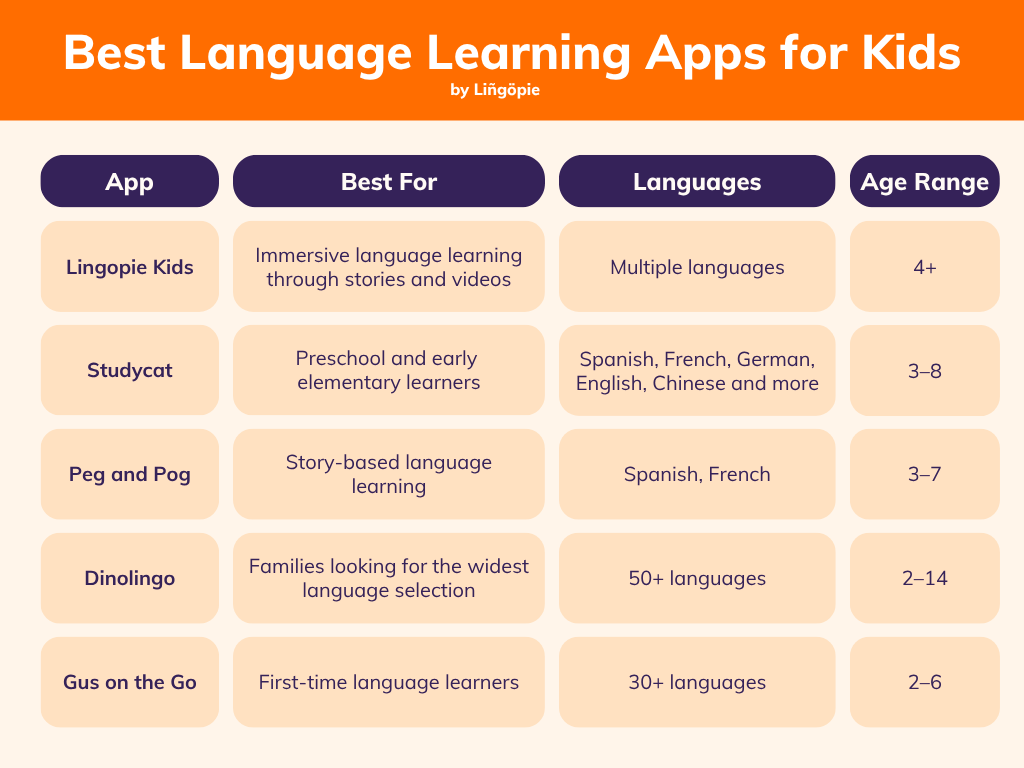
The comparison below highlights the best language apps for kids in 2026, including who they're best suited for, the ages they target, and the learning experience they offer.
| App | Best For | Age Range | Languages | Free Version |
|---|---|---|---|---|
| Lingopie Kids | Immersive language learning through stories and videos | 4+ | Multiple languages | Free trial |
| Studycat | Preschool and early elementary learners | 3–8 | Spanish, French, German, English, Chinese and more | Limited free content |
| Peg and Pog | Story-based language learning | 3–7 | Spanish, French | Free trial |
| Dinolingo | Families looking for the widest language selection | 2–14 | 50+ languages | Free trial |
| Gus on the Go | First-time language learners | 2–6 | 30+ languages | No |
| Droplets | Vocabulary building through short lessons | 6+ | 35+ languages | Yes |
| Lingokids | Educational games and activities | 2–8 | English-focused | Limited free plan |
| Duolingo | Older children and teens | 10+ | 40+ languages | Yes |
The Best Language Learning Apps for Kids Reviewed
Lingopie Kids
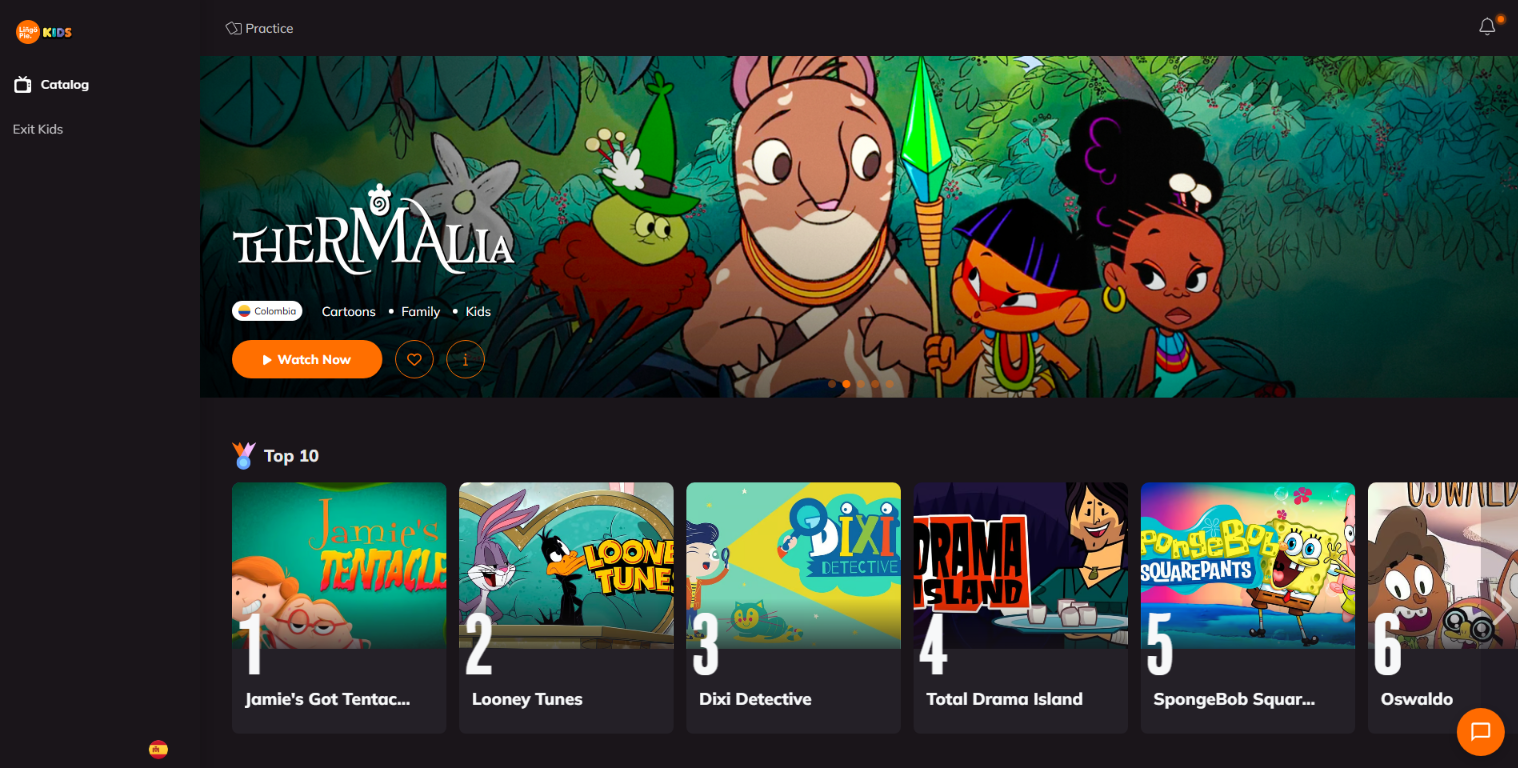
Many language apps teach children individual words through flashcards and matching games. Lingopie Kids takes a different approach by introducing language through stories, videos, catchy songs, and age-appropriate content that shows how words are actually used. So it’s like, instead of memorizing that rojo means red, children hear the word in context, see it used naturally, and connect it to a meaningful situation.
For parents, this approach can feel closer to how children learn their first language. Young learners are exposed to vocabulary, pronunciation, and common sentence patterns through engaging content rather than isolated drills. This makes Lingopie Kids particularly appealing to parents looking for more immersive language learning for children, or to parents who want screen time to feel educational rather than purely entertaining.
Because Lingopie Kids is included with a Lingopie subscription, families can learn together while getting more value from a single membership.
Pros
- Uses stories and videos instead of relying solely on flashcards
- Encourages listening comprehension and natural language exposure
- Suitable for different learning styles
- Makes screen time feel productive and educational
Cons
- Less focused on gamification than some competitors
- Works best when used consistently alongside real-world practice
Study Cat
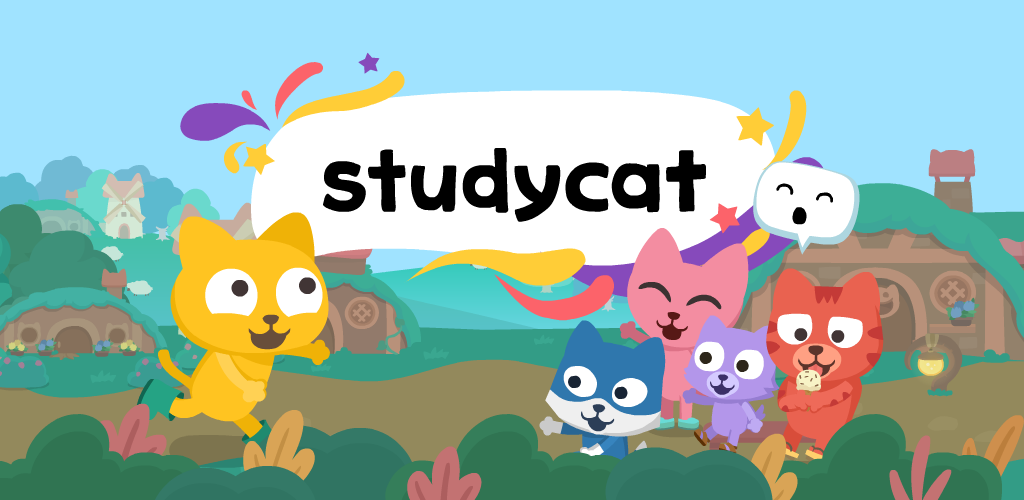
If your child enjoys tapping, matching, singing, and earning rewards, Studycat is one of the most engaging language apps for kids available. Lessons are built around short games and interactive activities that introduce foundational vocabulary such as colors, animals, numbers, food, and everyday expressions.
What makes Studycat particularly appealing for younger learners is that it was designed specifically for children rather than adapted from an adult language app. The interface is simple to navigate, instructions are easy to follow, and lessons are short enough to fit naturally into a child's attention span. Parents looking for a language app for ages 3 to 8 will likely find Studycat easier for children to use independently than many competing apps.
While it doesn't offer the same level of immersive content as story- or video-based platforms, Studycat does an excellent job of helping young learners build confidence and develop an early vocabulary foundation before moving on to more advanced language experiences.
Pros
- Designed specifically for young children
- Fun games that keep lessons engaging
- Introduces practical beginner vocabulary
- Easy for children to navigate independently
Cons
- Limited opportunities for real-world language exposure
- Older children may outgrow the activities
Peg And Pog
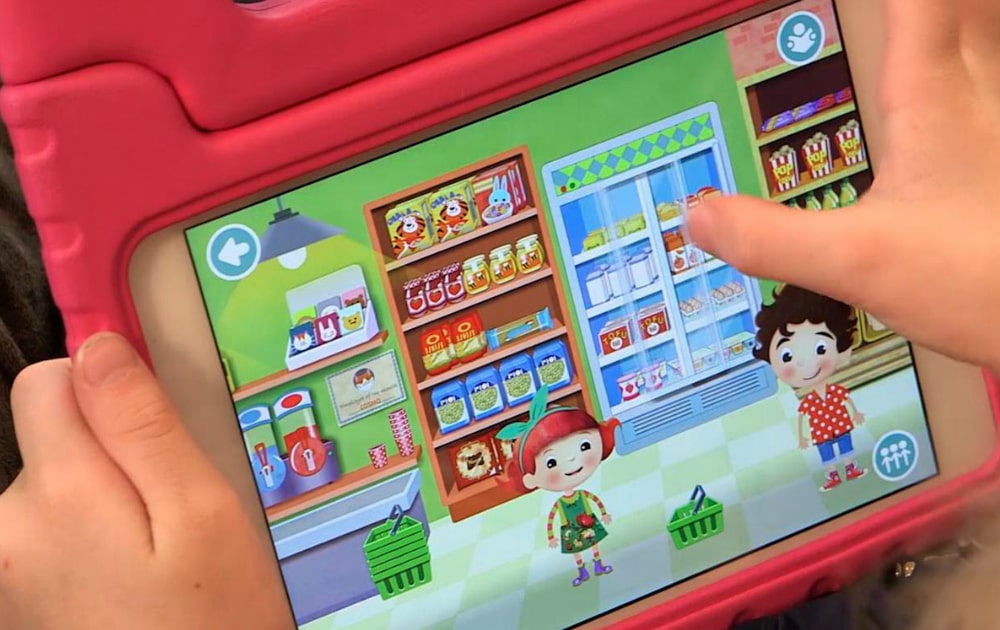
Not every child is motivated by points, badges, or repetitive language exercises. Peg and Pog takes a different approach by teaching languages through interactive stories, colorful adventures, and character-driven experiences. As children follow the journey of Peg and Pog, they naturally encounter new words and phrases in context rather than memorizing isolated vocabulary lists.
This storytelling approach can be especially effective for younger learners because it gives language a purpose. Instead of simply learning the word for "dog" or "house," children see those words appear as part of a larger narrative, making them easier to remember.
For parents looking for immersive language learning for children without overwhelming lessons or excessive screen time, Peg and Pog offers a gentle introduction.
Pros
- Story-based learning feels natural and engaging
- Encourages learning through context
- Child-friendly design and characters
- Great for younger children who enjoy imaginative play
Cons
- Fewer language options than some competitors
- Less suitable for older children seeking more advanced lessons
Dinolingo
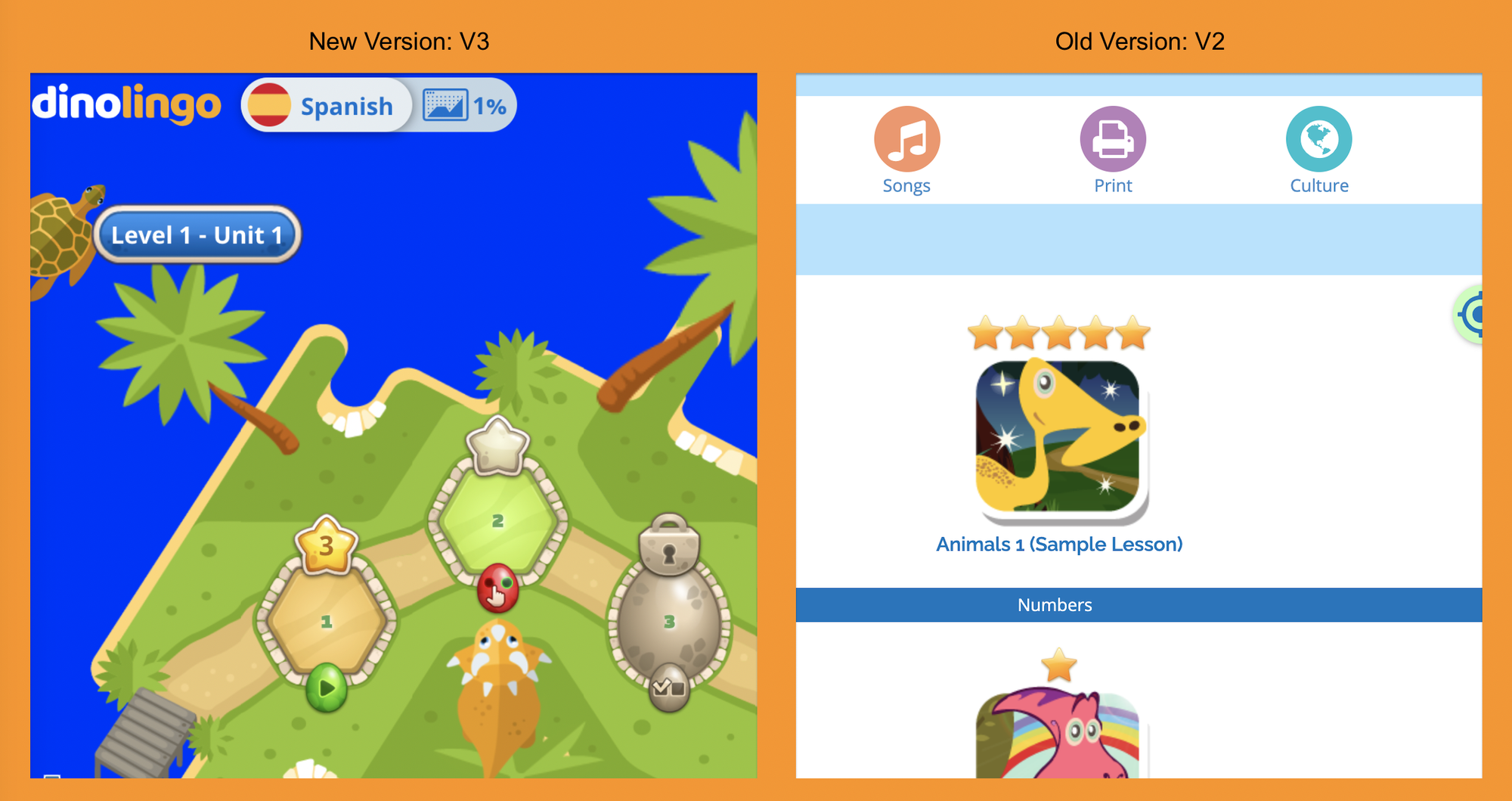
Dinolingo stands out by offering lessons in more than 50 languages, making it one of the best options for less commonly taught languages. The app combines videos, songs, stories, games, and printable activities to introduce children to new vocabulary and everyday expressions. This variety helps keep learning fresh while giving parents multiple ways to reinforce language skills beyond the screen.
While the lessons may not be as structured as most apps in the list , Dinolingo offers impressive breadth and flexibility. It's honestly good as a rotation app, but I wouldn't recommend this as the "best" or like THE ultimate all-in-one app.
Pros
- Supports more than 50 languages
- Includes games, songs, videos, and printable activities
- Suitable for a wide range of ages
- Great for heritage language learning
Cons
- Learning experience can vary between languages
- Less immersive than some specialized language platforms
Gus On The Go
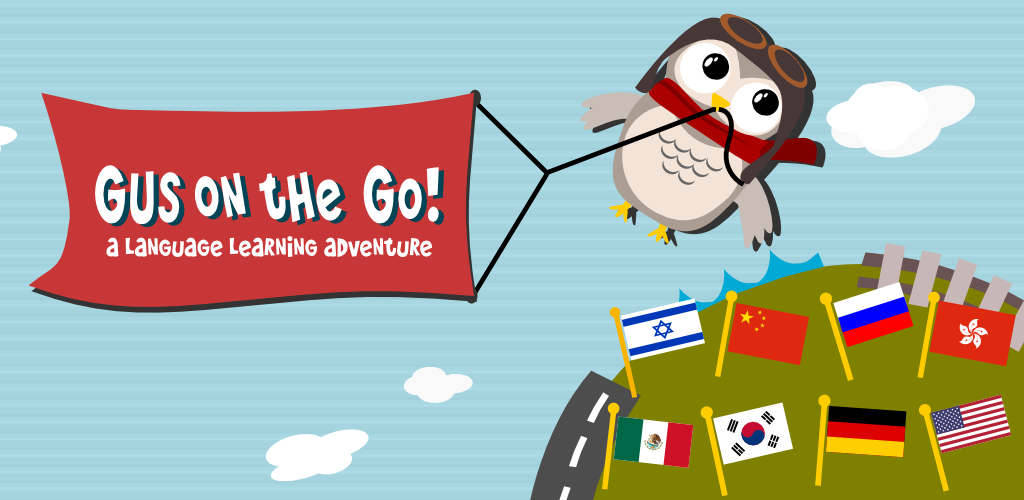
For children who are completely new to language learning, Gus on the Go offers a simple and approachable starting point. The app follows Gus, a friendly owl, through a series of lessons that introduce basic vocabulary through animations, puzzles, and interactive activities. Topics include common beginner words such as animals, food, colors, and numbers.
One of the app’s biggest strengths is its simplicity. The lessons are easy to follow, the interface is uncluttered, and children can focus on learning without being overwhelmed by too many features. This makes Gus on the Go a particularly good language app for toddlers and younger children who may struggle with more complex learning platforms.
While older children may eventually outgrow the content, Gus on the Go does a solid job of building confidence and familiarity with a new language. For parents looking for a gentle, low-pressure introduction to language learning, it's an easy app to recommend.
Pros
- Simple and easy for young children to use
- Introduces practical beginner vocabulary
- Child-friendly design and characters
- Good starting point for first-time learners
Cons
- Limited depth for long-term learning
- Older children may find the activities too basic
Droplets
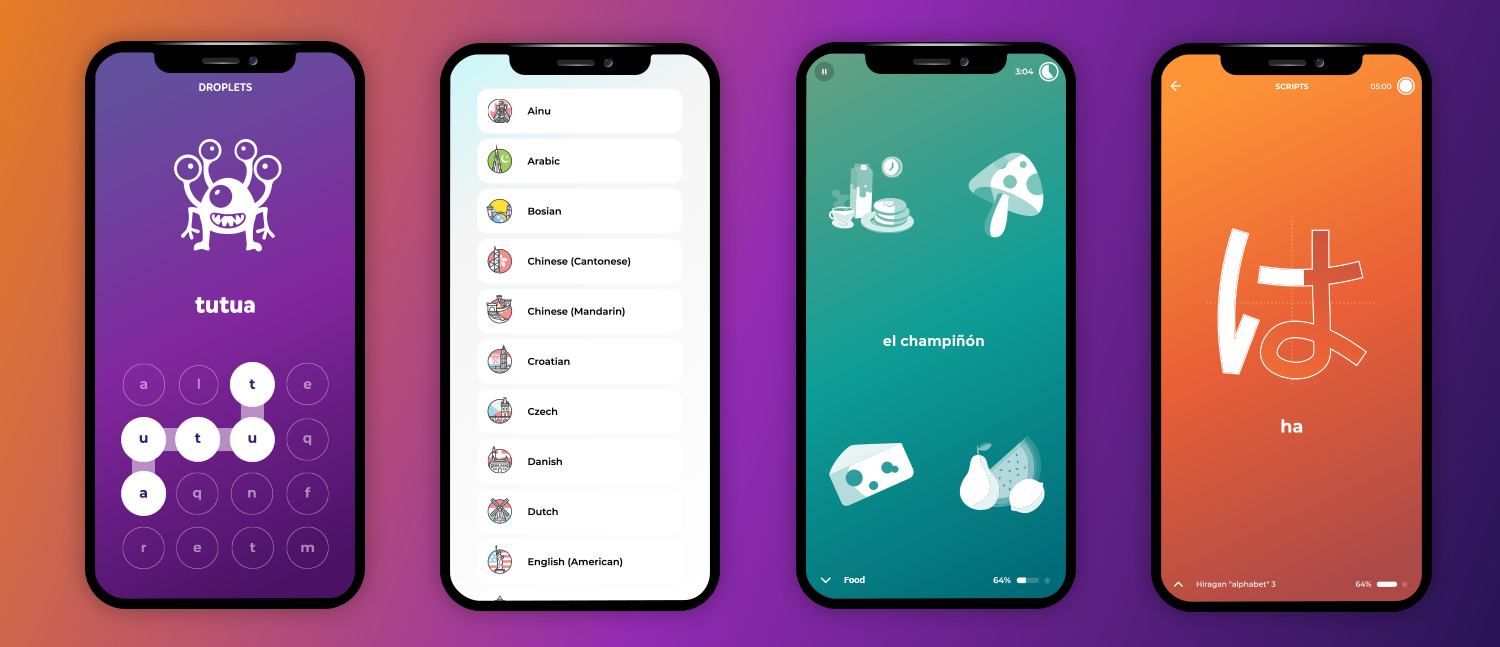
If your child prefers quick activities over long lessons, Droplets by Drops offers a refreshingly simple approach to language learning. Lessons focus on vocabulary acquisition through visual exercises, helping children learn words and phrases related to everyday topics such as food, animals, travel, hobbies, and more.
One reason parents appreciate Droplets is its bite-sized format. Sessions are designed to take just a few minutes, making it easy to fit language learning into a busy day without feeling "busy.” The colorful visuals and interactive activities also help reinforce word recognition, which can be especially useful for visual learners.
Unlike some of the other kids language apps on this list, Droplets places less emphasis on stories, characters, and structured learning paths. Instead, it excels as a vocabulary-building tool that can supplement classroom learning or another language program.
Pros
- Excellent for vocabulary building
- Short lessons fit easily into daily routines
- Supports a wide variety of languages
- Simple and visually appealing design
Cons
- Limited focus on conversations and grammar
- Better as a supplement than a complete language-learning program
Lingokids
Lingokids is best known for its large collection of educational games, songs, videos, and activities designed for young children. While language development is a major part of the experience, the app also covers topics such as literacy, math, social-emotional learning, and creativity, making it feel more like a complete learning platform.
The trade-off is that children looking to become proficient in a specific language may eventually need a more specialized program. However, for younger learners and families seeking a well-rounded educational experience, Lingokids remains one of the most popular and engaging options available.
Pros
- Large library of educational games and activities
- Suitable for preschool and early elementary learners
- Covers multiple developmental areas beyond language learning
- Engaging content that keeps children interested
Cons
- Less focused on learning a specific language
- May not provide enough depth for children with advanced language goals
Duolingo
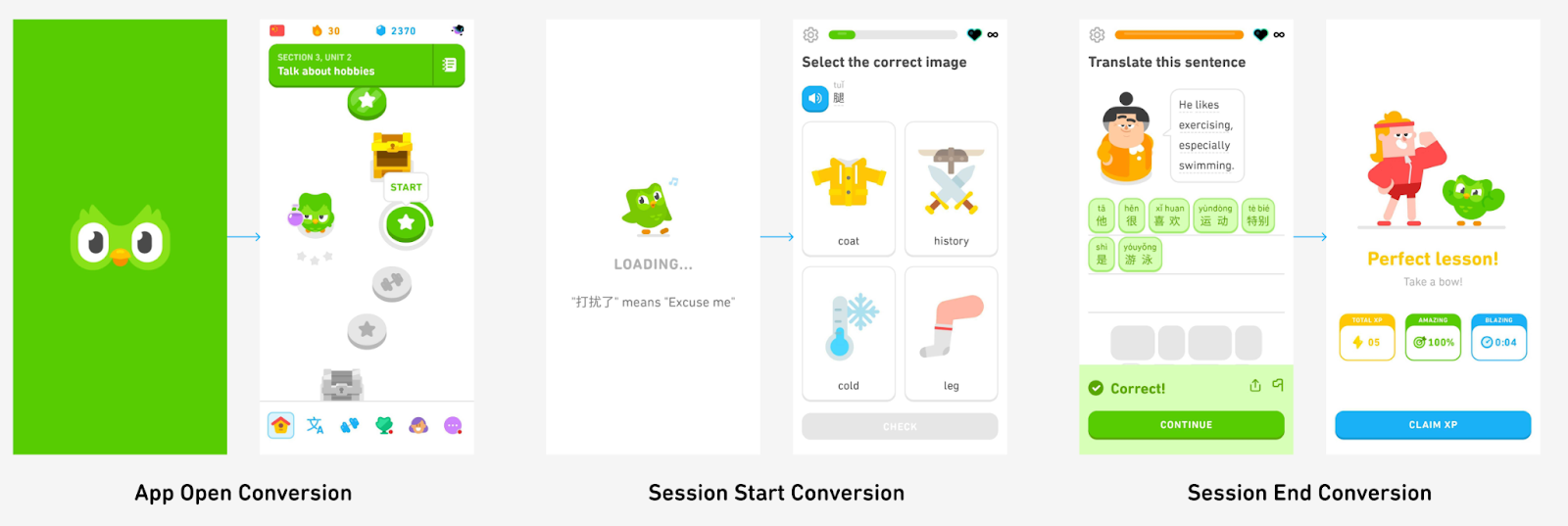
Duolingo is one of the most recognizable language-learning apps in the world, known for its bite-sized lessons, streaks, badges, and daily goals. Children learn through a mix of vocabulary exercises, listening activities, translation tasks, and short quizzes that gradually introduce new words and phrases.
For older children and teens, the app's gamified approach can be highly motivating. Features such as streaks, points, and achievement levels encourage consistent practice, while the short lessons make it easy to fit learning into a busy schedule. With dozens of languages available, it's also a flexible option for families exploring different language-learning goals.
That said, Duolingo was not designed specifically for young children. While motivated learners can make steady progress, younger users may find some lessons repetitive or may need parental support to stay engaged. For this reason, Duolingo tends to work best for independent learners who are already comfortable reading and following instructions on their own.
Pros
- Wide selection of languages
- Motivating streaks and achievement system
- Short lessons that fit easily into daily routines
- Free version available
Cons
- Not specifically designed for young children
- Focuses more on practice exercises than immersive language exposure
Are These Apps Safe for Children?
For many parents, safety is just as important as educational value. The good news is that most of the best language learning apps for kids are designed with young learners in mind. However, not every app offers the same level of privacy protection, parental oversight, or age-appropriate content, so it's worth taking a closer look before creating an account.
When evaluating a child-safe language app, consider the following:
- Parental Controls: Some platforms allow parents to manage screen time, monitor activity, or limit access to certain features. A strong parent dashboard language app can make it easier to track progress and stay involved in your child's learning journey.
- Age-Appropriate Content: The best language apps for kids present vocabulary, stories, and activities that match a child's developmental stage rather than overwhelming them with advanced lessons.
- Limited Ads and Distractions: Younger learners tend to stay focused longer when lessons aren't interrupted by constant advertisements or unrelated content.
- Speech and Listening Features: Some apps include speech recognition tools that encourage children to practice pronunciation. A kids language app with speech recognition can provide valuable speaking practice, especially for children who do not regularly hear the language at home.
For most families, the safest choice is an app that combines engaging lessons with strong privacy practices, age-appropriate content, and parental involvement. Whether you're looking for a language app for toddlers, a tool for language learning for homeschoolers, or an app for older children, choosing a platform that balances safety and educational quality can help make language learning both productive and enjoyable.
Tips for Parents to Make Language Learning Stick
Even the best language learning apps for kids can't do all the work on their own. Children make the most progress when language learning becomes part of everyday life rather than something they only do during app time. Here are a few simple ways to help your child stay engaged and build lasting language skills.
Pair App Time With Real-Life Activities
If your child learns the word for "apple," point it out during snack time. If they're learning colors, ask them to identify objects around the house using the new language. Connecting app lessons to everyday experiences helps children understand that language is something they use, not just something they study.
Keep Sessions Short and Consistent
Young learners often benefit more from 10 minutes of practice every day than an hour-long session once a week. Many of the best kids language apps are designed around short lessons because children tend to retain information better when learning is spread out over time rather than crammed into a single session.
Learn Alongside Your Child
You don't need to be fluent to support your child's learning. Practicing simple words together, repeating phrases, or celebrating milestones can boost confidence and make language learning feel like a shared family activity rather than another assignment.
Add Books, Songs, and Videos
Apps work best when they're part of a broader language-learning environment. Children's books, music, cartoons, and age-appropriate videos provide additional exposure and help reinforce vocabulary learned through the app. This is especially helpful for families interested in immersive language learning for children.
Focus on Progress, Not Perfection
Children don't need to memorize every word or pronounce everything perfectly right away. Celebrate small wins, whether it's remembering new vocabulary, recognizing words in a song, or confidently saying a simple phrase. Consistent exposure and positive experiences often matter more than rapid progress in the early stages.
The most successful young language learners aren't necessarily the ones using the most advanced app. They're the ones who encounter the language regularly, enjoy the process, and have supportive adults encouraging them along the way.
Ready to Help Your Child Learn a New Language?
The best language learning apps for kids make learning feel less like studying and more like discovering something new every day. Whether your child learns best through games, stories, songs, or videos, the right app can help build confidence, curiosity, and valuable language skills.
If you're looking for a platform that combines engaging content with real-world language exposure, give Lingopie Kids a try. Included with a Lingopie subscription, it allows the whole family to learn together through age-appropriate content, stories, and immersive language experiences that go beyond flashcards and drills.
FAQs
Can kids really learn a language from an app alone?
Apps can help children build vocabulary, listening skills, and confidence, but they work best when combined with real-world practice. Books, conversations, songs, and other forms of language exposure help reinforce what children learn through language learning games for kids.
How long should a child use a language learning app each day?
For most young learners, 10 to 20 minutes of focused practice is enough. Short, consistent sessions are often more effective than longer study periods and align well with how spaced repetition for young learners works.
Can a language app replace school language classes for kids?
Not completely. The best language learning apps for kids can supplement classroom instruction, provide additional practice, and increase exposure to the language, but they shouldn't be viewed as a full replacement for formal teaching.
What languages can kids learn with Lingopie?
Lingopie Kids supports several popular languages, including Spanish, French, German, Italian, Portuguese, and English. It's a great option for families raising bilingual children or introducing a second language at home.
Is there a free trial for Lingopie?
Yes. Lingopie offers a free trial, allowing families to explore both Lingopie and Lingopie Kids before committing to a subscription. This gives parents an opportunity to see whether the platform is a good fit for their child's learning style.




)