
I've tested way too many Hebrew learning apps over the past few months, and honestly? Most of them disappointed me. The app store has hundreds, and nearly all of them promise you’ll be speaking fluent Hebrew in a few weeks.
The reality is that most lean on basic flashcards and word lists that teach Hebrew with no context at all, which is exactly how you end up memorizing a hundred words and still freezing the moment a real Israeli talks to you.
So this is the honest version.
Below are the best apps to learn Hebrew that actually earned their place after I used them, plus who each one suits and where each one let me down. I'll also tell you whether apps to learn Hebrew can get you fluent on their own, or whether you need more than a phone to really crack this language.
- 18 Hebrew Slang Words And Phrases To Use Today
- 50 Basic Hebrew Phrases For Travelers
- Is Hebrew Hard To Learn? An Honest Review + Tips
Quick Comparison: The Best Hebrew Learning Apps
Here's the short version before the detailed reviews. This table covers the five apps I tested hands-on, what each one is built for, and my honest take after using it.
| App | Best for | Price | Level | My verdict |
|---|---|---|---|---|
| Lingopie | Immersion through Israeli TV | Subscription, free trial | Beginner to advanced | The one I kept using |
| Preply | One-on-one tutoring | Pay per lesson | Beginner to advanced | Great teaching, variable tutors |
| Write It! Hebrew | Reading and writing the script | Freemium | Absolute beginner | Useful, gets repetitive |
| Gus on the Go | Young kids (ages 2 to 7) | One-time purchase | Kids only | Genuinely fun for little ones |
| HebrewPod101 | Audio and culture | Subscription, free tier | Beginner to intermediate | Strong content, hard to stick with sol |
What Makes a Good App for Learning Hebrew
Not all Hebrew learning apps are built the same, and I learned that the slow way after downloading what felt like every option available. Hebrew throws problems at you that generic language apps just aren't set up to handle.
The alphabet reads right to left. Verbs shift dramatically depending on who's doing the action and when. And the pronunciation includes sounds that simply don't exist in English. An app that's brilliant for Spanish or French can fall completely flat the second it has to deal with Hebrew's actual demands.
To keep this review fair, here's what I checked in every app.
- Hebrew script support. Does it teach you to read Hebrew letters from day one, or does it lean on transliterations and let you avoid the alphabet entirely?
- Grammar integration. The good apps fold grammar into lessons naturally instead of bolting it on as separate vocabulary drills.
- Audio quality and pronunciation. Hebrew has sounds English speakers struggle to hear, let alone produce. You need clear native-speaker audio and some form of pronunciation feedback to tell similar sounds apart.
- Contextual learning. Isolated word lists don't stick. The effective apps show you vocabulary inside real sentences and real situations.
- Cultural context. Hebrew is wound tightly into Israeli culture and Jewish tradition. Apps that explain the culture help you learn not just what to say, but when and why to say it.
Best Hebrew Language Learning Apps
Here are my picks, broken down one by one. I've ranked them by how genuinely useful I found them for someone serious about getting to conversational Hebrew, not just collecting streaks.
BTW, if you want the single best app to learn Hebrew for real-world listening, start with the first one.
Lingopie - Best Hebrew Learning App For Immersion

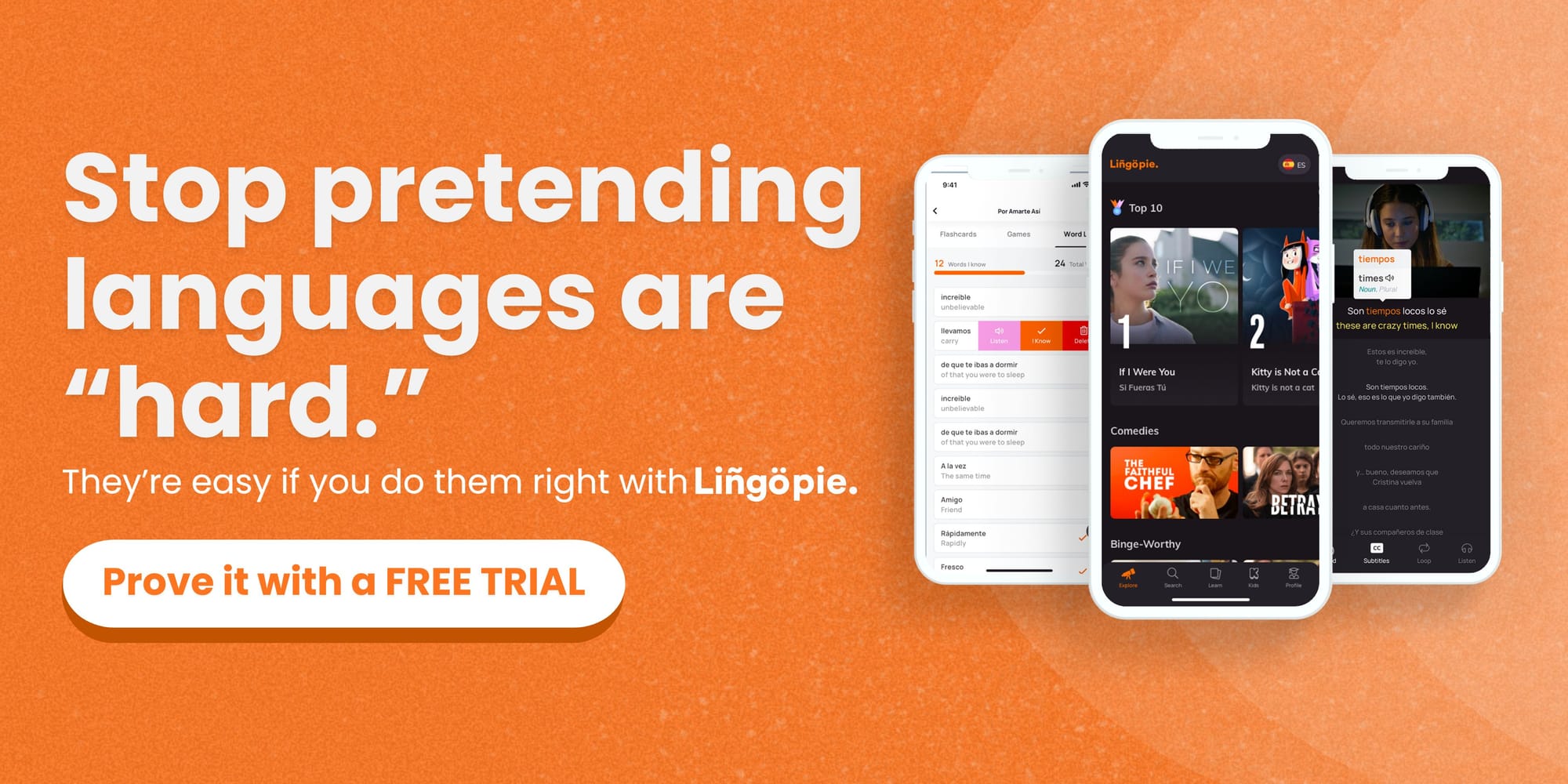
Lingopie teaches Hebrew through real Israeli TV shows and movies, with clickable subtitles that translate any word the second you tap it. This is the best app for learning Hebrew if your goal is understanding actual Israelis, because you're hearing real conversations between native speakers, not the slow scripted dialogue most courses record for learners.
Personally, I watched Bed & Biscuit on Lingopie, an Israeli family comedy about a dad and his daughter who move to a small village to run a doggie daycare and end up in a running feud with their neighbor. It's warm, silly, and genuinely fun to watch, which matters more than it sounds.
When a character gets angry, you learn how Israelis express frustration. When they joke around, you pick up humor and sarcasm that textbooks miss. You can rewind and replay scenes when someone speaks too fast or uses unfamiliar slang.
Lingopie chips away at the hardest part of learning Hebrew, which is following native speakers at native speed. After a few episodes, I started recognizing phrases from the show out in the wild. That's the moment this stops feeling like one of the best Hebrew learning apps on a list and starts feeling like the thing that's actually moving the needle.
| Pros | Cons |
|---|---|
| Learn through authentic Israeli entertainment | Requires subscription for full access |
| Exposure to real accents and cultural context | Better for intermediate learners |
| Interactive subtitles make vocabulary easy | Content library could be larger |
| Combines entertainment with learning | Needs some basic Hebrew foundation |
| Natural immersion experience | Limited structured grammar lessons |
Preply - Best App For One-On-One Hebrew Tutoring
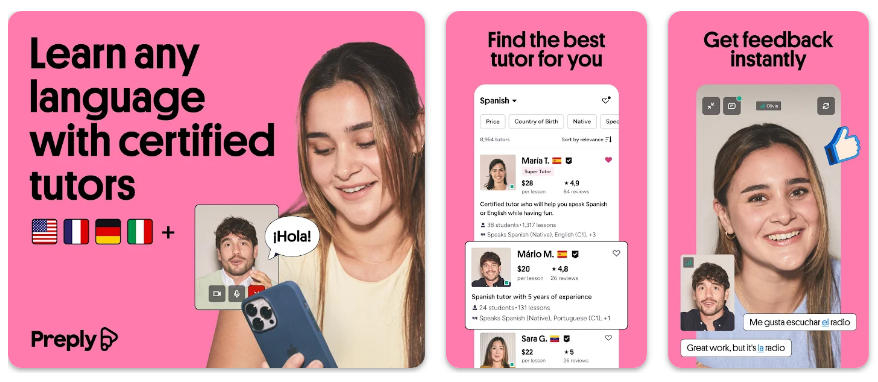
Preply connects Hebrew learners with native and professional Hebrew teachers for personalized video chat lessons. It excels in Cultural Context and Audio Quality and Pronunciation because you learn directly from native speakers who explain what Hebrew words mean and when to use them in Israeli situations.
I booked five Hebrew lessons through Preply to see how it held up. The live format does things no app can, since you get instant pronunciation correction, real-time grammar feedback when you're confused mid-sentence, and actual back-and-forth conversation instead of repeating phrases into your phone and hoping. For a language this tied to culture, religious tradition, and fast-moving modern slang, having a real Israeli on the other end is a genuine advantage.
The honest catch is consistency.
Tutor quality and teaching style vary a lot from one teacher to the next, so the experience depends heavily on finding the right match. It's worth reading reviews carefully and using a trial lesson before you commit to a regular slot. Once you click with a good tutor, though, this is one of the best apps for learning Hebrew if you want structured human feedback and you're ready to put in scheduled time.
| Pros | Cons |
|---|---|
| One-on-one lessons with native Hebrew speakers | Can be expensive with regular sessions |
| Personalized curriculum for your specific goals | Quality varies between different tutors |
| Instant feedback on pronunciation and grammar | Requires scheduling and time commitment |
| Cultural insights from Israeli teachers | Better for intermediate to advanced learners |
| Flexible scheduling around your availability | Need to find the right tutor match |
Write It! Hebrew - Best App for Learning the Hebrew Script
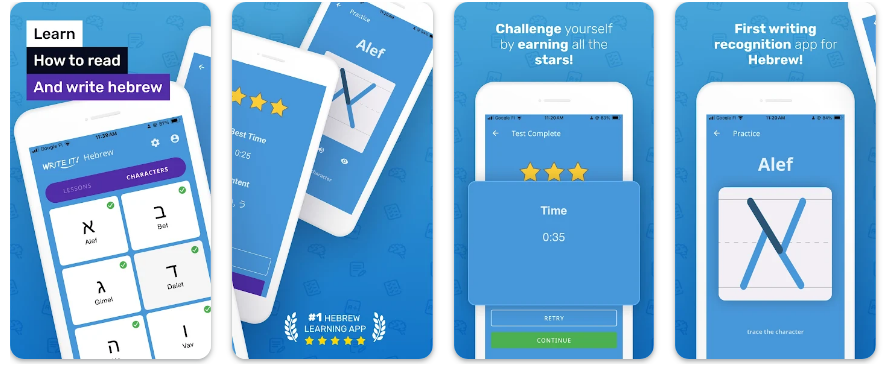
Write It! Hebrew is a focused app that teaches Hebrew handwriting through stroke-by-stroke practice and handwriting recognition. It does one job, the script, and it does it well, which makes it a smart companion to a broader course rather than a standalone way to learn Hebrew.
This matters more than beginners expect. Hebrew cursive looks nothing like the print letters you see in textbooks, and Israelis write in cursive every day. Learning correct letter formation and stroke order early builds the right muscle memory and saves you from bad habits that are a pain to unlearn later.
Using it, I found the practice genuinely helpful for getting the letters into my hand instead of just my eyes. Two honest gripes though. The drills get repetitive fast, since you're tracing the same forms over and over, and the handwriting recognition misread my strokes more than once even when I'd written the letter correctly, which got frustrating. For pure script practice, it earns its spot. Just don't expect it to teach you to speak.
| Pros | Cons |
|---|---|
| Teaches proper Hebrew letter formation | Only focuses on writing skills |
| Handwriting recognition technology | No speaking or listening practice |
| Perfect for learning Hebrew script | Limited vocabulary building |
| Short focused practice sessions | Can become repetitive quickly |
| Builds muscle memory for writing | Doesn't teach grammar or conversation |
Gus On The Go - Best Hebrew App For Kids
Gus on the Go is a game-based Hebrew app for children aged 2 to 7. An animated bird walks kids through basic vocabulary using colorful games and simple activities. It leans on native-speaker audio and a listen-and-repeat rhythm, which mirrors how young children pick up language in the first place.
It suits Hebrew well for little ones because kids can soak up the unusual sounds without worrying about reading letters or untangling grammar. The lessons stay short and playful, sticking to the essentials a child uses daily like colors, numbers, and animals. Going through it myself, the games held my attention, which is a good sign for the actual target audience, since a bored kid closes the app in seconds.
The flip side is range. The content is built for very young children and runs out quickly once a kid moves past the basics, and there's no real cultural depth for older learners. As a first, gentle introduction for a small child, though, it's one of the best apps to learn Hebrew for beginners in that age group.
| Pros | Cons |
|---|---|
| Perfect for young children learning Hebrew | Limited to very basic vocabulary |
| Colorful animations keep kids engaged | No advanced grammar or conversation |
| Native speaker pronunciation for kids | Better for ages 2-7 only |
| Safe environment with no ads | Content becomes too simple quickly |
| Short game-based learning sessions | Lacks cultural context for older learners |
HebrewPod101 - Best Hebrew App For Podcast-Style Content
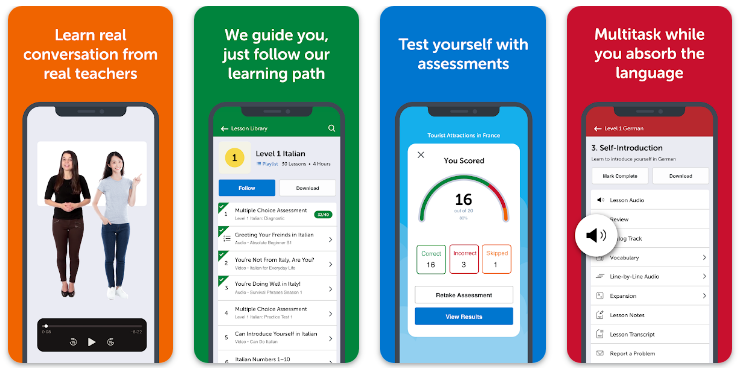
HebrewPod101 teaches through podcast-style lessons that fold Israeli culture into the language as you go. Most lessons come with context on Israeli society, Jewish holidays, and everyday customs, so you're not just memorizing words, you're learning when and how they're actually used. That cultural layer is a real strength and one of the things this app does better than most.
I listened to it on my commutes, which is where this format shines. You can learn hands-free while you're doing something else, and a lot of the lessons were genuinely good, with clear native-speaker audio and explanations that made the grammar make sense.
So why isn't it higher on my list? Because my motivation dropped off. Audio-only learning asks a lot of your discipline. With nobody checking in and no interactive feedback loop, it was easy to let a few days slide into a few weeks. The content is strong. Staying consistent with it on my own was the hard part.
If you're the kind of person who sticks with podcasts and audiobooks without external nudging, this could be the best app to learn Hebrew for you. If you need accountability to keep going, pair it with something more interactive.
| Pros | Cons |
|---|---|
| Rich cultural context in every lesson | Requires subscription for full access |
| Podcast format perfect for commuting | Can feel overwhelming for beginners |
| Native speaker audio with clear explanations | Less interactive than app-based learning |
| Covers beginner to intermediate levels | Limited speaking practice opportunities |
| Flexible learning at your own pace | Content library navigation can be confusing |
Best Apps to Learn Hebrew for Free
Paid platforms get most of the attention, but plenty of free learn Hebrew apps will carry you through the alphabet, core vocabulary, and even your first conversations before you ever reach for your wallet.
The only trade-off? Well, it's the depth.
Most free tools cap their lessons, run ads, or save the good advanced material for a paid tier, so they work best as a daily supplement or a starting point rather than a full path to fluency. Still, if your goal is finding the best apps to learn Hebrew language fundamentals without spending a cent, these four are where I'd point you first.
- Duolingo — The most popular free option, built around short gamified lessons and a streak system that keeps you coming back daily. It's great for building a habit and picking up starter vocabulary, though its grammar and conversation depth stay thin for a language as complex as Hebrew.
- Nemo Hebrew — A free vocabulary app focused on essential words and phrases, with native-speaker audio and a record-and-compare feature for your pronunciation. Handy for travel basics and tightening your accent, less so for grammar or reading.
- HelloTalk — A free language-exchange app that connects you with native Hebrew speakers for text and voice chat, complete with built-in correction tools. It's the closest you'll get to real conversation practice without paying, as long as you're comfortable messaging strangers.
- Drops — A visual, game-based vocabulary app where you match words to images, with Hebrew available and a free tier capped at five minutes a day. Good for visual learners and quick daily reps, though it won't teach you full sentences or grammar.
How Long Does It Actually Take to Learn Hebrew?
According to the US Foreign Service Institute, Hebrew takes roughly 44 weeks, or about 1,100 hours, to reach professional working proficiency. That sounds daunting, but most people see real, usable progress long before that finish line.
Here's what you can realistically expect:
- Basic conversations (3-6 months) - You'll master the alphabet, pick up essential vocabulary, and form simple sentences with 3-4 hours of daily study
- Intermediate level (6-12 months) - Your vocabulary expands significantly and you start tackling Hebrew grammar
- Advanced fluency (1-2+ years) - You can handle complex conversations and texts with confidence
However, several factors affect how quickly you progress. If you already know Arabic or another Semitic language, you’ll have a significant head start. Your native language background, study methods, and daily time commitment also matter.
Generally speaking, immersion experiences, structured classes, and one-on-one tutoring speed things up compared to studying alone. The real key is staying consistent and mixing up your learning methods.
Can You Learn Hebrew Through Apps?
You can get a long way with apps, but the people who actually reach fluency treat apps as one tool among several. Apps are excellent for daily vocabulary practice, drilling the alphabet, and getting comfortable with basic sentence structure. To get all the way to fluency, though, you'll want real conversation practice with native speakers, cultural immersion through Israeli media, and some structured grammar to tie it together.
This is exactly why I keep coming back to Lingopie for Hebrew. Watching popular Israeli shows with interactive dual subtitles puts you in front of how the language actually sounds in natural conversation, slang, emotion, cultural references and all. It's the closest thing to immersion you can get without a plane ticket, and it slots in alongside whatever else you're using.
Ready To Learn Hebrew?
I'm not gonna lie, Hebrew will frustrate you. The verb conjugations will spin your head, the right-to-left script will trip you up, and you'll mangle the pronunciation for a while. Every learner hits that wall where it feels like the language is fighting back, and most of the apps on this list will get you partway up it.
But eventually you'll catch the words in Hebrew songs without reading the translation, follow an Israeli news clip, and laugh at the joke a beginner would have missed entirely. That's the moment Hebrew stops being a subject you study and starts being a language you live in.
So if you're learning Hebrew from scratch, I highly recommend that you get real input, early and often. Not endless flashcards, not streaks for the sake of streaks, but hearing the language the way native speakers actually use it.
That's exactly what Lingopie is built for. You learn from real Israeli shows, with every word a tap away, so the vocabulary sticks because it came wrapped in a story you cared about. Curious? Click below to unlock a free 7-day trial to see it for yourself.
Frequently Asked Questions
What is the best app to learn Hebrew in 2026?
For most people, Lingopie is the strongest all-round pick because it teaches through real Israeli TV instead of isolated word lists. The right choice among the best apps to learn Hebrew 2026 has on offer still depends on your goal, since tutoring, audio, and script practice each suit a different kind of learner.
What are the best apps to learn Hebrew for free?
Free tools can absolutely get you started on the alphabet and core vocabulary, and several apps offer a usable free tier before asking you to pay. Most of the best apps to learn Hebrew for free work best as a daily supplement rather than a complete path to fluency.
Can I learn Hebrew from scratch using an app?
Yes, especially if you combine a script tool for the alphabet with an immersion app for listening. The strongest apps to learn Hebrew start you with simple input and build up, so you're never thrown into complex grammar with no foundation.
Which app is best for learning the Hebrew alphabet?
Write It! Hebrew is the most focused option for reading and writing the script, since it drills proper stroke order and letter formation. It only covers writing, so pair it with a broader app for speaking and listening.
Is Duolingo good for learning Hebrew?
Duolingo is fine for building a daily habit and picking up starter vocabulary, but its grammar and conversation depth are thin for a language as complex as Hebrew. Use it to stay consistent, then add a moe immersive tools like Lingopie for the parts it skips.
How many hours a day should I practice Hebrew?
Even 20 to 30 minutes of daily practice beats a long session once a week, because consistency is what locks the language in. If you're aiming to learn Hebrew fast, 1 to 2 focused hours a day with a mix of methods will move you noticeably quicker.