

Finding useful language resources can be frustrating. You try a random PDF, bookmark a guide that everyone’s sharing, and still feel like something’s missing. What often gets ignored are Turkish TV shows already sitting in your streaming apps. These are full of everyday conversations, cultural references, and the kind of language people actually use.
But hold up! Not every Turkish show will help. Others are so gripping, you’ll forget that was the plan. You hit play thinking you’ll practise your listening, then three episodes later, you haven’t paused once to check a word.
So, in this post, I’ll walk you through 7 Turkish TV shows that language learners consistently recommend. I'll also share the specific steps to turn your binge-watching sessions into effective study time and discuss why compelling input like this works so well for language acquisition.
- 10 Curse Words In Turkish To Sound Like A Native
- 5 Basic Turkish Grammar Tips For Beginners
- Is Turkish Hard To Learn? 7 Reasons Why It Is Not

Turkish TV Series As Comprehensive Input
Turkish TV shows represent the ideal example of compelling input in language learning. Linguist Stephen Krashen defines compelling input they’re as content so engaging that learners forget they're consuming material in a foreign language, entering a state of flow where acquisition happens automatically.
Television series create this effect by combining visual storytelling, emotional character development, and ongoing narrative tension that keeps viewers genuinely invested. When content is compelling rather than merely comprehensible, the brain processes language without conscious effort, making acquisition feel natural rather than forced.
| Comprehensible Input | Compelling Input |
|---|---|
| Understandable but may feel like work | So interesting you forget it's in another language |
| Learner can follow the meaning | Learner becomes emotionally absorbed |
| Slightly above current proficiency level | Creates flow state regardless of difficulty |
| Facilitates learning through understanding | Drives acquisition through engagement |
| Requires conscious effort to pay attention | Attention happens automatically |
| Good for structured learning | Superior for natural acquisition |
So basically, when you're invested in characters and storylines, your brain prioritizes retaining the Turkish dialogue because it's meaningful to you personally. Research shows that this emotional engagement creates stronger neural pathways than neutral content, which explains why learners who watch compelling TV shows often outperform those using traditional comprehensible materials.
Turkish TV Series For Learning Turkish
Life Song ⭐ On Lingopie

If you want to learn Turkish the way people actually speak it on the street, watching this Turkish TV series is one of the better choices for advanced learners. Life Song follows Hülya, a young woman juggling low-income jobs while putting her sibling through school, so the dialogue is grounded in everyday situations:
- Arguing with landlords
- Navigating workplaces
- Dealing with family pressure
...and more! Because the show blends drama, comedy, and romance, you hear Turkish across a range of emotional registers rather than a single tone. The thriller elements throw in some tense, fast-paced exchanges too, which trains your ear for rapid speech.
The Protector (Hakan: Muhafız)
Hakan isn’t your typical hero. He runs a dusty antiques shop in Istanbul’s Grand Bazaar and mostly worries about rent—until he learns he’s the last in a secret line of guardians sworn to protect the city from immortals. With ancient symbols, shadowy enemies, and a streetwise protagonist, The Protector brings Turkish mysticism into a modern, Netflix-style action fantasy.
While the story leans into legend, the language stays grounded in everyday Istanbul life. The dialogue also flows naturally between friends, family, and coworkers, which shows that it's perfect for picking up casual phrases and knowing when to use formal versus informal speech.
You’ll also catch common words around work, stress, and relationships, plus the occasional bit of mythological vocab that still pops up in Turkish books and media.
The Red Room ⭐ On Lingopie
This Turkish TV show is one of the best choices for learners who want to pick up formal and psychological vocabulary alongside everyday speech. Set inside a psychiatric clinic in Istanbul, The Red Room structures itself as a series of patient case studies, which means each episode introduces a self-contained emotional situation with its own register and vocabulary.
Here, you'll also hear how Turkish speakers talk about mental health, family conflict, and personal crisis, all in a context that demands precise language. For advanced learners, watching this Turkish series offers consistent exposure to monologues, clinical dialogue, and emotionally charged conversation, three of the harder speech patterns to master.
Kübra
What if a religious app started sending you messages that predicted the future? That’s the unsettling question at the heart of Kübra, a psychological thriller that follows Gökhan, a former soldier whose life spirals after receiving cryptic texts from an unknown sender. As his story unfolds, so does a larger commentary on belief, power, and the influence of digital platforms in Turkish society.
This one’s slower-paced and heavier on the ideas, but the language is rich. You’ll hear philosophical and religious vocabulary you’d find in opinion pieces, televised debates, or novels. There’s also plenty of media-related language (think live streams and online backlash), making it a solid pick for learners ready to move beyond casual conversation and into more layered, intellectual Turkish.
Yeşilçam ⭐ On Lingopie
Set during the golden age of Turkish cinema, this Turkish TV series gives you a rare window into both contemporary storytelling and mid-century Istanbul at the same time. The show follows an ambitious producer chasing success in the Yeşilçam film district, so the dialogue spans professional negotiation, creative conflict, and romantic tension across multiple social classes.
For advanced learners, that range matters. Watching Turkish content like Yeşilçam trains you to recognize formal speech, period-specific expressions, and the kind of dramatic monologue Turkish cinema was famous for producing. The pacing is deliberate, which makes it easier to follow complex exchanges without constantly rewinding.
The Tailor (Terzi)
Feeling fashionista? Well this one is for you! In this show, we'll see that Peyami is one of Istanbul’s most respected fashion designers. When he agrees to create a wedding dress for his best friend’s fiancée, he’s pulled into a tangle of family secrets and emotional fallout. The series blends quiet tension with careful character work.
Conversations focus on creative work, professional relationships, and family pressure. You’ll hear language related to tailoring and business, as well as how characters adjust their tone depending on social status. For learners, it offers plenty of natural speech used in upper-class, urban settings.
The Last Summer ⭐ On Lingopie
Few Turkish TV shows pack as many speech registers into a single storyline as The Last Summer. The plot puts a mafia boss, a state prosecutor, and a rebellious teenager in the same orbit, which means the show cuts between criminal street language, legal and institutional formality, and domestic family conversation in the same episode.
For anyone serious about reaching advanced fluency, watching this Turkish TV series is genuinely useful because it forces you to code-switch the way real Turkish speakers do. The thriller and action sequences also expose you to fast, high-pressure speech, where contractions collapse and words blur together. That is the Turkish you need to understand once subtitles come off.
Yakamoz S-245
Love shows like The Last Ship? Then you'll love Yakamoz S-245! This show is set after a global disaster makes sunlight deadly, and a submarine becomes one of the few safe places left. Marine biologist Arman joins the crew, where personal conflicts and survival tactics collide in close quarters.
The script includes military language, technical terms, and emergency communication. It’s a solid way to hear how Turkish is used in formal or high-pressure situations. Since the cast mixes civilians and officers, you also get a range of speaking styles and levels of politeness.
Shahmaran
In here, you'll meet Şahsu, a university lecturer, who travels to Adana to reconnect with her estranged grandfather. Once there, she discovers her visit was expected and tied to a local legend about a mythical creature and an ancient prophecy.
The show mixes academic language with phrases linked to folklore and belief systems. It also contrasts two different regional settings, Istanbul and Adana, letting you hear how speech varies across the country. If you’re interested in cultural context, it offers vocabulary rooted in tradition and modern life side by side.
How To Learn Turkish by Watching TV With Subtitles
Start with Dual Subtitles
The most effective approach begins with dual subtitles (both Turkish and English) simultaneously. This technique lets your brain connect Turkish words with their meanings while following the story naturally. To do this, start each new series with dual subtitles enabled so you can understand the plot and character relationships without getting lost.
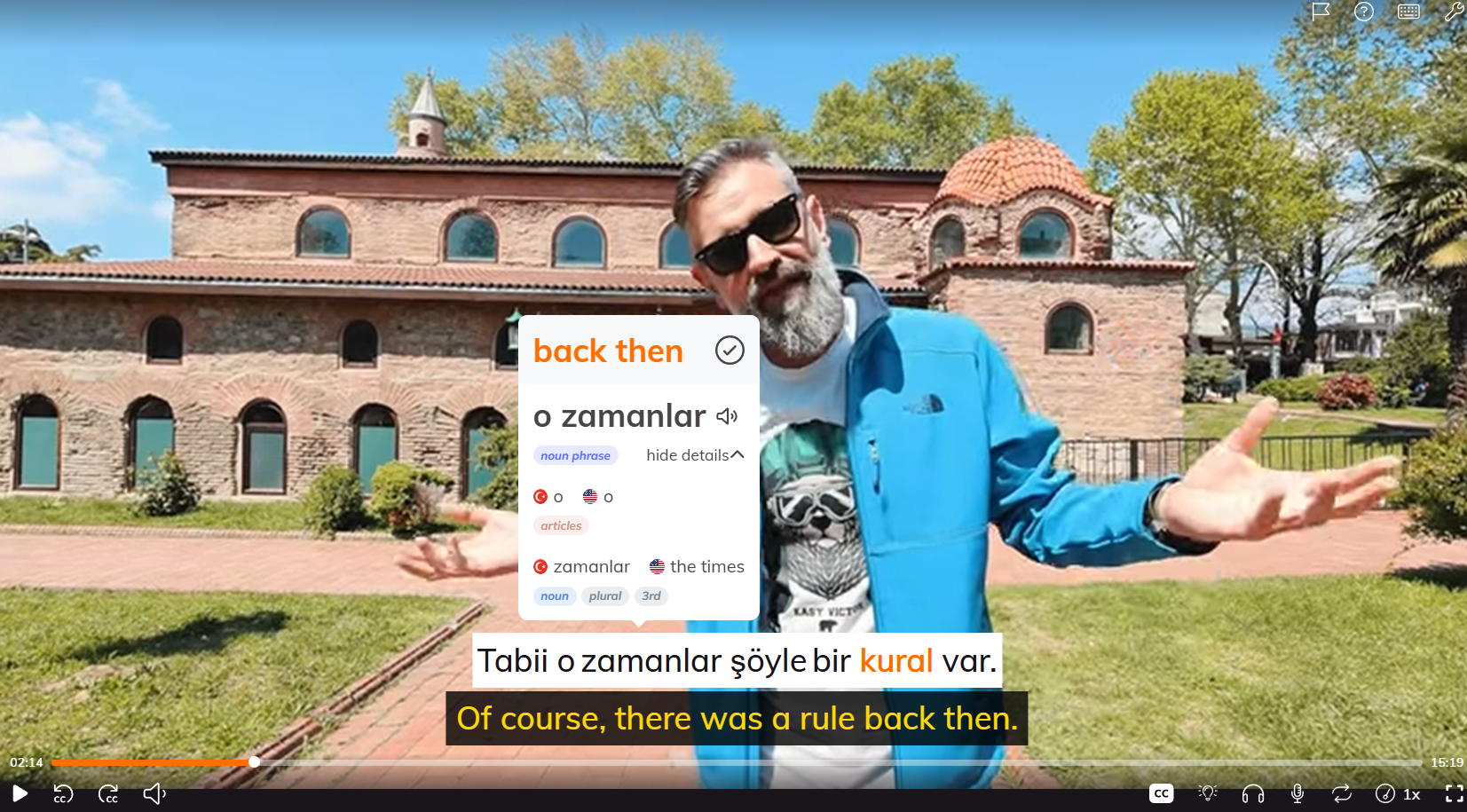
As you become more comfortable with the dialogue patterns and vocabulary, gradually reduce your reliance on the English subtitles.
Once you've watched several episodes with dual subtitles, switch to Turkish-only subtitles for the same content. This forces your brain to process Turkish directly rather than translating through English, which accelerates acquisition. The visual Turkish text also reinforces what you're hearing and helps you recognize written forms of words you've already heard spoken.
Active Learning Techniques
Don't just watch passively. Instead, interact with the content to maximize retention. Keep a notebook handy to jot down interesting phrases, cultural expressions, or vocabulary that appear frequently across episodes. Pause when you hear useful expressions and try repeating them aloud to practice pronunciation and intonation.
As much as possible, remember to focus on dialogue that matches situations you might encounter in real life, like ordering food, asking for directions, or expressing emotions.
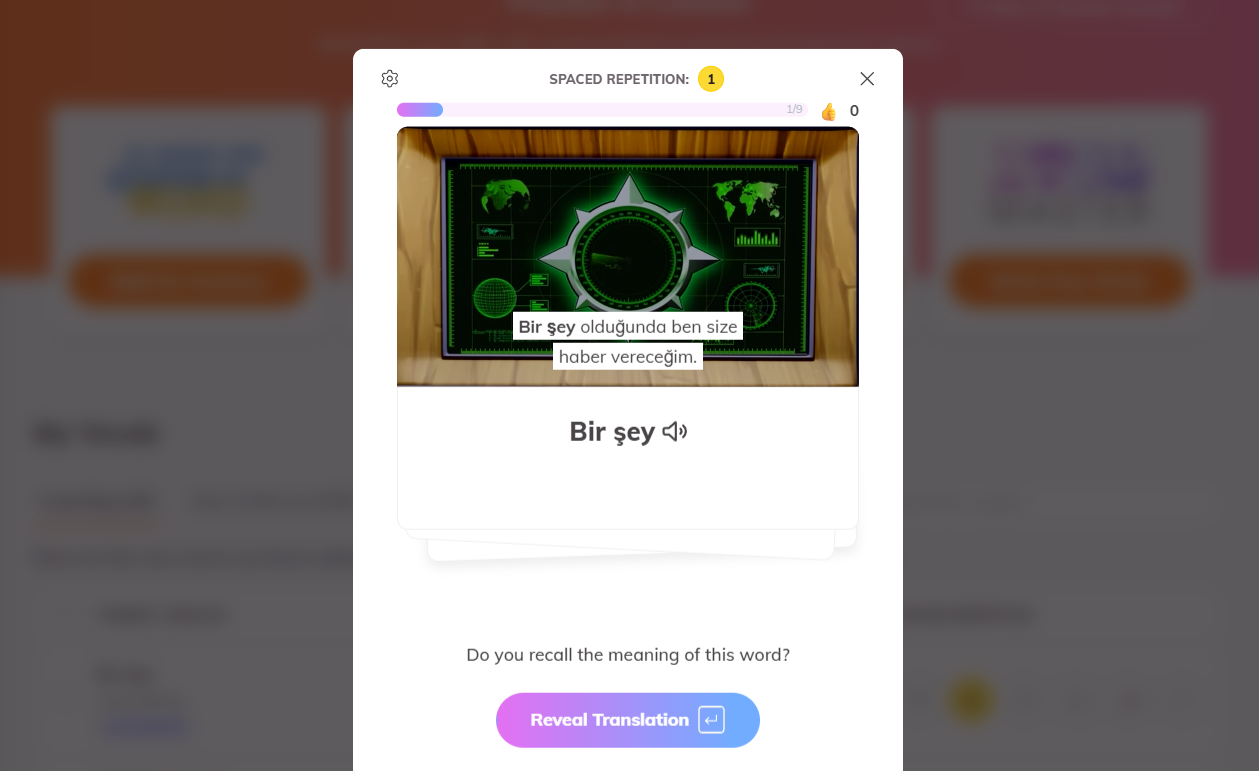
Create context-rich flashcards by writing down new words along with the specific scene where you encountered them. Instead of memorizing isolated vocabulary, you'll remember how Turkish speakers actually use these words in emotional or dramatic contexts. This contextual learning helps you understand not just what words mean, but when and how to use them appropriately in Turkish conversations.
The Loop-and-Learn Method
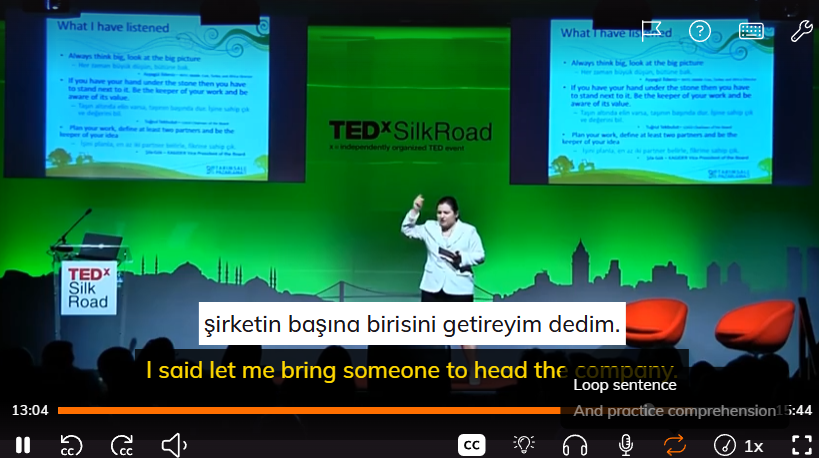
When you encounter challenging dialogue or rapid speech, use your streaming platform's playback controls to replay those segments until they become clear. Don't just move on when something sounds confusing—loop that conversation while following along with subtitles until your ear adjusts to the pronunciation and rhythm. This technique strengthens neural pathways and helps you recognize similar speech patterns in future episodes.
Focus particularly on emotional scenes where characters express feelings, argue, or have intense conversations. These moments often contain the most useful everyday vocabulary and showcase how Turkish speakers modify their tone and word choice based on emotional states. The dramatic context also makes these expressions more memorable than neutral dialogue.
Basic Turkish Words and Phrases You'll Encounter
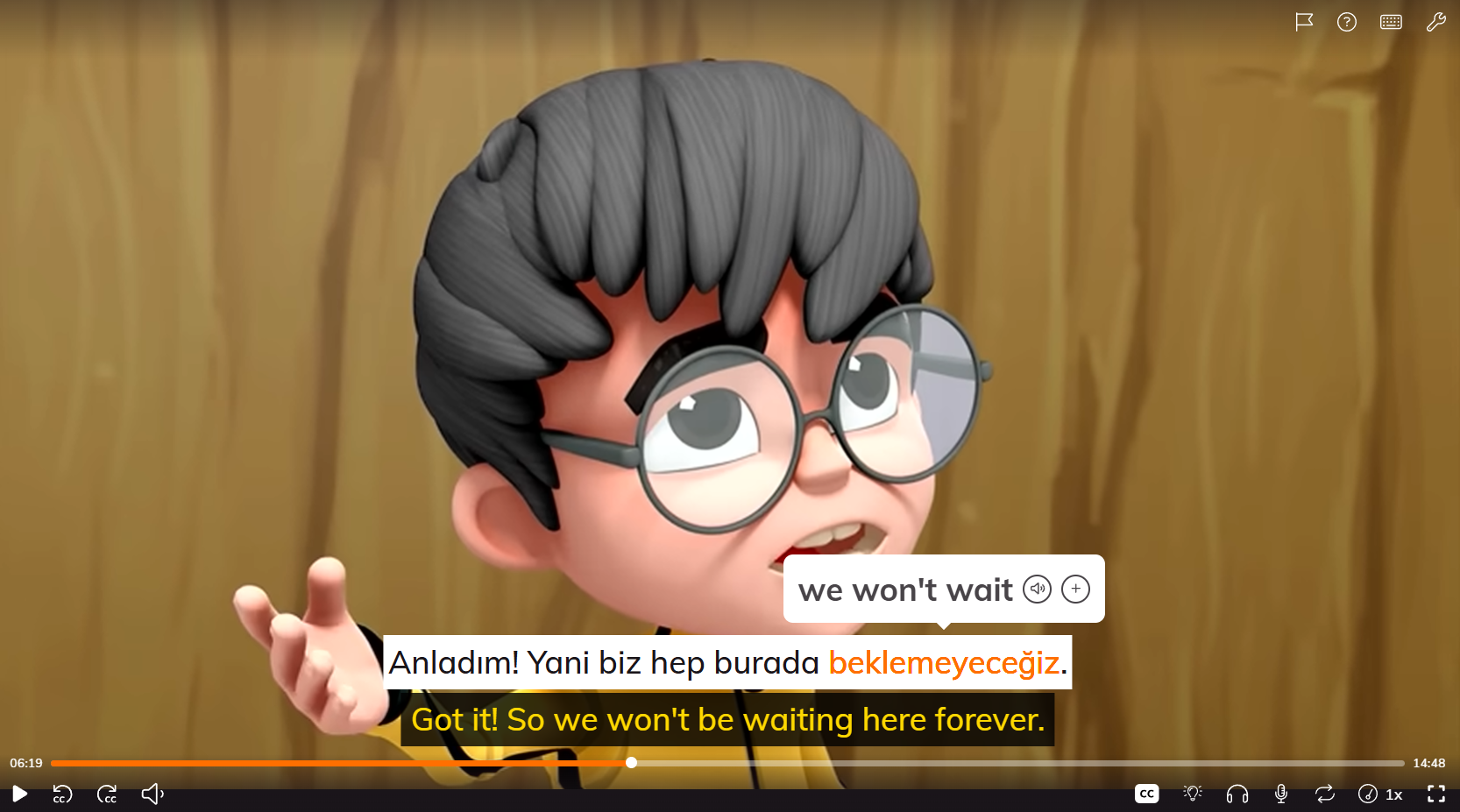
Turkish TV shows repeatedly use certain words and phrases that form the backbone of everyday conversation. The good news? Well, these expressions appear so frequently across different series that you'll start recognizing them within your first few episodes!
Here are some of those Turkish expressions that you'll definitely encounter.
| Turkish | English |
|---|---|
| Merhaba | Hello |
| Teşekkürler | Thank you |
| Lütfen | Please |
| Özür dilerim | I'm sorry |
| Evet/Hayır | Yes/No |
| Nasılsın? | How are you? |
| İyi geceler | Good night |
| Aile | Family |
| Seviyorum | I love (you) |
| Gel buraya | Come here |
| Git | Go |
| Ne yapıyorsun? | What are you doing? |
| Nerede? | Where? |
| Kim? | Who? |
| Neden? | Why? |
| Tamam | Okay |
| Tabii | Of course |
| Belki | Maybe |
| Şimdi | Now |
| Sonra | Later |
| Bugün | Today |
| Yarın | Tomorrow |
| Para | Money |
| İş | Work/Job |
| Ev | House/Home |
| Yemek | Food |
Try These Shows with Enhanced Learning Tools
And there we have our complete list of Turkish TV shows that’ll transform your language learning without feeling like work. Each series offers something different, from modern Istanbul slang to historical vocabulary, so pick whichever storyline grabs your attention first.
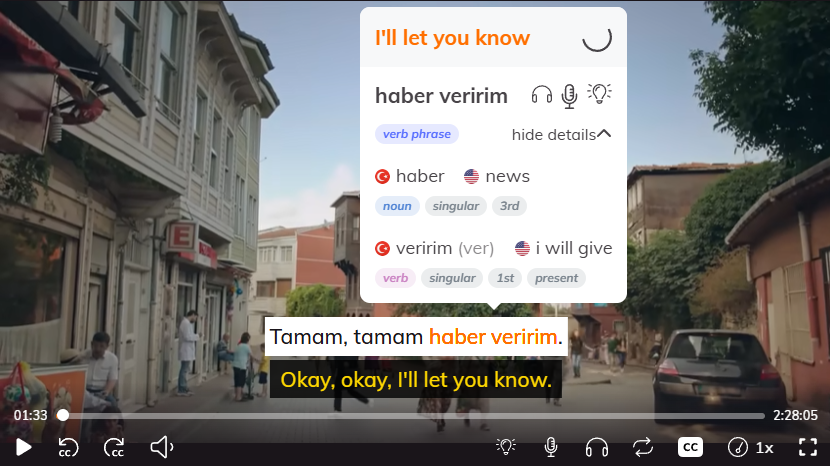
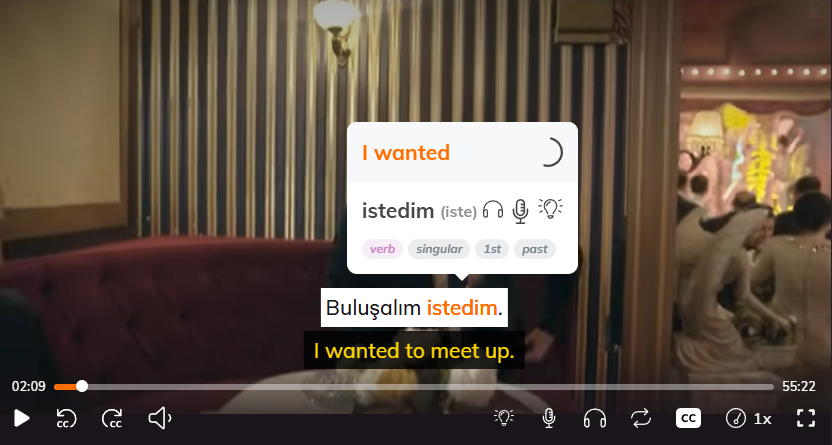
For the best learning experience, try Lingopie, which has it's own curated content but lets you click any word for instant translations and creates flashcards from the actual scenes where you heard them.
The best part? You don’t need to overthink any of this. Just watch, get hooked on the drama, and let your brain naturally absorb Turkish along the way. With Lingopie’s interactive features helping you along, you'll be understanding conversations and picking up cultural nuances that no textbook could ever teach you.


![9 Best Israeli TV Shows in Hebrew [2026 Watchlist]](/blog/content/images/size/w1200/2026/02/Hebrew-TV-Shows.jpg)



)