
Most people feel pretty good about German pronunciation until they actually try to have a conversation. Reading slowly is fine. The moment it speeds up, every tricky letter in the German alphabet reverts back to its English sound by instinct, and suddenly, nobody understands you.
In this post, you’ll learn the 10 German letters of the alphabet that sound nothing like what you would expect, with a real word example, and tips on how to stop defaulting to English.

What Makes the German Alphabet Different From English
The German alphabet uses the same 26 base letters as English, plus four special characters: Ä, Ö, Ü (the umlauts) and ß (the Eszett or sharp S). That brings the full count to 30. But the real issue is not the extra letters. It is the letters you think you already know.
German is a phonetic language, which means once you know the rules, you can read almost any word aloud correctly. English is not phonetic, which is actually the bigger problem here. English speakers are wired to expect inconsistency:
- "tough" does not rhyme with "though."
- “cough” does not sound like “bough.”
- “great” does not rhyme with “threat.”
In German, the rules hold. If you know how a letter sounds, it sounds that way every time. The learning curve is front-loaded, but after that, it gets easier.
10 German Alphabet Letters That Might Be Confusing
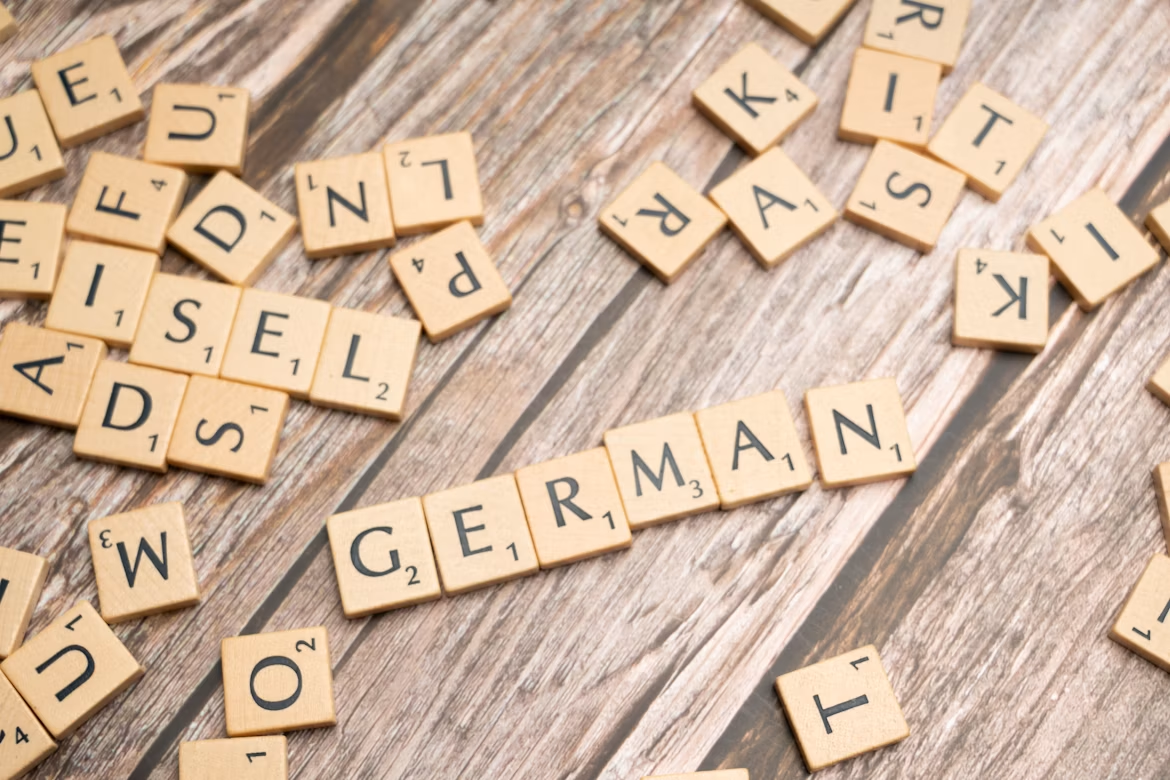
Here are the German alphabet letters pronunciation problems you are most likely to encounter, in the order learners usually hit them.
| Letter | Sounds Like (English) | Quick Example |
|---|---|---|
| W | English V | Wasser (water) = “Vasser” |
| V | English F | Vogel (bird) = “Fogel” |
| J | English Y | Ja (yes) = “Ya” |
| Z | English TS | Zeit (time) = “Tsait” |
| Ä | “air” or “ay” (short/long) | Mädchen = “Mayd-shen” |
| Ö | No direct English equivalent (rounded lips, say “ay”) | schön = “shern” |
| Ü | No direct English equivalent (rounded lips, say “ee”) | über = “ue-ber” |
| R | Guttural, from the back of the throat | Rot (red) = “Rhot” |
| CH | Soft hiss after e/i or guttural after a/o/u | ich = “ish”, ach = “akh” |
| ß | Always a sharp SS sound | Straße = “Strah-se” |
The Letter W
In German, W is pronounced like the English V. This one catches English speakers completely off guard because we see W and automatically make a rounded lip sound. In German, that same letter requires your top teeth to touch your lower lip.
- Wasser (water) sounds like "Vasser"
- Wein (wine) sounds like "Vine"
- Weg (way) sounds like "Veg"
The Letter V
If W sounds like V, what does V sound like? In most German words, V sounds like the English F. Vogel (bird) is "Fogel". Vater (father) is "Fater". Vielen Dank (thanks very much) starts with an F sound.
The exception: in words borrowed from other languages (like Violine or Variation), V is sometimes pronounced as an English V. But for everyday native German words, default to F.
The Letter J
German J is always pronounced like the English Y in "yes" or "yellow." So Ja (yes) = "Ya", Jahr (year) = "Yar", Jetzt (now) = "Yetzt."
The reason English speakers still mess this up even after learning the rule: we have "J" hardwired to a hard DZH sound (like "jump" or "jacket"), and that reflex kicks in under pressure. The fix is to practise specifically with words like: jemand (someone) and jedes (every).
The Umlaut Ä
The German alphabet umlaut letters start with Ä, which has two pronunciations depending on whether the vowel is short or long. The long Ä sounds like the English "ay" in "say" or "day". The short Ä sounds like the English "e" in "bed" or "head".
Examples: spät (late) uses the long Ä, sounding like "shpayt". Mädchen (girl) uses a short Ä, sounding like "Mayd-shen" with a quick clipped vowel. This one is the most approachable of the three umlauts for English speakers because the sounds already exist in English.
The Umlaut Ö
The Ö sound does not exist natively in English, which makes it harder to pin down. The closest approximation: round your lips as if you are about to say "oo", then say "ay" instead. The sound sits somewhere between the two.
Common examples:
- schön (beautiful) is roughly "shern" with rounded lips
- Öl (oil) is "erl" with rounded lips
- hören (to hear) is "hern"
The lips doing extra work here is the key. If your lips are flat when pronouncing it, then you are not making the sound.
The Umlaut Ü
The ä ö ü pronunciation challenge peaks with Ü. Round your lips as if you are about to whistle or say "oo", then say "ee" instead. It should feel strange at first. That strangeness means you are doing it right.
Examples:
- über (over/above) starts with this sound
- fühlen (to feel) uses a long Ü
- Brücke (bridge) uses a short Ü.
Many English speakers are familiar with über from the brand name or general English slang, but they rarely pronounce it correctly. The lips need to be pursed, not spread.
The Letter R
The German R is not the American R at all. It is produced at the back of the throat, similar to the sound you make when gargling. Some German dialects do roll it with the tongue (especially in the south), but standard German R is guttural.
At the start of a word (Rot = red, Reich = empire), the R is stronger and clearly guttural. At the end of a word or after a vowel (Bruder = brother, Wasser = water), the R softens to almost an "uh" sound and can be nearly silent. This variation depends on word position, not on any additional rule.
The Letter Ch
This is one of the most inconsistent-seeming German alphabet letters pronunciation challenges because CH has two different sounds. After A, O, U (back vowels), it is a guttural sound made at the back of the throat, like clearing phlegm. After E, I (front vowels), it becomes a soft hiss made at the front of the mouth, almost like "sh" but lighter.
Here are some examples:
- Bach (stream) uses the guttural CH.
- ich (I) uses the soft hiss
- Buch (book) is guttural
- Milch (milk) is soft
The rule is consistent once you know it. The vowel before CH tells you which sound to make.
The Letter ß (Eszett / Sharp S)
The ß (also called the Eszett or sharp S) looks unfamiliar, but it sounds simple: it is always a sharp, double SS sound.
- Straße (street) = "Strah-se"
- heißen (to be called) = "high-sen"
- groß (big) = "grohs".
The one practical thing to know is that ß appears after long vowels and diphthongs, while ss appears after short vowels. So Straße has a long A sound and uses ß, but müssen (must) has a short U sound and uses ss.
How to Practice German Alphabet Pronunciation on Your Own
Knowing the rules is step one. Getting the sounds into muscle memory requires repetition with real German audio. Here is what actually works.
Use Native German Audio to Train Your Ear
The single most effective thing you can do early on is listen to native speakers saying the same words repeatedly. Audiobooks, podcasts, and German-language YouTube channels all work for this. The goal is to start recognizing how real speakers produce each letter combination you have been studying.
Pay specific attention to W, V, J, Z, and the three umlauts when listening. When you hear a word that contains one of these, pause and repeat it aloud. The repetition trains your mouth to produce the sounds automatically, rather than reverting to English defaults under pressure.
Watch German TV Shows to Hear Letters in Real Speech
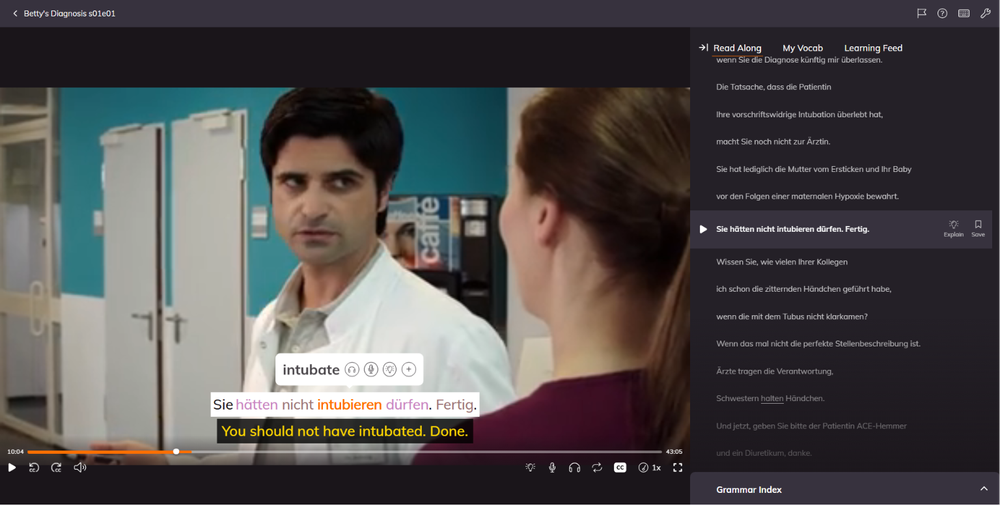
Watching German shows is one of the most underrated tools for how to pronounce German letters correctly. When you hear an actor say Wasser twenty times across an episode, the V sound stops feeling unnatural. Context and repetition together are what actually shift pronunciation habits.
This is exactly where Lingopie helps!
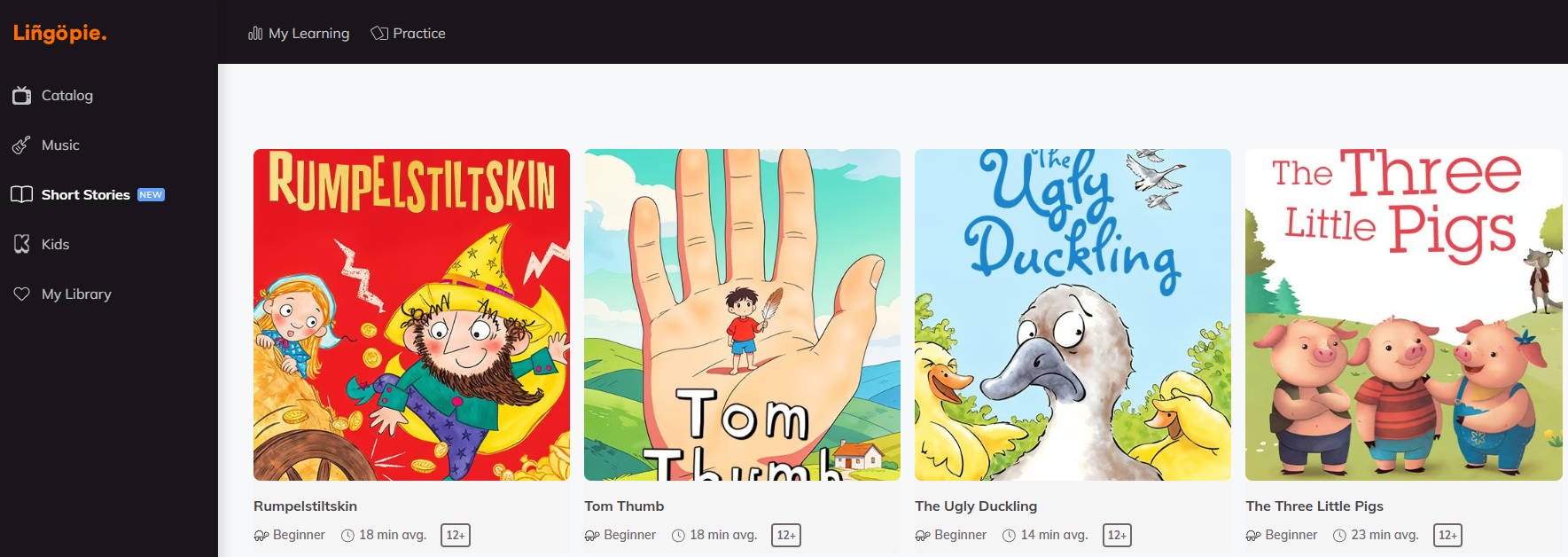
Lingopie lets you watch real German TV shows and films with dual subtitles and interactive vocabulary tools built in, so you can tap on any word and immediately hear a native speaker say it in context. For the German alphabet for beginners, hearing letters in actual words used in actual sentences beats any drilling exercise.
Try Lingopie free and start training your ear on real German speech from day one.
Best Tools to Learn the German Alphabet in 2026
Here is a quick-reference list of what works at each stage of learning German alphabet sounds:
- Lingopie - Watch German TV shows and films with interactive subtitles. Best for hearing letters in real, natural speech.
- Forvo - Native speaker audio for individual words. Useful for checking the pronunciation of specific problem letters.
- Deutsche Welle (DW Learn German) - Free structured German lessons including alphabet and pronunciation fundamentals. Well-organized for beginners.
- Anki - Flashcard app for drilling letter sounds and vocabulary. Works best when audio clips are included in the deck.
- YouTube (Easy German, Deutsch für Euch) - Free video content from native speakers covering pronunciation rules in depth with examples.
For a full comparison of German language for beginners tools available in 2026, the above list covers the free and paid options most learners find practical at the A1-B1 stage.
 Jonathan Del Prado
Ready to learn German?
Learning the German alphabet is not just about memorizing a list of sounds. It is about retraining instincts that have been hardwired since you first learned to read. The letters covered in this post are the ones that will trip you up the most at speed, in real conversations, and when you are too tired to think carefully.
Get these right, and everything else in German pronunciation gets easier. And once they click, they stick!
FAQs
Does Lingopie have German content for complete beginners?
Yes. Lingopie includes German content across difficulty levels, including shows, music, short stories, and kid-friendly content suitable for A1 and A2 learners. The platform lets you filter by level and adds interactive subtitles in German and your native language simultaneously.
How quickly can I improve my German pronunciation with TV Shows?
Most learners notice a difference in their listening comprehension within four to six weeks of regular exposure (roughly 20 to 30 minutes per day). Pronunciation improvement takes a bit longer because it requires active output practice. The best combination is to watch German content for input, then immediately try to repeat the phrases you hear. That back-and-forth between listening and speaking is what trains how to speak German naturally over time.
Is A1 German enough to watch German TV shows and understand them?
Not enough to understand everything, no. With A1 German, you might catch basic greetings, simple sentences, and familiar words, but most native German TV shows will still feel too fast and overwhelming.
What A1 is good for is using TV shows as training material:
- watching kids’ shows or slow learner content,
- using German subtitles,
- pausing often,
- recognizing repeated phrases,
- building listening stamina.
Most learners start understanding simple TV content more comfortably around A2 to B1, especially with subtitles.
Is German pronunciation consistent or are there exceptions like in English?
German is far more consistent than English. Once you learn the core rules for each letter and letter combination, you can read almost any word correctly without prior exposure. The main exceptions involve borrowed words from other languages (which sometimes keep their original pronunciation) and the CH sound, which changes based on surrounding vowels.
Can you write German without using umlauts?
Yes, technically. When typing on a keyboard without German characters, it is accepted practice to substitute ae for ä, oe for ö, ue for ü, and ss for ß. So schön becomes schoen and Straße becomes Strasse. Native speakers will understand it, but it looks informal.



![Is German Easy to Learn for English Speakers? Real Data from 14k Learners [2026]](/blog/content/images/size/w300/2026/03/is-german-easy-to-learn-for-english-speakers.jpg)