

If you’ve been learning Spanish and the holidays are around the corner, you’re probably wondering how to wish someone a Merry Christmas in Spanish. The most famous phrase is Feliz Navidad (yes, the one from the song!), but there’s more to Spanish Christmas greetings than that catchy tune.
Depending on where you are and who you’re talking to, you might also hear Felices Fiestas (Happy Holidays) or Feliz Año Nuevo (Happy New Year) thrown into the mix. But what exactly do these phrases mean?
In this post, we’ll give you the lowdown, so you know exactly when and how to use each greeting. You’ll learn the literal translations, pick up regional variations from Spain to Latin America, and get a few bonus phrases that’ll help you sound more natural when spreading holiday cheer in Spanish.
- 7 Best Spanish Language Documentaries To Watch
- 40+ Spanish Greetings You Must Learn in 2026
- The Fastest Way to Learn Spanish In 2026 [Guide]

How To Wish Merry Christmas In Spanish?
The most common way to wish someone a Merry Christmas in Spanish is Feliz Navidad. Feliz means "happy" or "merry," and Navidad means "Christmas." Put them together, and you've got the Spanish equivalent of "Merry Christmas."
The word feliz comes from Latin and is used in other celebrations too, like Feliz cumpleaños (Happy Birthday) or Feliz Año Nuevo (Happy New Year). Navidad also has Latin roots, coming from nativitas, which refers to the nativity or birth of Jesus.

Spanish Phrases for Holiday Greetings
Beyond Feliz Navidad, there are several other greetings you'll hear during the holiday season in Spanish-speaking countries. Here are the most common ones and when to use them.
Feliz Navidad
This is the most common and versatile Christmas greeting in Spanish. It works in any situation, formal or casual, and is universally understood across all Spanish-speaking countries.
Felices Fiestas
This is a more formal, inclusive greeting that covers Christmas, New Year’s, and the entire festive season. It translates to "Happy Holidays," with felices being the plural form of feliz (happy) and fiestas meaning "holidays" or "festivities." You won’t hear it much in casual conversation, but it’s common in professional settings, holiday cards, corporate emails, and shop signage when you want to keep things polite and neutral.
Felices Navidades
This is the plural version of Feliz Navidad, though less commonly used in everyday speech. It means "Happy Christmases" or "Merry Christmases," with felices (plural of happy) and Navidades (plural of Christmas). It appears more often in written greetings and formal contexts, and some Spanish speakers use it interchangeably with the singular form.
¡Que pases una feliz navidad!
This one's warmer and more personal than a simple Feliz Navidad. It means "I hope you have a Merry Christmas" or "May you have a Merry Christmas." Que pases means "that you have" or "that you spend," una is "a," and feliz navidad is "merry Christmas." Use this when you want to sound more thoughtful or genuine, especially with friends and family you're close to.
¡Feliz Navidad y Próspero Año Nuevo!
This classic greeting covers both Christmas and New Year in one go. It means "Merry Christmas and a Prosperous New Year." Próspero means prosperous, and Año Nuevo is New Year. You'll hear this everywhere as December wraps up and people start thinking about the year ahead. It's perfect for holiday cards, emails, or when you want to wish someone well for both celebrations at once.
Mis mejores deseos en esta Navidad
This is a more formal, heartfelt way to send your Christmas wishes. It translates to "My best wishes this Christmas." Mis mejores deseos means "my best wishes," en means "in" or "during," and esta Navidad is "this Christmas." It's great for professional contexts, like messages to colleagues, clients, or anyone you want to sound polished and respectful with.
Te deseo una feliz navidad
This one's personal and direct. It means "I wish you a Merry Christmas." Te deseo is "I wish you," una is "a," and feliz navidad is "merry Christmas." The te makes it feel warm and sincere, so it's perfect for close friends and family. If you need to be more formal, swap te for le to say "Le deseo una feliz navidad" when talking to someone you'd address more respectfully.
Spanish Phrases for Holiday Greetings
Once you’ve got the basics down, here are a few more phrases that'll help you sound natural during the holidays.
Feliz Noche Buena
This means "Happy Christmas Eve." Noche Buena literally translates to "Good Night" but refers specifically to Christmas Eve, which is a huge celebration in Spanish-speaking cultures. Use this on December 24th when wishing someone well for the evening festivities.
Feliz Navidad y Felices Fiestas
This combines "Merry Christmas" and "Happy Holidays" into one greeting. It's a safe, all-encompassing phrase that covers Christmas and the holiday season in general. Perfect when you want to wish someone well without getting too specific.
Tengas una Feliz Navidad
This means "May you have a Merry Christmas." Tengas is the subjunctive form of "have," giving it a warm, hopeful tone. It's a bit more personal than just saying Feliz Navidad and works well with friends or people you know casually.
Pases una Feliz Navidad
Similar to the previous phrase, this means "May you spend a Merry Christmas." Pases comes from pasar (to spend or pass time), so it emphasizes enjoying the day itself. Use it when you want to sound thoughtful without being overly formal.
Les deseo una Feliz Navidad
This translates to "I wish you (plural) a Merry Christmas." The les makes it plural, so you're addressing a group rather than one person. Great for holiday cards to families, teams at work, or any situation where you're greeting multiple people at once.
Local Christmas Day Celebrations
Christmas traditions vary across Spanish-speaking countries, and some celebrations might surprise you. Here are a few unique ones worth knowing about.
Los Reyes Magos
This is the celebration of the Three Wise Men on January 6th, and in many Spanish-speaking countries, it's a bigger deal than Christmas Day itself. Kids don't get presents on December 25th, but on the night of January 5th, when they leave their shoes out for the Three Kings to fill with toys and sweets.
The next day, families share Roscón de Reyes, a sweet crown-shaped bread with hidden surprises inside. Cities across Spain and Latin America hold huge parades with elaborate floats and actors dressed as the Three Kings tossing sweets to the crowds.
Caga Tió
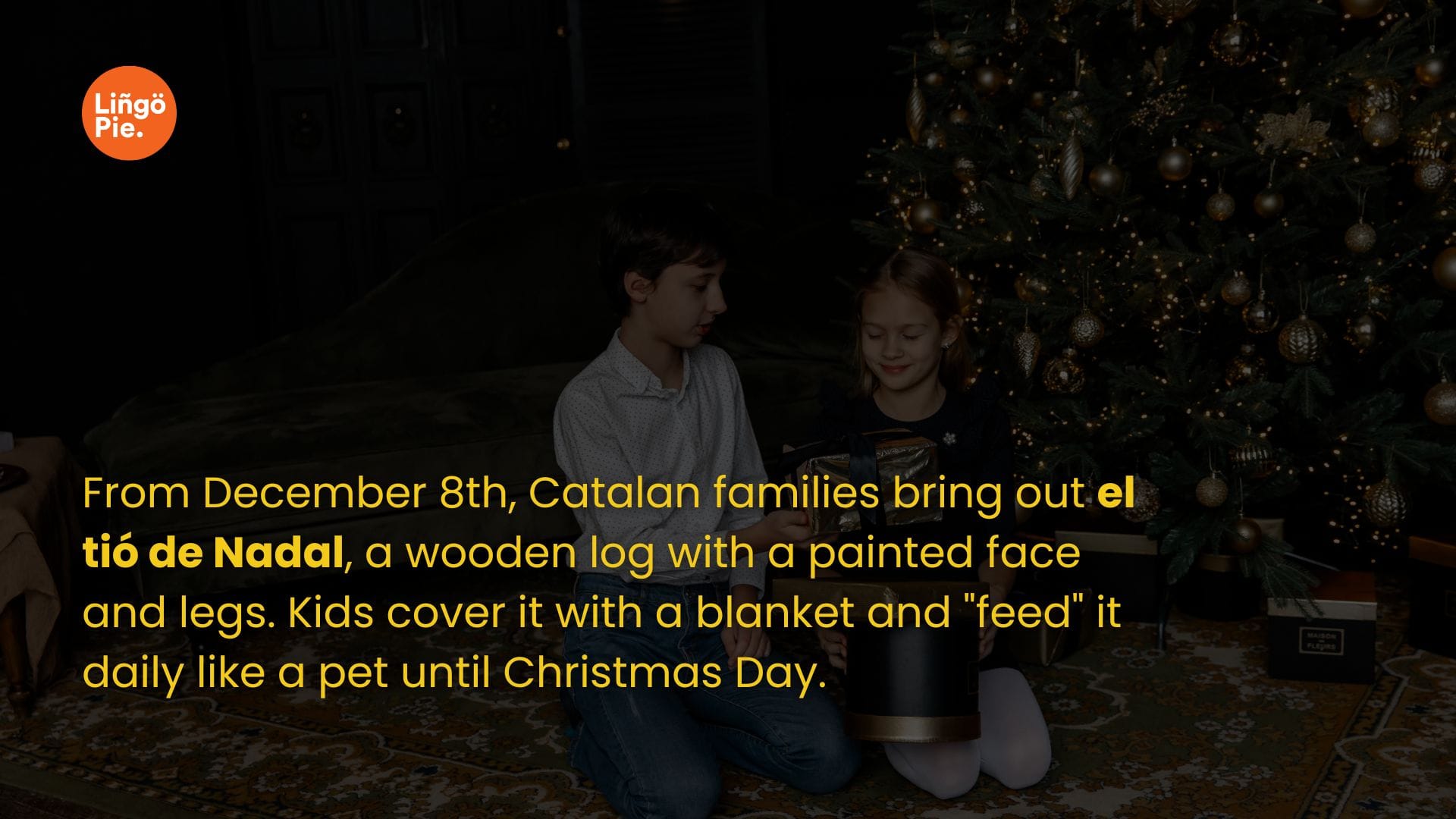
This is Catalonia’s weirdest and most loved Christmas tradition. Caga Tió means "pooping log," and it's a hollow log with a painted face, stick legs, and a little red hat. Starting in early December, families "feed" the log scraps and cover it with a blanket.
On Christmas Eve or Christmas Day, kids beat it with sticks while singing songs, and the log "poops out" small gifts, candies, and treats. It's bizarre, hilarious, and Catalans wouldn't have Christmas any other way.
La Quema del Diablo
This Guatemalan tradition kicks off Christmas on December 7th with fire and fireworks. La Quema del Diablo means "The Burning of the Devil," and at 6 p.m., people drag old furniture, rubbish, and devil effigies into the streets and set them ablaze.
The idea is to burn away evil spirits and bad energy before Christmas arrives. Entire neighbourhoods gather around the flames while fireworks light up the sky. It's loud, dramatic, and one of the most intense ways to start the holiday season.
 Genine Torres
Christmas Food and Drinks In Spanish
Christmas in Spanish-speaking countries means one thing: food, and lots of it. If you’re celebrating with Spanish-speaking friends or travelling during the festive season, here are the most common Christmas foods and drinks you’ll come across.
Food/Drink | Country/Region | What It Is |
|---|---|---|
Roscón de Reyes | Spain | A sweet, ring-shaped bread decorated with candied fruit, eaten on January 6th for Three Kings Day |
Turrón | Spain | A nougat candy made with almonds, honey, and egg whites, popular throughout the Christmas season |
Bacalao | Spain, Latin America | Salted cod prepared in various ways, a traditional Christmas Eve dish |
Tamales | Mexico, Central America | Corn dough filled with meats, cheese, or sweets, wrapped in corn husks and steamed |
Ponche Navideño | Mexico | A warm fruit punch made with tejocote, guava, cinnamon, and sometimes spiked with rum |
Pan de Jamón | Venezuela | A sweet bread filled with ham, olives, and raisins, served during Christmas dinner |
Hallacas | Venezuela | Similar to tamales but wrapped in plantain leaves, filled with a stew of meats and vegetables |
Rompope | Mexico | A creamy, eggnog-like drink flavored with vanilla and cinnamon, often spiked with rum |
Polvorones | Spain, Latin America | Crumbly shortbread cookies dusted with powdered sugar, popular during the holidays |
Buñuelos | Colombia, Mexico | Fried dough balls or fritters, crispy on the outside and soft inside, often drizzled with syrup |
Coquito | Puerto Rico | A coconut-based drink similar to eggnog, made with rum, coconut milk, and spices |
Pavo Relleno | Various | Roast turkey stuffed with fruits, nuts, and spices, common in many Latin American countries |
Want to Celebrate Christmas in Spanish?
Learning these Christmas phrases is a great start, but if you want to connect with Spanish-speaking culture during the holidays truly, you need to hear how people actually use the language. That's where Lingopie comes in.
Lingopie is a language learning platform that teaches Spanish through real TV shows and movies, so you're not just memorizing phrases from a textbook. You'll hear native speakers using Feliz Navidad, Felices Fiestas, and all the other greetings in actual conversations, complete with the tone, emotion, and context that make them feel natural.
This Christmas, why not make language learning part of your celebration? Whether you’re brushing up on your Spanish before a holiday trip, trying to impress Spanish-speaking family and friends, or just want to understand what everyone’s saying in those festive telenovelas, Lingopie gives you the tools to learn naturally and enjoyably.
Sign up today and spend the holidays learning Spanish the way it's actually spoken, one binge-worthy episode at a time.
FAQ
Is Feliz Navidad Spanish Or Mexican?
Feliz Navidad is Spanish, not specifically Mexican. It's used across all Spanish-speaking countries, including Spain, Mexico, and Latin America.
How do Mexicans say "merry Christmas"?
Mexicans say "Feliz Navidad" just like most Spanish speakers. You might also hear "Felices Fiestas" or "Feliz Noche Buena" on Christmas Eve.
Is it okay to say "Feliz Navidad"?
Yes, it's perfectly fine to say Feliz Navidad. It's the most common and widely accepted Christmas greeting in Spanish, understood everywhere.
Do you say "Happy Noche Buena"?
You'd say "Feliz Noche Buena," not "Happy Noche Buena." It means "Happy Christmas Eve" and is commonly used on December 24th.

![How To Say Happy New Year In Greek [Guide]](/blog/content/images/2025/12/how-to-say-happu-new-year-In-Greek-1.png)
![How To Say Happy Birthday In Spanish: 17+ Easy Ways [GUIDE]](/blog/content/images/size/w300/2026/03/Happy-Birthday-In-Spanish.jpg)