
The Korean alphabet might be easy to learn, but building an actual vocabulary? That's where most learners hit a wall. You need thousands of words before you can hold a real conversation, and staring at textbook lists isn’t going to cut it.
I spent two weeks testing six popular Korean flashcard apps to figure out which ones actually work. Spoiler: most of them are either trying too hard or not trying at all. Only two made it past day three on my phone. Curious? Read on below!
- 6 Best Korean Drama Apps For Language Immersion
- How Long Does it Take to Learn Korean? Guide + Tips
- 6 Best Korean Translator Apps And How To Use Them

Why Use Flashcards When Learning Korean?
You need to use flashcards because your brain doesn't retain vocabulary from passive exposure alone. Reading a word once in a textbook or hearing it in a drama isn't enough. Your brain needs active recall, the process of forcing yourself to retrieve information from memory, to actually move words into long-term storage.
Flashcards can make THIS happen! The best apps use spaced repetition, showing you words right before you're about to forget them, which maximizes retention without wasting time on words you already know cold.
Here's what makes flashcards essential for Korean:
- Hangul recognition speed – Flashcards train you to read Korean characters instantly without translating to romanization first
- Contextual learning – Example sentences show you how words actually work in real conversations, not just dictionary definitions
- Audio reinforcement – Hearing native pronunciation while reviewing builds listening skills alongside vocabulary
- Portable practice – Five minutes during your commute beats staring at a textbook you'll procrastinate opening
- Measurable progress – Watching your known word count climb keeps you motivated when grammar gets frustrating
Best Korean Language Flashcard Apps
Lingopie Flashcards
Publisher: Lingopie
Availability: Android | iOS
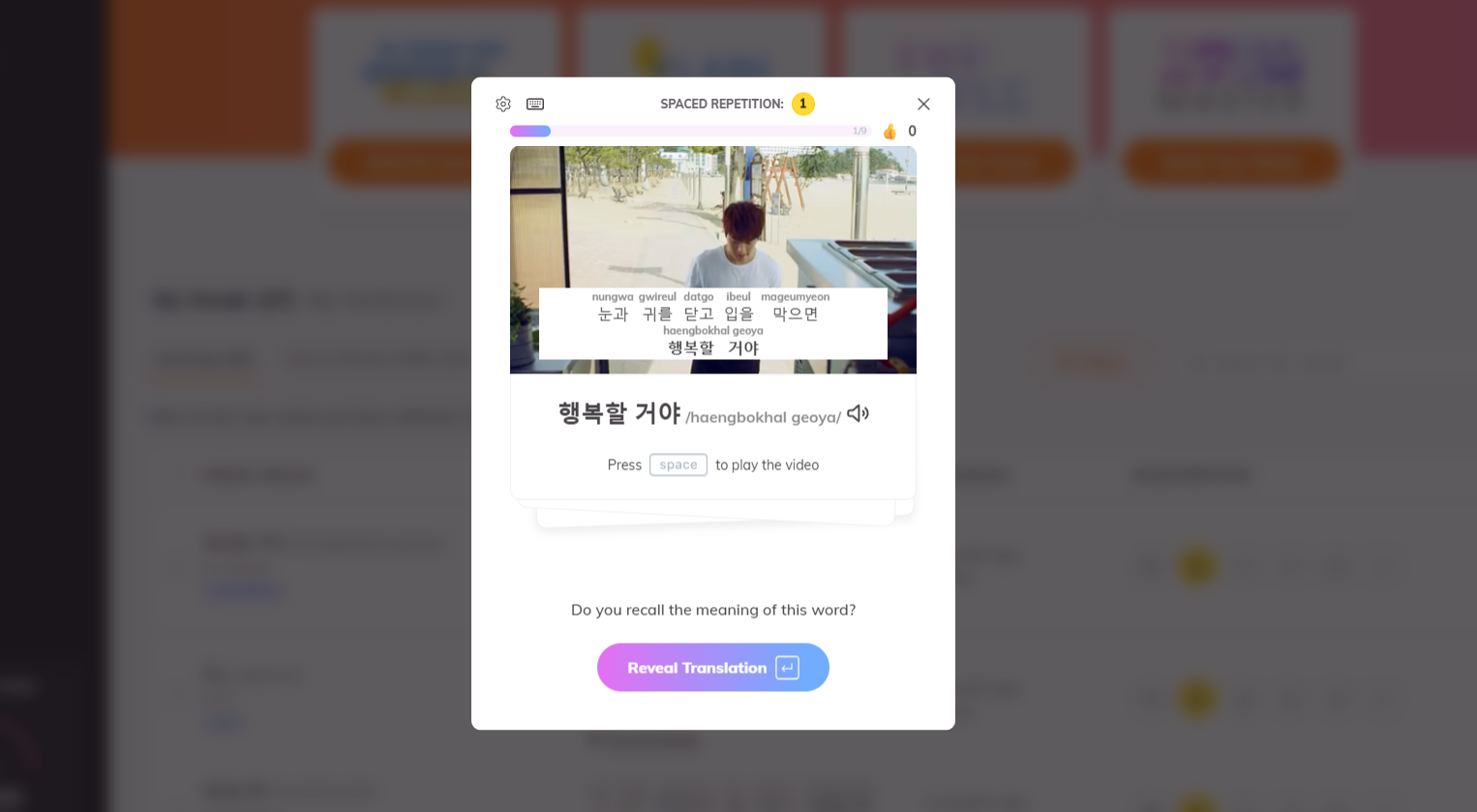
Lingopie Flashcards pulls vocabulary directly from Korean TV showsthat and movies you're actually watching. This means you're learning the exact phrases and expressions that showed up in the drama episode you just finished. All you have to do is tap any word in the dual subtitles while watching, save it to your deck, and the app automatically creates a flashcard with the full sentence, audio from the scene, and a video scene for context.
If you're already using Korean content to learn, the flashcards feel like a natural extension rather than separate study time. You can create decks organized by show, difficulty, or topic. The interface is clean and doesn't waste your time with unnecessary features. It's straightforward: watch content you enjoy, save words you don't know, review them until they stick. That's it.
Avocards
Publisher: Avocards
Availability: Android | iOS
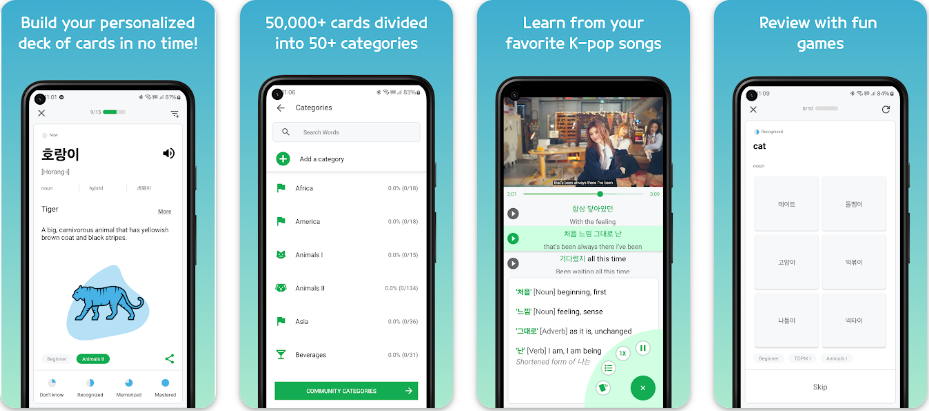
Avocards gets one thing right: if you’re learning Korean because of K-pop, you actually want to understand what BTS and BLACKPINK are saying. Learning vocabulary through songs you already love makes sense. The app has lyrics from dozens of artists, plus 50,000 words split into categories and spaced repetition to help things stick.
Just note that if you do decide to use this, there are reports saying that the K-pop lyrics feature glitches at times. Songs from major artists like BLACKPINK, 2PM, and AKMU either don't show up or won't let you create flashcards from them. You know, the main reason you downloaded this app.
The example sentences are solid, and the native speaker audio is genuinely helpful. If you can overlook the buggy song selection and double-check weird definitions, it's a decent tool for K-pop fans. Just know you'll need to supplement it with something more reliable for core vocabulary.
KoLearn
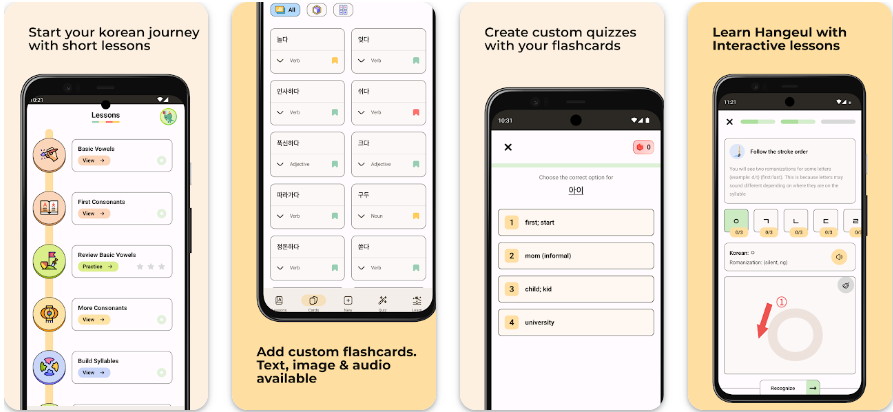
Publisher: Learnion
Availability: Android
KoLearn focuses on something most apps ignore: actually writing Korean by hand. It's got handwritten recognition, custom flashcard creation, AI-generated speaking and listening quizzes, and deck organization. If you want to practice writing Hangul properly instead of just recognizing it, this is one of the few apps that lets you.
The handwriting recognition is unreliable though. It'll mark correct characters as wrong often enough to make you doubt whether you're learning properly or just fighting with buggy software. The generated quizzes have similar issues. Sometimes they won't show all your flashcards, which defeats the purpose of creating custom study sets in the first place.
The core idea is good. Being able to write your own flashcards with examples and group them by topic gives you control that other apps don't offer. The AI quiz generation is a nice touch when it works. But the glitchy recognition and incomplete quizzes mean you'll spend time troubleshooting instead of studying. It's worth keeping if handwriting practice matters to you, just prepare for frustration.
DuoCards Korean
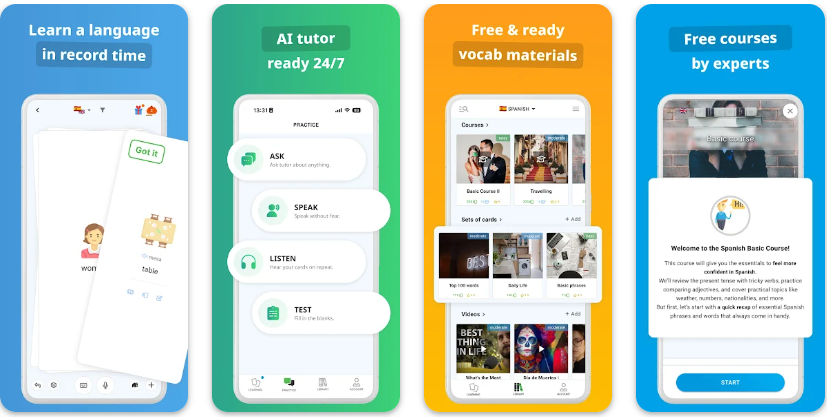
Publisher: DuoCards
Availability: Android | iOS
From the name itself, DuoCards specializes in flashcards with spaced repetition. It also has an AI vocabulary builder, YouTube video integration with tap-to-translate subtitles, progress tracking, and deck sharing across 50+ languages. It sounds impressive until you actually use it.
According to the latest reports, the translations can be a hit or miss with many users saying they need to double-check definitions with ChatGPT or Reverso before trusting what the app gives them. That’s a problem when you're trying to build vocabulary efficiently.
Despite the quirks, DuoCards has real strengths. The YouTube integration is actually innovative. Being able to tap unknown words in video subtitles and instantly create flashcards from real content beats generic word lists. If you're patient enough to verify translations and don't mind the occasional glitch, it's a solid free option.
Drops Korean
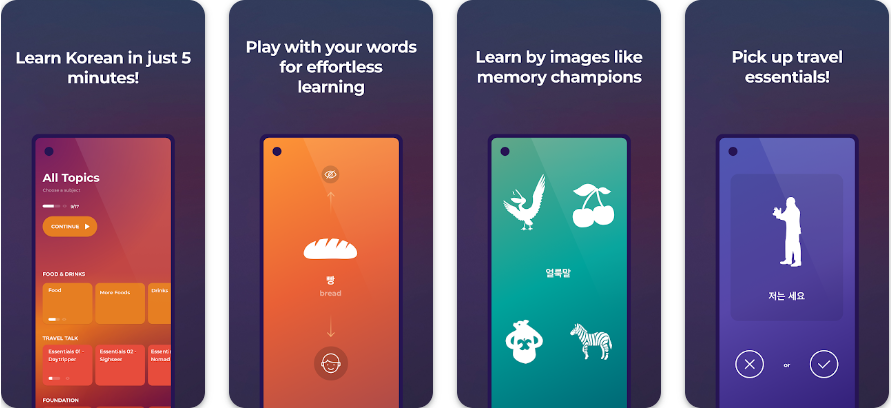
Publisher: Drops Languages
Availability: Android | iOS
Drops Korean is one of my favorite five-minute practice apps. You get exactly five minutes per day unless you pay for premium. The app locks you out after your time is up. It sounds restrictive, but it's actually brilliant for building consistency. The app teaches vocabulary only through illustrations and quick mini-games, with over 2,700 words across 150+ topics. No grammar, no typing, just rapid swipes and taps.
The five-minute limit works because it removes every excuse. You can't say you don't have time. The illustrations are beautiful, and the mini-games keep things moving without feeling gimmicky. Native speaker audio is clear and professional. Swipe-based input is faster than typing, which matters when you're racing against the clock.
The downside is that five minutes isn't enough once you're hooked. You'll hit your stride and then get kicked out. The free version is generous with 2,700 words available, but serious learners will need premium for unlimited time. It's perfect as a daily supplement alongside a more comprehensive app.
AnkiDroid
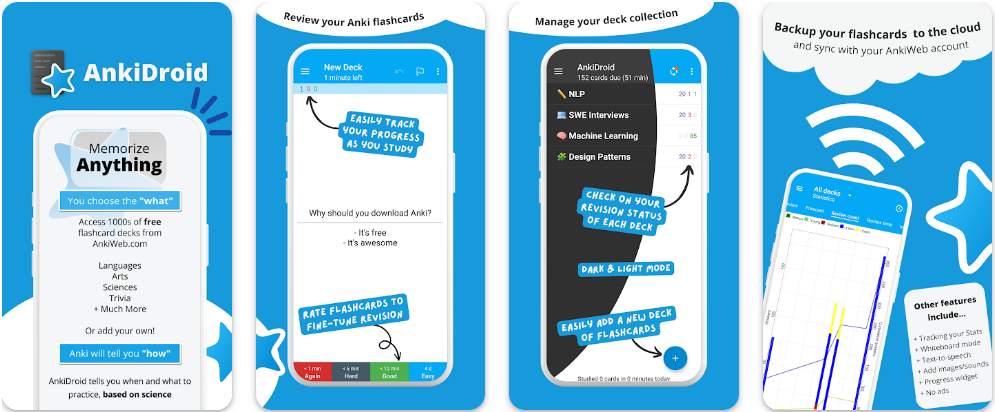
Publisher: AnkiDroid Open Source Team
Availability: Android | iOS
AnkiDroid is the powerhouse that serious language learners swear by. It's open source, completely free, and built on spaced repetition research that actually works. You can create unlimited decks, download shared decks from other users, customize every aspect of your cards, and sync across devices.
The problem is that it looks and feels like software from 2008. The interface is clunky and overwhelming if you've never used it before. There's no hand-holding, no pretty graphics, no gamification. You're staring at text cards and clicking buttons. Setting up your first deck requires patience and probably a YouTube tutorial. If you want to add audio or images, you're doing it manually. The learning curve is steep enough that most casual learners give up before they see results.
But if you stick with it, AnkiDroid is unbeatable for long-term retention. The spaced repetition algorithm is proven, the customization lets you study exactly how you want, and the massive library of shared decks means you can find pre-made Korean vocabulary sets for any level. It's not pretty or fun, but it works better than anything else on this list for actually getting words into your long-term memory.
How To Use Korean Flashcards For Improving Vocabulary
If you're starting Korean from scratch, flashcards need to be part of your daily routine from day one. You can't build conversational ability without vocabulary, and you won't retain vocabulary without consistent review!
So my suggestion is to start with high-frequency words like greetings, numbers, and basic verbs. Learn 10-20 new words daily instead of cramming hundreds at once. The goal is retention a month later, not just recognition today.
Here's how to make flashcards actually work:
- Pair cards with real content – watch a drama episode, save unknown words, review them the next day
- Set a daily minimum you'll actually keep – five minutes beats an hour you'll skip
- Review even when it's boring – spaced repetition needs weeks of exposure to work
- Create extra examples for stubborn words – if it won't stick after ten reviews, you need better context
Don't treat flashcards like a separate study session. They work best when tied to content you're already consuming. The words that show up in your favorite K-drama will stick faster than a generic beginner list because you remember the scene, the emotion, and the context. Missing three days of review will cost you more progress than studying an extra hour once a week. Consistency is everything, buddy!
Use Korean Flashcard Apps Today
Most flashcard apps will help you memorize words. The question is whether you'll actually stick with them long enough to see results. If you're learning Korean because you love the content, not because you enjoy studying, that changes which app makes sense for you.
Learning vocabulary from shows you're already watching removes the friction between entertainment and study time. You're not forcing yourself to review random word lists. You're reinforcing words you just heard in context, with native audio and scenes you actually remember.
Download Lingopie and start turning your watch time into real progress. The flashcards are free with your subscription, and they'll do more for your vocabulary than any standalone app that treats Korean like a textbook subject.





![Japanese vs Korean: Which Language Should You Be Learning? [2026]](/blog/content/images/size/w300/2026/03/Japanese-vs-Korean.jpg)