

If you are studying Japanese from scratch, one of the most useful building blocks you can start with is Japanese months. Unlike English, which uses names derived from Roman gods and emperors (January from Janus, March from Mars), Japanese takes a much more logical, number-based approach.
To fill gaps in your understanding of the months in Japanese, this guide walks you through everything: how to say and write them, how to count each, the traditional names still used in poetry and literature, and how to read and write dates the Japanese way.
- Japanese Counters: Every Counter You Need (With Charts)
- 50+ Japanese Internet Slang Every Learner Needs to Know
- Sushi Names In Japanese And How To Order Them [Guide]

How to Say Months in Japanese
The most important word to know when talking about months in Japanese is gatsu (がつ / 月). This is the suffix you attach to a number to name a specific calendar month. One (ichi) plus gatsu gives you Ichigatsu (一月), meaning January. Two (ni) plus gatsu gives you Nigatsu (二月), meaning February — and so on through December.
However, the kanji 月 has three distinct readings depending on what you are doing with it, and each one serves a different purpose.
- Gatsu is for naming the months of the year.
- Tsuki (つき) is the native Japanese (wago) reading used to count a duration of months — but only up to three months, using traditional Japanese numbers.
- Kagetsu (かげつ / ヶ月) is the standard modern counter for duration that uses Chinese-derived on'yomi numbers (ikkagetsu, nikagetsu, sankagetsu…).
Japanese Months
Japan officially adopted the Gregorian calendar in 1873, replacing the old lunisolar calendar that had been used for centuries. The switch was part of the broader modernization efforts of the Meiji era, and it meant the centuries-old lunisolar calendar
The structure of the modern months is refreshingly straightforward: you take a number from 1 to 12 and add gatsu (月) after it. The kanji character 月 literally means 'moon' or 'month,' which makes sense given that months were originally based on lunar cycles. So while the calendar system changed, the character connecting months to the moon has remained.
Below is the complete table of all twelve months in Japanese with English, romaji, hiragana, and kanji.
For the number 4, Japanese has two readings: yon (よん) and shi (し). But when it comes to saying the month, only Shigatsu (しがつ) is correct — yon-gatsu simply does not exist.
Similarly, July uses shichi (しち) for seven, giving you Shichigatsu (しちがつ / 七月). You cannot substitute nana-gatsu, even though nana is another valid reading of 7 in other contexts.
On the other hand, September uses ku (く) for nine, giving you Kugatsu (くがつ / 九月) — not kyuu-gatsu. These fixed readings are part of the established naming convention for the months in Japanese, so it is worth memorizing them as set terms rather than mechanically applying number rules.
How To Write Months In Japanese?

In Japanese, months are usually written using kanji. Technically, you just take the month number and add 月 (meaning “month”). For example, 二月 (nigatsu) means February and 三月 (sangatsu) means March. Kanji is the form you will most often see on calendars, official documents, newspapers, and signs.
Months can also be written in hiragana, such as いちがつ, にがつ, さんがつ. Hiragana is sometimes used in children’s books, beginner learning materials, or when showing pronunciation alongside kanji. If you are still learning kanji, writing the months in hiragana is completely acceptable.
You may also see Japanese months written in romaji, like Ichigatsu, Nigatsu, and Sangatsu. Romaji uses the Roman alphabet and is mainly found in language learning resources and textbooks for non-Japanese learners. However, it is rarely used in native Japanese writing, so it is best treated as a learning aid rather than a standard writing form.
How to Count Months in Japanese
There is an important distinction to understand here: the months listed above are for naming a specific month of the year (like 'it happened in March'). But if you want to count months as a duration — like 'three months ago' or 'she studied Japanese for six months' — you use a completely different system.
The two options are kagetsu (ヶ月 / か月) and tsuki (月). The critical difference is the number system each one requires. Tsuki uses native Japanese wago numbers — hito, futa, mi — and, in modern Japanese, is used only for durations of up to three months: hitotsuki (1 month), futatuki (2 months), mitsuki (3 months).
Beyond three, tsuki is simply not used. Kagetsu uses Chinese-derived on'yomi numbers (like ichi, ni, san, yon) and works for any number of months with no upper limit. For everyday speech, kagetsu is the go-to counter.
Notice also that kagetsu uses different pronunciations for some months than gatsu does. April is Shigatsu (四月) when naming the calendar month, but 'four months' is Yonkagetsu (四ヶ月) — not Shikagetsu.
July is Shichigatsu (七月), but 'seven months' is Nanakagetsu (七ヶ月). The number rules shift depending on whether you are naming a month or counting a duration.
Also watch for the sound changes in kagetsu: 1 month is Ikkagetsu (not Ichikagetsu), 6 months is Rokkagetsu (not Rokukagetsu), and 8 months can be either Hakkagetsu or Hachikagetsu. These are called sokuonbin — consonant doubling for smoother pronunciation — and they are a normal feature of Japanese counters.
A practical example: if someone asks how long you studied Japanese, you would say "Sankagetsu benkyou shimashita" (I studied for three months).
Traditional Names for Months in Japanese
Before Japan adopted the Gregorian calendar, the country used a lunisolar calendar system with its own poetic set of month names. This system is called wafuu getsumei (わふうげつめい / 和風月名), which roughly translates as 'traditional Japanese month names.'
These names were used prior to the Meiji Restoration in 1868 and are deeply tied to the seasons, nature, and cultural events of the lunar calendar. Each name evokes something specific — a flower, a meteorological phenomenon, a ritual, or an aspect of everyday life in ancient Japan.
Today, only the Gregorian calendar is used in daily life, government, and business. However, the traditional calendar and its month names have not disappeared. They continue to appear in literature, traditional poetry such as tanka and haiku, seasonal greetings, and certain cultural contexts.
January: Mutsuki (睦月) むつき
The kanji 睦 means harmony or affection. The name reflects the tradition of families gathering together during New Year celebrations to renew bonds and spend time with loved ones. January was considered a month for closeness and togetherness, which is where the name comes from.
February: Kisaragi (如月 / 衣更着) きさらぎ
Kisaragi has two possible kanji writings. The more common 如月 uses characters meaning "like" and "moon," while 衣更着 means "wearing more clothes." The second interpretation is widely cited because February is still cold across Japan, and layering clothes during the lingering winter was a practical reality. Either way, both readings point to the same season: the tail end of winter.
March: Yayoi (弥生) やよい
The kanji 弥生 means "new growth" or "increasing life." March marks the beginning of spring in the traditional calendar, when plants start to emerge and nature comes back to life after winter. Yayoi is also commonly used as a given name in Japan, underscoring how familiar and beloved this name remains.
April: Uzuki (卯月) うづき
The character 卯 refers to the u-no-hana, or deutzia flower, which blooms in April. The name celebrates the white blossoms that appear during this season. Some sources also connect 卯 to the fourth sign of the Chinese zodiac, the rabbit, adding another layer of cultural association to the name.
May: Satsuki (皐月) さつき
The name comes from 早苗月 (sanae-zuki), meaning "rice seedling month." The kanji 皐 relates to rice paddies and agriculture. In the traditional lunisolar calendar, this month fell around what is now June in the Gregorian calendar, which is when rice planting would begin in Japan. Satsuki is still commonly used as a given name today.
June: Minazuki (水無月) みなづき
The kanji 水無月 literally reads as "month without water," which seems contradictory since June is Japan's rainy season. The explanation is that 無 here functions as an old possessive particle, not a negation, making the name mean "month of water" rather than "month without water." The name refers to the heavy rains of tsuyu, the rainy season, not an absence of them.
July: Fumizuki (文月) ふみづき
The character 文 means writing or literature. One explanation is that the name comes from the tradition of writing poetry during the Tanabata festival on July 7th, when people write wishes on strips of paper and hang them from bamboo. Another theory connects it to an older meaning of the character related to ripening grain. Both readings fit the season.
August: Hazuki (葉月) はづき
The kanji 葉 means leaf. By August, the trees are at peak fullness with thick, lush foliage before autumn begins to turn them. The name captures that moment at the height of summer when greenery is at its most abundant, just before the slow shift toward fall.
September: Nagatsuki (長月) ながつき
The characters 長月 mean "long month," referring to the lengthening of nights as autumn deepens and daylight hours shorten. September marks the transition from summer to fall in the traditional calendar, and the name reflects that growing sense of darkness arriving earlier each evening.
October: Kannazuki (神無月) かんなづき
This name means "month without gods." According to Shinto tradition, all the kami (gods) leave their local shrines across Japan in October to gather at Izumo Taisha, a major shrine in Shimane Prefecture, for their annual meeting. For this reason, October is called Kannazuki everywhere except Izumo, where it is called Kamiarizuki (神有月), meaning "month with gods," since all the deities are gathered there.
November: Shimotsuki (霜月) しもつき
The kanji 霜 means frost. November brings the first frosts of the year to many parts of Japan, marking the clear arrival of winter. The name is one of the most self-explanatory of the traditional set: the cold comes, and the ground shows it.
December: Shiwasu (師走) しわす
The characters 師走 mean "teachers run." The name supposedly comes from the idea that even Buddhist monks and priests, who are normally calm and composed, become so busy during December that they are seen rushing around to complete year-end duties and preparations for the New Year. December remains the busiest month of the year in Japan, and the name has stuck because it still rings true.
Japanese Calendar Format and Date System
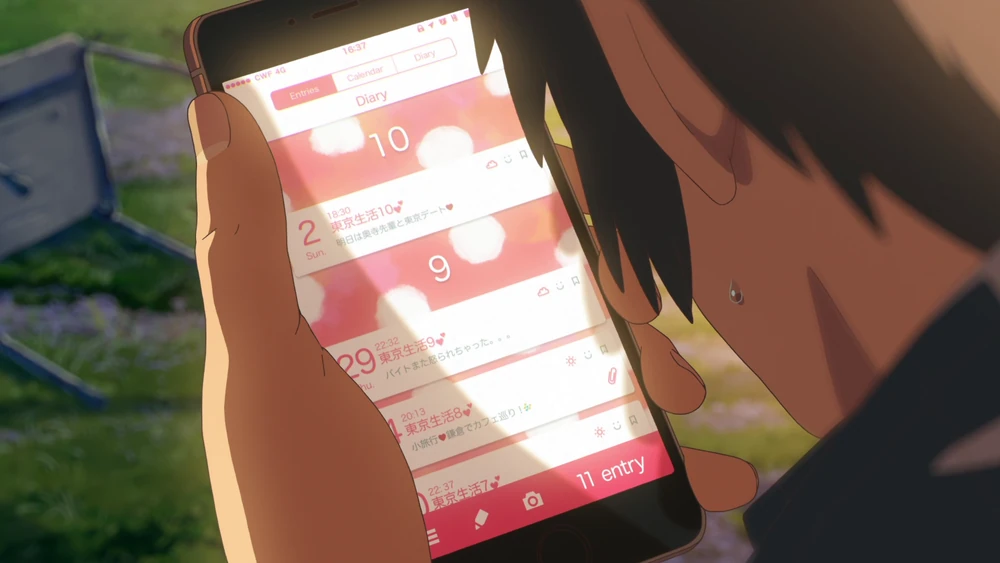
The Japanese date format follows the year-month-day order, which is the opposite of the American month-day-year format and different from the European day-month-year system. This applies both to written dates and to how dates are said aloud.
In Japanese, the character 年 (nen) means 'year,' 月 (gatsu/tsuki) means 'month,' and 日 (nichi/ka) means 'day.' So March 15, 2025 in Japanese becomes 2025年3月15日 in formal writing, or 2025/3/15 in casual written form. When saying this date aloud in Japanese, you would say: Nisen nijuugo-nen sangatsu juugo-nichi.
Japan also uses its own traditional era system alongside the Gregorian calendar — a system called gengou (元号). This means that the year in Japan can be expressed in two ways: by the Western Gregorian year, or by the year within the current imperial era. The current era is Reiwa (令和), which began in May 2019 when Emperor Naruhito ascended to the throne. That means 2026 is also Reiwa 8 (令和8年). The previous era was Heisei (平成), and before that, Showa (昭和).
Japanese Month Vocabulary: Key Words and Expressions
Beyond naming and counting months, there is a set of everyday vocabulary around time and months that you will need for real conversations. Whether you are asking what month it is in Japan, talking about last month, discussing next year, or writing the date in Japanese, these words come up constantly.
| English | Japanese (Romaji) | Japanese (Kanji/Kana) |
|---|---|---|
| What month is it? | Nan-gatsu desu ka? | 何月ですか? |
| What month is it in Japan? | Nihon wa ima nan-gatsu desu ka? | 日本は今何月ですか? |
| This month | Kongetsu | 今月 |
| Next month | Raigetsu | 来月 |
| Last month | Sengetsu | 先月 |
| Every month | Maitsuki | 毎月 |
| This year | Kotoshi | 今年 |
| Last year | Kyonen | 去年 |
| Next year | Rainen | 来年 |
| Every year | Maitoshi / Mainen | 毎年 |
| In [month] | [Month]gatsu ni | 〇月に |
| One month (duration) | Ikkagetsu | 一ヶ月 |
| Three months (duration) | Sankagetsu | 三ヶ月 |
| Six months (duration) | Rokkagetsu | 六ヶ月 |
| Calendar | Karendaa / Koyomi | カレンダー / 暦 |
| Japanese era year | Gengou | 元号 |
How to Use Japanese Months in a Sentence
Knowing the vocabulary is one thing, but seeing how months work inside full sentences is what makes them usable in real conversations. Below are practical examples covering the most common situations: asking about dates, talking about when something happens, and describing duration.
| Japanese | Romaji | English |
|---|---|---|
| 今何月ですか? | Ima nangatsu desu ka? | What month is it now? |
| 私の誕生日は五月です。 | Watashi no tanjoubi wa gogatsu desu. | My birthday is in May. |
| 来月日本に行きます。 | Raigetsu Nihon ni ikimasu. | I am going to Japan next month. |
| 先月から日本語を勉強しています。 | Sengetsu kara Nihongo wo benkyou shite imasu. | I have been studying Japanese since last month. |
| 三ヶ月間日本語を勉強しました。 | Sankagetsu-kan Nihongo wo benkyou shimashita. | I studied Japanese for three months. |
| 五月は桜が綺麗です。 | Gogatsu wa sakura ga kirei desu. | The cherry blossoms are beautiful in May. |
| 何月に日本に来ましたか? | Nangatsu ni Nihon ni kimashita ka? | What month did you come to Japan? |
| 十二月は一番忙しいです。 | Juunigatsu wa ichiban isogashii desu. | December is the busiest month. |
Note that the particle に (ni) marks the time when something happens, so you attach it after the month name when describing when an event occurs, for example gogatsu ni, meaning "in May." For talking about duration rather than a specific month, use kagetsu rather than gatsu, as covered in the counting section above.
Seasons and Their Connection to Months
The Japanese calendar divides the year into four seasons (四季 / shiki), and each season carries strong cultural weight in Japan. In fact, the seasons are not just meteorological markers but are actually woven into food, clothing, festivals, art, and daily language.
Spring (春 / haru) spans March through May and is culturally dominated by cherry blossoms (sakura), the start of the school year in April, and the energy of new beginnings.
Summer (夏 / natsu) runs from June through August, covering the rainy season (tsuyu) in June and the intense heat of July and August, along with major festivals like Obon.
Autumn (秋 / aki) is September through November — celebrated for its foliage and harvest festivals.
Winter (冬 / fuyu) covers December through February, encompassing the new year, a deeply important period in Japanese culture.
Knowing these seasonal associations will make a big difference when consuming Japanese content — you will notice how often seasons are referenced in dialogue, song titles, drama episodes, and film narratives on Lingopie.
Japanese Month Pronunciation Tips
A few sounds in Japanese months trip up beginners. Here is what to watch for before practicing out loud.
- The "tsu" sound in gatsu — Position your tongue as if saying the "ts" in "cats" and treat it as a single syllable. Short and clipped, not drawn out.
- Devoiced vowels — The "u" at the end of gatsu is barely audible in natural speech. Ichigatsu sounds closer to "ichigats" with an almost silent ending. This is normal in native speech.
- Long vowels — October, November, and December use long vowel sounds: Juugatsu, Juuichigatsu, Juunigatsu. The "uu" is held roughly twice as long as a short vowel. Shortening it can cause confusion.
- The Japanese "r" sound — The "r" in Rokugatsu is not the same as English "r." It sits somewhere between "r," "l," and "d," with the tongue lightly tapping the ridge behind the upper teeth.
Keep Learning Japanese Through Real Content
Months, dates, and seasons are the kind of vocabulary that shows up everywhere in authentic Japanese content — in news broadcasts, dramas, variety shows, and films. The best way to make these terms stick is not to drill them in isolation, but to encounter them in real, engaging contexts. My advice? Why not try Lingopie?
Lingopie lets you watch Japanese TV shows and movies with interactive subtitles, so you can pick up vocabulary like Shichigatsu, Raigetsu, and Kotoshi the way native speakers actually use them. The more Japanese content you consume, the more naturally the calendar systems (Gregorian and traditional) will feel second nature.
Give Lingopie a try now by clicking below!


![Japanese Honorifics: 10+ Titles You’ll Actually Use [GUIDE]](/blog/content/images/size/w300/2026/03/Japanese-honorifics.jpg)

![Japanese vs Korean: Which Language Should You Be Learning? [2026]](/blog/content/images/size/w300/2026/03/Japanese-vs-Korean.jpg)
)