
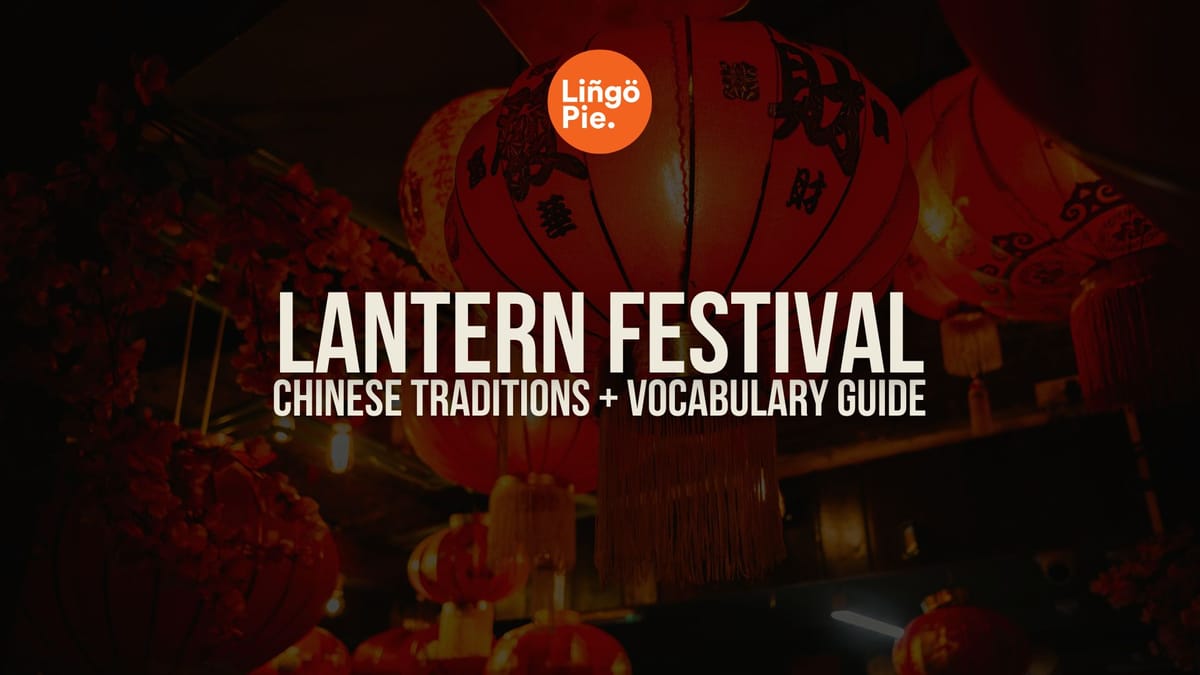
The Chinese Lantern Festival is one of the most visually stunning and culturally rich celebrations in the world. And if you've ever watched a Chinese drama or film featuring the festival, you already know just how magical it looks on screen.
This year, the Chinese Lantern Festival falls on March 3, 2026. Whether you're a language learner, a culture enthusiast, or just someone who stumbled across a breathtaking festival clip on social media, there’s no better time to dive into the language and traditions behind Yuan Xiao Jie (元宵节).
- 5 Chinese Language Flashcards You Need To Use
- 60 Chinese Slang Words And Phrases For Beginners
- 11 Best Apps To Learn Chinese [TESTED]

What Is the Chinese Lantern Festival?
The Chinese Lantern Festival, or Yuan Xiao Jie (元宵节), is celebrated on the 15th day of the first lunar month (two weeks after Chinese New Year). It marks the first full moon of the new lunar year and the official end of the Chinese New Year (Spring Festival) period.
It is the first night of the new year to see a full moon, symbolizing the return of spring and family unity. The festival's roots stretch back more than 2,000 years to the Han dynasty (206 BC–AD 220).
The Lantern Festival pushes the celebration of the Spring Festival to another climax and also marks the end of the Chinese New Year period. People celebrate by watching lanterns, solving lantern riddles, eating Yuanxiao (Tangyuan), performing dragon and lion dances, and engaging in other customs that symbolize reunion, happiness, and fulfillment.
The 2026 Lantern Festival: A Rare Celestial Event
What makes the 2026 Lantern Festival particularly special is a celestial coincidence. On the night of March 3, 2026, a Total Lunar Eclipse is expected to occur. Instead of a standard bright white full moon, observers in many parts of Asia and the Pacific may witness a "Blood Moon" during the festival. This creates a unique "Double Celebration" of earthly lanterns and a cosmic red moon — a phenomenon that happens very rarely on this specific festival date.
How Is the Chinese Lantern Festival Celebrated?
Lantern Displays
Today, when the festival comes, red lanterns can be seen in the street, in each house, and in stores. In the parks, lanterns of various shapes and types attract countless visitors. Visitors marvel that various lanterns so vividly demonstrate traditional Chinese folklore.
The traditional lanterns are almost always red to invoke good fortune. Lighting lanterns symbolizes "illuminating the future" — a way for people to pray for smooth futures and express their best wishes for their families.
Guessing Lantern Riddles (Cai Deng Mi — 猜灯谜)
One of the most engaging and interactive traditions of the Lantern Festival is Guessing Lantern Riddles. Dating back to the Song Dynasty, this custom transforms the festival from a mere visual spectacle into a lively intellectual game. Hosts write riddles on strips of colorful paper and paste them onto lanterns. If a visitor solves a riddle, they can tear off the strip and present it to the host to claim a small prize.
Eating Tangyuan (汤圆) / Yuanxiao (元宵)
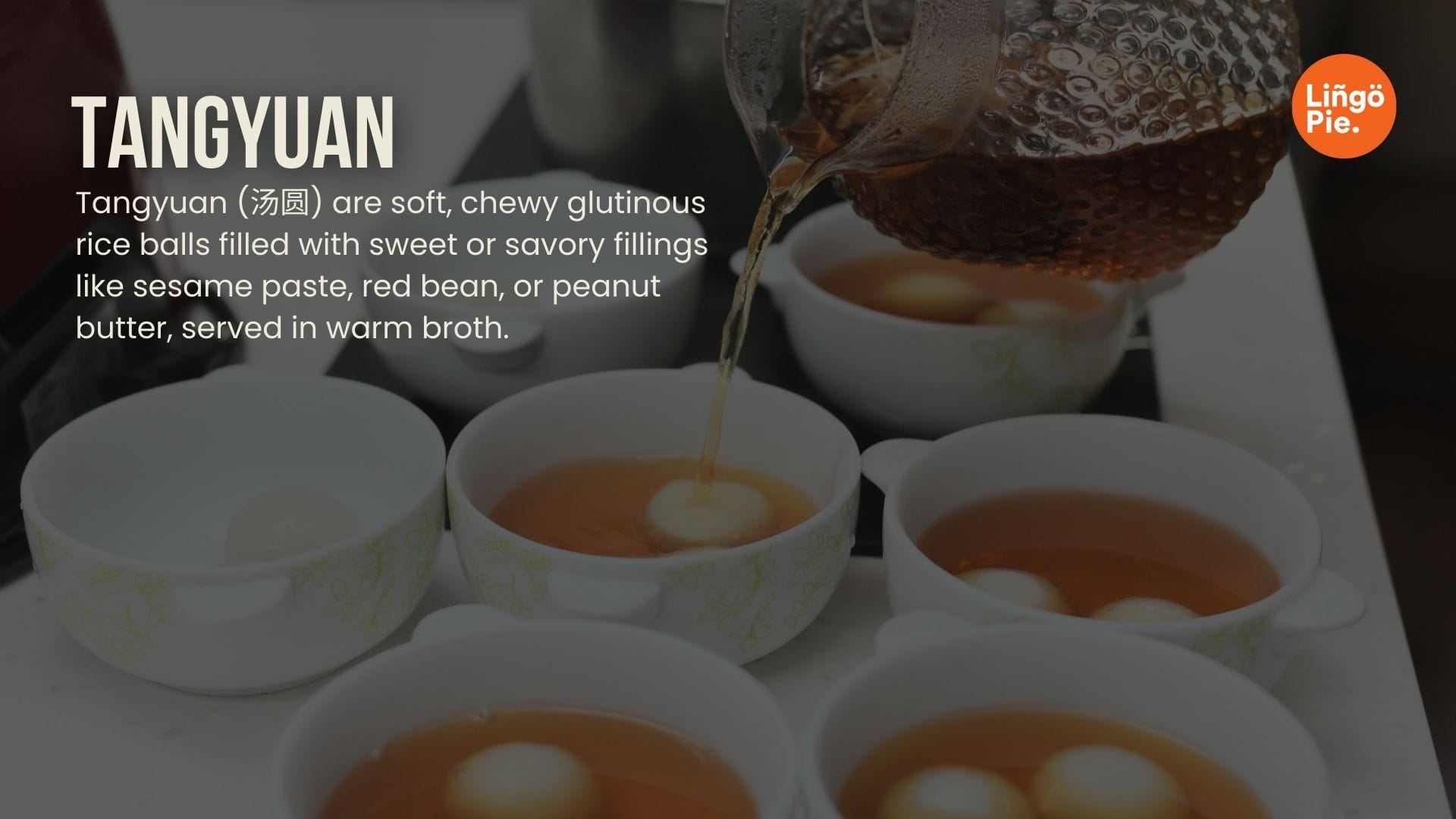
The food of the Lantern Festival is just as symbolic as the lanterns themselves. People eat sweet rice balls called tangyuan, watch dragon and lion dances, and set off fireworks. The round shape of tangyuan symbolizes wholeness and family togetherness — a fitting treat for a festival that celebrates reunion.
Dragon and Lion Dances
Derived from the Three Kingdoms Period (220–280), the lion dance is an excellent traditional art that adds infinite fun to any celebration, including the Lantern Festival. These performances are believed to ward off evil spirits and bring good luck for the year ahead.
Basic Chinese Vocabulary for the Lantern Festival
Learning Chinese doesn't have to start in a classroom. Festivals are one of the most natural — and fun — entry points into a new language. Here are key Mandarin words and phrases you'll encounter around Yuan Xiao Jie:
| Chinese | Pinyin | Meaning |
|---|---|---|
| 元宵节 | Yuánxiāo Jié | Lantern Festival |
| 灯笼 | Dēnglóng | Lantern |
| 汤圆 | Tāngyuán | Sweet rice balls (tangyuan) |
| 猜灯谜 | Cāi dēng mí | Guessing lantern riddles |
| 龙舞 | Lóng wǔ | Dragon dance |
| 狮子舞 | Shīzi wǔ | Lion dance |
| 烟花 | Yānhuā | Fireworks |
| 满月 | Mǎnyuè | Full moon |
| 团圆 | Tuányuán | Reunion / togetherness |
| 吉祥 | Jíxiáng | Good fortune / auspicious |
| 春节 | Chūnjié | Spring Festival / Chinese New Year |
| 祝你元宵节快乐 | Zhù nǐ Yuánxiāo Jié kuàilè | Happy Lantern Festival! |
Pro tip: Many of these words appear in Chinese TV dramas set in historical or modern settings. Hearing them used naturally by characters is one of the most effective ways to make them stick.
How to Learn Chinese Through Chinese Dramas and Films
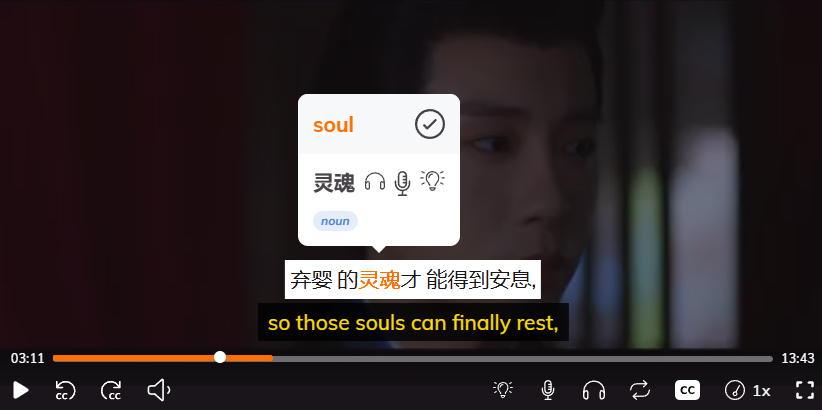
Understanding a festival is one thing. Experiencing it through the lens of culture — the way characters talk about it, celebrate it, and feel it — is something else entirely. That's where Lingopie comes in.
Lingopie is a language learning platform that teaches you real, conversational Chinese through authentic TV shows and movies. Instead of drilling grammar rules in isolation, you learn the way native speakers actually talk — in context, with emotion, and with cultural depth.
Here's why learning Chinese through content is especially powerful during festival season:
Context Makes Vocabulary Stick
When you hear tuányuán (团圆, reunion) spoken by a character who hasn't seen their family in years, or watch a scene where characters debate over lantern riddles, the vocabulary becomes attached to a memory and an emotion. That's far more durable than a flashcard.
Chinese Dramas Are Full of Cultural Celebration Scenes
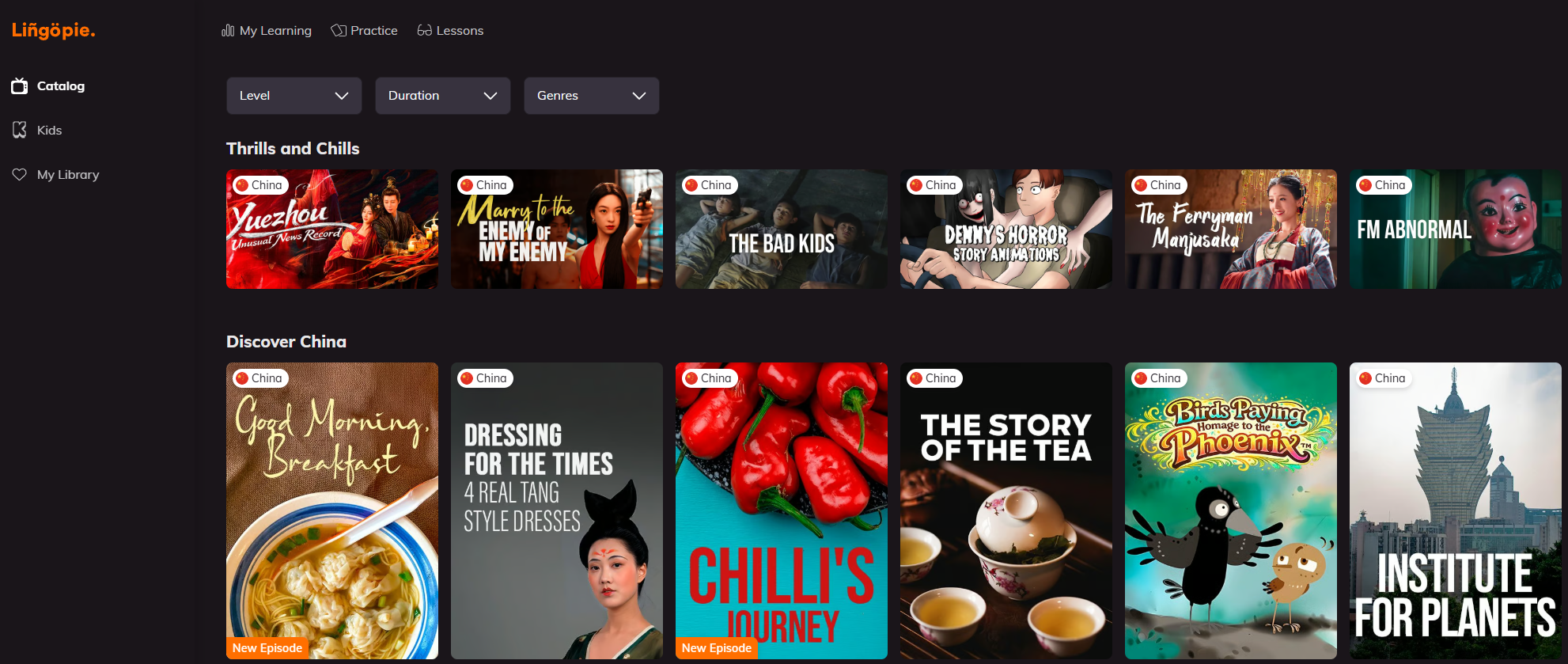
Historical Chinese dramas (gǔzhuāng jù — 古装剧) frequently feature Lantern Festival scenes: candlelit streets, romantic encounters, riddle games, and fireworks. Watching these scenes with Lingopie's dual-language subtitles means you're not just entertained — you're building vocabulary in real time.
🔁 Lingopie's Interactive Subtitles Let You Learn at Your Own Pace
With Lingopie, you can:
- Click on any word in the subtitles to get an instant translation and pronunciation
- Save words to flashcard decks to review later
- Replay scenes to hear pronunciation again
- Learn in context — not just from definitions, but from real usage
Whether you're a complete beginner trying to recognize tones, or an intermediate learner ready to tackle the nuance of written Chinese characters, Lingopie meets you where you are.
Why the Lantern Festival Is the Perfect Starting Point for Chinese Learners
Here's something language teachers know well: motivation is the engine of language learning. And nothing fuels motivation like genuine cultural curiosity.
The Lantern Festival gives you a rich, tangible thread to pull on. You want to understand what a character is saying as they admire lanterns? You want to know how to wish someone Yuánxiāo Jié kuàilè? You want to know what the riddle on the lantern actually means? That curiosity is the beginning of real fluency.
And the best part? You don't have to be in China to experience it. With Lingopie, you can immerse yourself in the sights, sounds, and language of Chinese culture any time — from wherever you are in the world.
Start Your Chinese Language Journey This Lantern Festival
The 2026 Chinese Lantern Festival on March 3 is a beautiful moment to begin. Light a (metaphorical) lantern of your own — one that illuminates a new language, a new culture, and a new way of seeing the world.
Ready to learn Chinese the fun way? Explore Lingopie's Chinese content library and start watching your way to fluency today.
👉 Start learning Chinese with Lingopie
Lingopie is a language learning platform that uses TV shows and movies to teach real, conversational language skills. Available in Spanish, Chinese, German, Portuguese, Italian, Russian, Hebrew, Korean, Japanese, and more.

![Learn Korean With ENHYPEN: 5 Tracks Every ENGENE Should Study [Guide]](/blog/content/images/2026/03/Learn-Korean-With-Enhypen.jpg)