


If you love binge-watching and want your screen time to actually do something for you, Chinese TV shows are one of the smartest ways to start learning Mandarin. You hear how people really talk. The pauses. The filler words. The casual “aiya” when someone is annoyed. The way tones shift in real conversations. That kind of natural speech is almost impossible to pick up from a textbook.
The trick is choosing the right Chinese dramas for your level. Some Mandarin TV series use clear, modern dialogue that mirrors everyday life. Others move too fast or lean heavily into historical language that overwhelms beginners.
To help you out, this list focuses on Chinese TV shows that help absolute beginners and intermediate learners build confidence, understand common phrases, and train their ears while staying genuinely entertained.
- 5 Chinese Language Flashcards You Need To Use
- 60 Chinese Slang Words And Phrases For Beginners
- 11 Absolutely Useful Apps To Learn Chinese [TESTED]

Where To Watch Chinese Dramas
If you’re outside China, you still have solid options for streaming Chinese TV shows legally. Several international platforms license popular Chinese dramas and make them accessible with subtitles.
In the context of learning though, reliable, high-quality subtitles are very important. You’ll rely on them to build vocabulary and train your ear, so low-quality or machine-translated subs can teach you the wrong phrasing and slow your progress.
Here are some of the best platforms to watch Chinese TV shows for learning Mandarin:
| Platform | Why It’s Good for Learners |
|---|---|
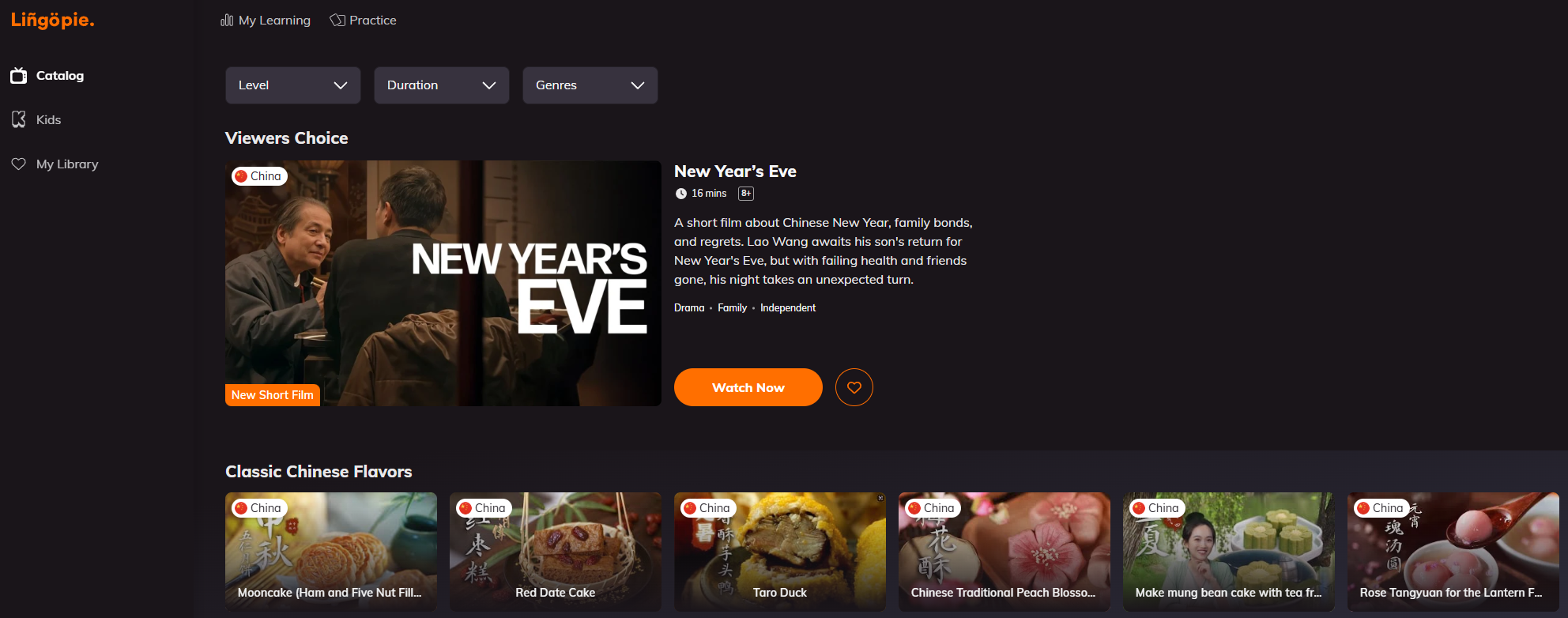
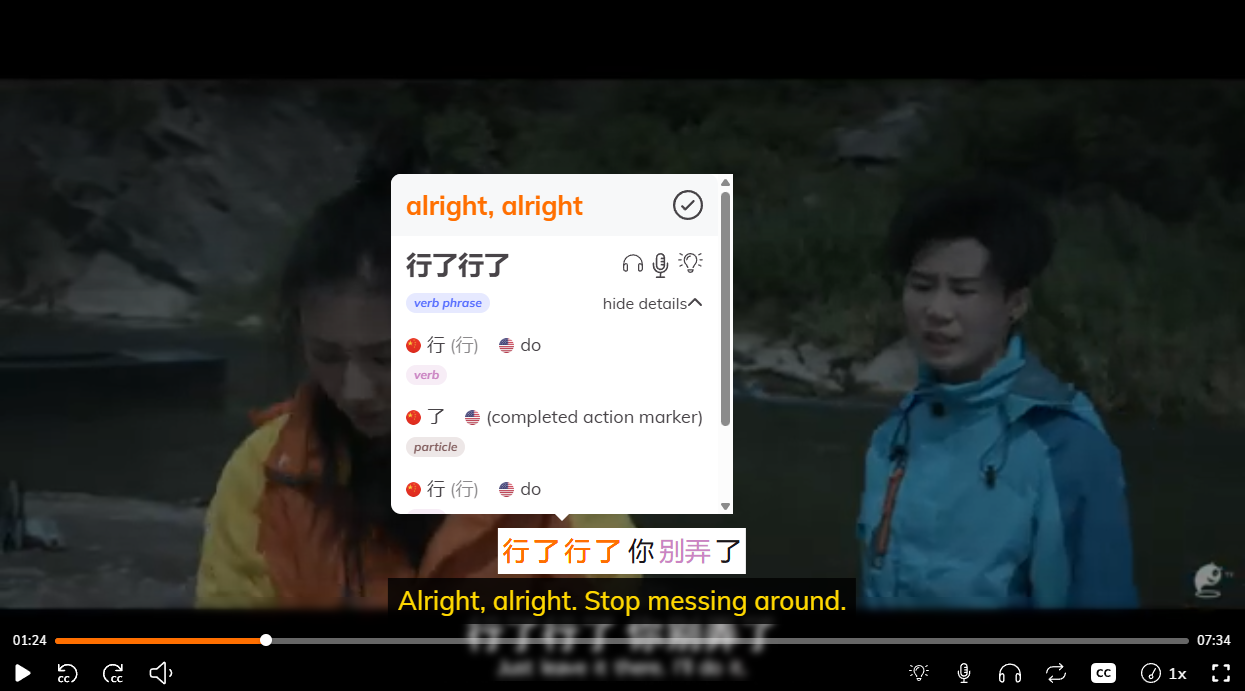
| Lingopie | Designed for language learning. Interactive subtitles, click for definitions, and built-in tools that make Chinese TV shows more structured and beginner friendly. |
| iQIYI | One of the largest Chinese streaming platforms. Huge catalog of Chinese dramas, including modern series with Mandarin subtitles. |
| Viki | Strong subtitle quality and active community translations. Great mix of Chinese dramas and other Asian series. |
| WeTV | International version of Tencent Video. Solid selection of popular Chinese TV shows with English subtitles. |
| Viu | Offers select Mandarin dramas depending on region, often with clean subtitle formatting. |
If you already have subscriptions to major global streaming platforms, you’ll find a few Chinese TV shows there too. Occasionally, they secure exclusive rights to big titles that break into the US market. The downside is that the catalog tends to focus on mainstream hits. Niche Chinese dramas or lesser-known Mandarin TV series often never make it there.
Why Learn with TV Shows Instead of Textbooks?
If you came here, you probably know part of the reasoning behind that statement: textbooks are boring. Even though they are a proven way to increase your vocabulary and grammar awareness, textbook learning does not stimulate our need to engage.
You see, when you learn with something that excites you, it makes it easier for your brain to recognize that knowledge as something important to keep. Textbooks are useful for grammar, but the experiences and connections we have to something are what our brains tend to remember in the end.
1. Excitement Rewires Your Brain to Build Habits
The more excited you are to do something, the easier it gets for you to repeat that action and build a lasting habit. By letting entertainment drive your studies, you take the friction out of the process, transforming language learning from a tedious daily chore into something you actually look forward to.
That way, you are not only learning but building different neural pathways. These pathways connect language learning in deeper ways than bare memorization ever could.
2. You'll Absorb Way More Than Just Vocabulary
This deep connection is exactly what happens when you learn through TV shows. If you make the right use of subtitles, choose a show that suits your Chinese level, and build a habit, you will pick up far more than words on a page.
By watching native content, you naturally absorb:
- Intonation and Accents: Hear how native speakers actually sound.
- Semantics and Context: Understand the true meaning behind the words.
- Natural Word Usage: Learn how Chinese speakers talk about feelings, work, and daily life.
- Cultural Awareness: Pick up on social cues, traditions, and modern lifestyle habits.
3. Keeping It Sustainable Prevents Instant Burnout
The trick to making this work without burning out is keeping it sustainable. You don't need to pause every five seconds to write down every unfamiliar word. In fact, doing that just turns the show into another boring textbook.
Instead, use these strategies to keep your learning effortless:
- Get lost in the story first: Let the plot pull you in rather than focusing entirely on grammar.
- Trust your brain: Let your mind do the background work of spotting patterns and recurring slang.
- Listen for the rhythm: Focus on the natural flow of the dialogue.
Over time, you will notice that phrases from your favorite characters just start slipping into your own speech naturally.
Best Chinese Shows to Learn Mandarin
Marry to the Enemy of My Enemy (Available on Lingopie)

Xia Nuan is the kind of heiress who does everything right and still gets betrayed. After finding a kidney donor for her stepsister, her family turns on her — until Zhong Xinyang pulls her out of the chaos and she engineers a return that no one sees coming. This Chinese drama runs on betrayal, power shifts, and the specific pleasure of watching someone rebuild from zero.
For learners watching Chinese TV, the dialogue is sharp and confrontation-heavy, which means you get a lot of direct, emotionally charged Mandarin. You'll hear how Chinese speakers express anger, negotiate loyalty, and deliver the kind of cold, controlled lines that land harder than shouting. Good pick for intermediate learners who want something with teeth.
Eternal Love

Also known as Ten Miles of Peach Blossoms, this is one of the most iconic fantasy romantic Chinese TV shows of the last decade. Gods, immortals, multiple lifetimes, dramatic declarations. It’s big, emotional, and visually unforgettable. The romance spans centuries, so expect poetic confessions and intense confrontations.
From a learning perspective, this is not beginner territory.
- Mythology and fantasy vocabulary
- Formal, elevated phrasing
- Long emotional monologues
- Less everyday conversational Mandarin
This fits intermediate learners who want exposure to dramatic, expressive Mandarin rather than daily life speech. If you’re comfortable with subtitles and want to stretch your listening skills, this Mandarin drama gives you high emotion and high language density in every episode.
Delicious Romance (Available on Lingopie)

Three women. Three completely different ideas about what love is supposed to look like. Delicious Romance tracks Liu Jing, Fang Xin, and Xia Meng through careers, relationships, and a lot of food, and it doesn't rush any of it. The show is less interested in dramatic twists than in the quieter friction of adult life.
If you want to learn mandarin with chinese romance dramas, this is a phenomenal place to start. The conversations happen in kitchens, offices, and restaurants — the exact settings where everyday vocabulary gets used. You'll pick up how Chinese speakers talk about food, feelings, and work frustration in the same breath. Accessible for beginners, genuinely enjoyable for everyone.
Meteor Garden

If you want drama with a capital D, this is it. Meteor Garden is the glossy campus romance that launched a new generation of Chinese TV fans, built around the iconic rich-boy-meets-strong-girl storyline. The emotions run high, the confrontations are direct, and the dialogue is modern and easy to catch compared to historical dramas.
The reason why this is one of the best Chinese dramas for beginners is that the setting is contemporary and the vocabulary revolves around school, relationships, jealousy, and friendship. You’ll hear lots of repeated phrases during arguments and emotional scenes, which actually helps reinforce sentence patterns.
It’s dramatic, yes, but linguistically accessible. If you want a Chinese TV show that feels big and addictive without being linguistically overwhelming, this one delivers.
Born to Run (Available on Lingopie)

A car crash. One family loses a son. Another loses a daughter's ability to walk. Born to Run doesn't soften any of that. What follows is a Chinese drama about two families learning to carry grief that isn't their fault, and what happens when their lives stay tangled together anyway.
The language here is emotionally dense and deliberately paced, which makes it useful for learners who want to build vocabulary around family relationships, medical situations, and the kind of Mandarin people use when they're trying to hold themselves together. It's not easy watching, but the dialogue is clear and the emotional context makes new phrases stick faster than flashcards.
Nirvana in Fire (琅琊榜)

When it comes to chinese historical dramas for language learners, this is the heavyweight champion. Nirvana in Fire is all about political revenge, strategy, and mind games inside the royal court. Every conversation feels calculated. People speak carefully because one wrong word can cost them everything.
What makes this powerful for learners:
- Formal, strategic Mandarin instead of casual slang
- Longer sentence structures that train advanced listening
- Repeated political and loyalty-related vocabulary
- Clear diction despite the historical setting
Just note that this is not beginner friendly. It’s best for strong intermediate learners who want to challenge their comprehension and move beyond everyday dialogue. If you can follow this Chinese TV series without subtitles, you’re officially leveling up.
Are You Safe? (Available on Lingopie)

Qin Huai, Zhou You, and Chen Mo start out barely tolerating each other. By the end, they're the tightest unit in cybercrime enforcement. Are You Safe? follows their casework and the slow build of trust between three people who weren't supposed to get along. The cases are grounded in real cybersecurity scenarios, which makes the tech feel credible rather than decorative.
For those hunting down chinese crime dramas for intermediate learners, this show is a strong pick for its exposure to contemporary, professional Mandarin. The vocabulary leans into tech, investigation, and team dynamics — the kind of Chinese you'd actually hear in a modern workplace. The dialogue moves fast but stays clear, and the case-of-the-week format means you're constantly hearing new vocabulary in fresh contexts.
Scissor Seven

Scissor Seven is an animated action comedy about a clueless hairdresser who moonlights as an assassin, and it moves fast in short, punchy episodes. The humor is absurd, the fights are over the top, and the dialogue swings between deadpan sarcasm and chaotic banter.
For learners, it’s a mixed challenge in a good way. Episodes are short, which makes it less intimidating, but the speech can be quick and packed with jokes. It works best for high beginners and intermediate learners who want exposure to casual, everyday Mandarin with personality.
You Are My Glory (Available on Lingopie)

Yu Tu is an aerospace engineer who is very good at his job and not particularly interested in anything else. Qiao Jingjing is a celebrity who plays online games better than most people expect. They knew each other years ago, and now they don't — until they do again. You Are My Glory is a slow-burn romance that takes both careers seriously, which sets it apart from most idol dramas.
The Mandarin here is modern, clean, and split between two very different worlds: the technical language of aerospace engineering and the casual speech of entertainment and gaming. That range makes it genuinely useful for watching Chinese TV at an intermediate level. You'll absorb professional vocabulary alongside the everyday Mandarin that shows up in dating and friendship.
Go Go Squid! (亲爱的,热爱的)

If you want something energetic without getting lost in palace politics, Go Go Squid! is an easy crowd pleaser. The story blends romance with the world of competitive cybersecurity and esports, so you get modern slang, tech talk, and lots of playful back and forth between characters.
For learners, this lands between beginner and intermediate. Most conversations revolve around daily life, dating, teamwork, and ambition, which makes the vocabulary practical. The tech terms show up often, but they’re repeated enough that they start sticking. Among modern Chinese TV shows, this one feels current without being linguistically overwhelming.
FM Abnormal (Available on Lingopie)
Ten stories. Each one a different genre — dimensional travel, twisted romance, mystery — but all connected by something off about the world they're set in. FM Abnormal is an anthology series, which means it doesn't ask you to track a single storyline across episodes. Each one resets and pulls you somewhere new.
The format is actually useful for Chinese learners. Short, self-contained episodes mean lower stakes per sitting, and the genre variety exposes you to a wider range of vocabulary than a single-premise Chinese drama would. You'll hear Mandarin used in sci-fi contexts, romantic tension, and thriller pacing — all in one show. Good for intermediate learners who get bored fast.
The Untamed (陈情令)

If you’ve spent any time in the world of Chinese TV shows, you’ve heard of The Untamed. This fantasy wuxia drama built a global fandom for a reason, making it a massive favorite for those who want to learn mandarin with the untamed. It blends mystery, brotherhood, and slow-burn emotional tension with a sprawling cast and layered backstory.
Language-wise, this sits firmly at intermediate. You’ll hear formal address terms, sect names, and cultivation-related vocabulary alongside moments of casual banter between leads. The dialogue isn’t as politically dense as some historical epics, but it still requires focus.
Best for learners who:
- Want exposure to historical style Mandarin
- Can handle names, titles, and fantasy terminology
- Are ready to rely on subtitles strategically
It’s not your starter Chinese TV show, but if you stick with it, your listening stamina improves fast.
Nothing But Thirty (三十而已)

Nothing But Thirty follows three women in Shanghai navigating career changes, marriage challenges, and shifting friendships as they enter their thirties. The story feels realistic and grounded, focusing on everyday pressures rather than exaggerated twists. Much of the dialogue takes place in offices, apartments, and social gatherings, which makes the language feel familiar and current.
Honestly, this is a very strong choice if you’re moving into the intermediate level. The Mandarin is modern and clearly spoken, with vocabulary tied to work life, relationships, and social expectations. The vocab and prhases used here are also practical so you can use these in actual convos right away.
How to Learn Chinese With Lingopie

What makes Lingopie effective is the depth of immersion it creates. We're talking about learning Mandarin without textbooks through TV. You’re hearing Mandarin used in full conversations, emotional exchanges, arguments, humor, and everyday situations exactly as native speakers deliver them. The repetition across scenes helps your brain internalize tone patterns and phrasing naturally.
Over time, you begin recognizing chunks of language instead of translating word by word. That steady immersion in authentic Chinese TV shows builds real listening confidence and faster comprehension.
To start learning Chinese with Lingopie:
- Choose a level-appropriate Chinese TV show: Begin with modern, dialogue-driven series so you can focus on clear, everyday Mandarin.
- Turn on dual subtitles: Follow the Mandarin while using English only as support, not as your main reference.
- Click, pause, and replay short scenes: Focus on 30 to 60-second exchanges to absorb tones, rhythm, and sentence flow.
- Review and repeat aloud: Revisit saved words and mimic key lines to strengthen pronunciation and listening recall.
Used consistently, this turns binge-watching into structured immersion instead of passive entertainment.
Summing Up: The Best TV Shows to Learn Chinese
With this list, we've shown you a range of diverse content that showcases the richness of the Mandarin Chinese language.
From historical dramas to modern romances, each series offers a unique perspective on Chinese culture and society. We strongly recommend delving into this varied selection to gain insights from different angles.
Sign up to the Lingopie platform to access an extensive library of Chinese movies and TV shows, and start your path to fluency in Mandarin Chinese today.
FAQs: The Best TV Shows to Learn Chinese
Welcome to our FAQ section regarding the "10 Best TV Shows to Learn Chinese." Here, we address common queries and provide valuable insights to enhance your language-learning experience.
Can you learn Chinese from watching TV?
Yes, you can learn Chinese from watching TV. Subtitles are also a great way to learn Chinese characters. Watching Chinese TV shows helps to improve listening skills, vocabulary, and pronunciation. Always combine this with other language-learning methods for a comprehensive approach.
What should I watch to learn Mandarin?
To learn Mandarin, watch a variety of Chinese shows, including dramas, sitcoms, and documentaries. Choose content that aligns with your interests and proficiency level. Check out Lingopie to find an extensive library of Chinese TV shows.
Does watching Chinese shows improve Chinese?
Watching Chinese shows can significantly improve your Chinese language skills, particularly in listening and comprehension. It exposes you to natural conversations, accents, and real-life contexts.
What is the most effective way to learn Chinese?
The most effective way to learn Chinese is through a combination of methods, including classes, immersion, chinese language apps, and watching Chinese content. Consistency and practice are key to success.


![10 Best Japanese TV Shows To Learn Japanese [2026]](/blog/content/images/2023/09/C-pia-de-imgs-blog---Spanish-1--10-.png)