


Ever tried learning Russian from a textbook and hit a wall two weeks in? Watching Russian TV shows is genuinely one of the most effective ways to build your Russian listening skills, learn colloquial Russian through tv, and actually understand how the language sounds in real life. You're learning WHILE watching good TV.
This guide covers the best Russian series for language learners at every level, whether you want crime dramas, period dramas steeped in Soviet and Russian history, or something easy to watch on a Tuesday night. All recommendations come with notes on language difficulty, subtitles, and what kind of vocabulary you'll pick up.
- 5 Best Russian Language Flashcards You Need To Use
- 5 Best Russian Translation Apps Worth Checking Out
- 11 Best Apps to Learn Russian Language [TESTED]

The Secret to Faster Fluency: Russian Immersion Through Binge-Watching
Why do some Russian learners progress faster than others? More often than not, it comes down to how much time they spend actually listening to the language. Immersion through Russian series comes with real language learning benefits, such as:
- Better listening comprehension
- Exposure to native speakers in authentic situations
- Learning colloquial expressions
However , not every Russian TV show is great for language learning. Some are way too advanced and might end up discouraging you before you even get started. To help you find the perfect match for your current skills, we have organized this list of russian series by difficulty level. From absolute beginner animation to fast-paced advanced dramas, here are the best shows to get you fluent.
Best Russian TV Shows For Learning Russian
1 - Masha and the Bear (Маша и Медведь)
Where to watch: Netflix & Lingopie | Learner level: Absolute Beginner

Masha and the Bear is technically a Russian children's cartoon, but it's one of the most practical starting points for adult Russian learners. The sentences are short, the vocabulary is basic, and the expressions are exactly the kind of everyday Russian you'd actually use. Because each episode runs under 10 minutes, it's easy to rewatch with both English and Russian subtitles until the words start clicking.
What makes it work for beginners is the repetition. The same practical words and phrases come up across episodes, so new vocabulary naturally reinforces itself without you having to try. If you've never studied Russian before, this is genuinely one of the least overwhelming ways to start hearing the language in context.
2 - The Last Czars (The Last Czars)
Where to watch: Netflix | Learner level: Upper-Intermediate
This historical docudrama chronicles the complex geopolitical pressures and personal tragedies that led to the fall of the Romanov dynasty in early 20th-century Russia.
For viewers looking to maximize their russian immersion through binge watching, changing the global audio settings to the full Russian language dub transforms this hybrid documentary into an incredible linguistic tool. Because the voice actors use a highly precise, classical theatrical cadence, it introduces intermediate students to elevated grammatical structures, royal honorifics, and formal vocabulary that textbooks rarely cover, all while providing deep cultural context.
3 - Servant of the People (Слуга народу)
Where to watch: Netflix | Learner level: Advanced

Servant of the People is about a high school teacher whose rant about government corruption gets filmed, goes viral, and somehow lands him as the president of Ukraine. It’s a sharp, funny premise and the dialogue matches that energy throughout. The Russian here is witty and satirical, yet grounded in how people actually talk, which makes it genuinely useful for picking up natural conversational expressions.
Intermediate learners will find the conversational tone easier to follow than more formal Russian series, and because the humor is relatable rather than culturally coded, you spend less time confused and more time actually absorbing the language.
4 - Silver Spoon (Мажор)
Where to watch: Netflix | Learner level: Intermediate
This crime drama follows Igor, a reckless billionaire's son who is stripped of his wealth and forced to work alongside gritty, working-class detectives at a local police station. The narrative setup creates a brilliant contrast between high-society speech and raw street dialogue, making it an excellent resource to study conversational russian from tv shows . Rather than listening to sanitized audio drills, you are exposed to fast-paced banter, authentic urban sarcasm, and emotional arguments, which teaches you how native speakers adjust their tone and sentence structures based on social hierarchy.
5 - To The Lake ( Эпидемия)
Where to watch: Netflix | Learner level: Advanced
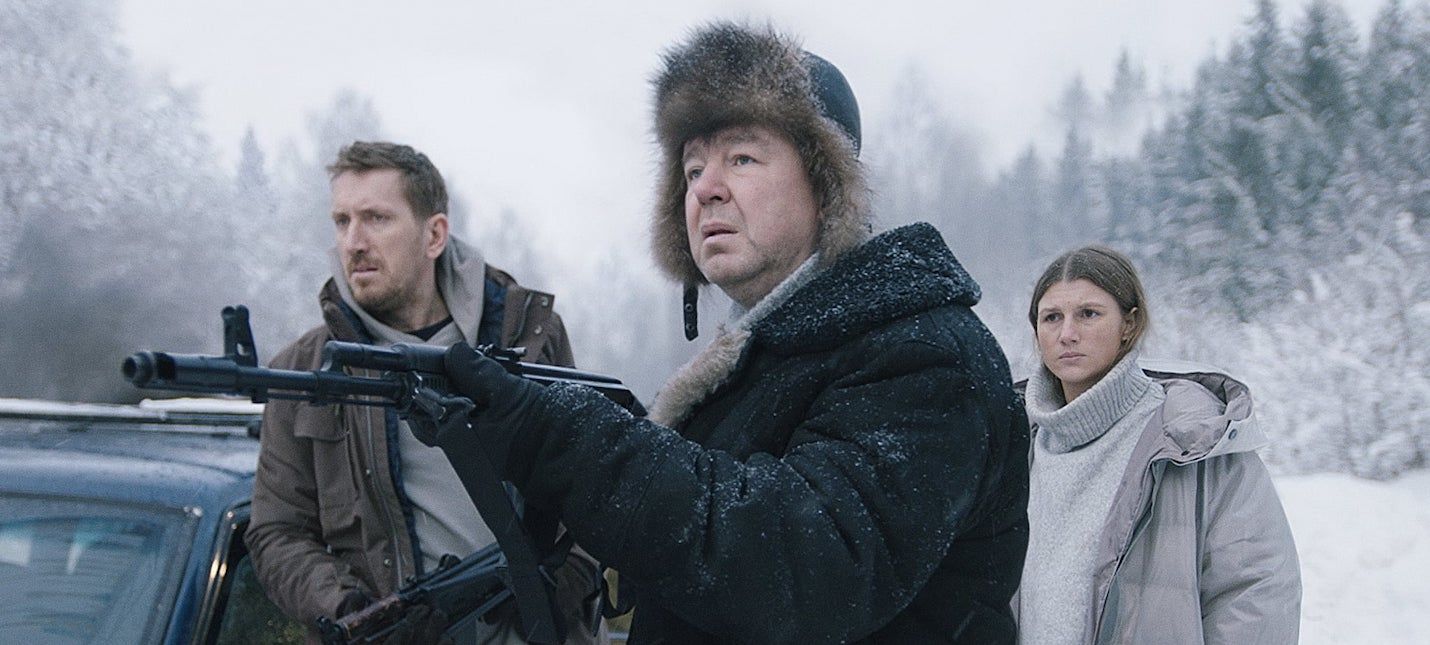
Within the backdrop of a devastating global catastrophe, To the Lake russian tv show, unfolds not just a gripping narrative but also serves as a unique language-learning opportunity. Forced together by circumstances, characters from diverse backgrounds unite in their quest to escape a deadly disease.
As they confront perilous situations, they also navigate through family challenges, learning valuable survival skills along the way. In the pursuit of language proficiency, this series becomes a dynamic tool.
By listening to the dialogue, viewers can absorb authentic Russian expressions, diverse accents, and cultural nuances, transforming each episode into a linguistic adventure.
'To the Lake' offers not only a thrilling storyline but also a captivating method for Russian learners to enhance their comprehension and fluency.
6 - The Sniffer (Нюхач)
Where to watch: Netflix | Learner level: Upper-Intermediate
This procedural detective series centers on an eccentric consultant who possesses an extraordinarily acute sense of smell, allowing him to reconstruct crime scenes by identifying invisible chemical traces. The show is uniquely valuable for russian listening practice with tv shows due to the protagonist’s specific speaking habits; because he is constantly explaining complex, analytical deductions to his partner, he speaks with a slow, highly calculated, and distinct cadence. This crisp pronunciation allows learners to easily separate individual words, track complicated particle usage, and mimic natural intonation patterns.
7 - Better Than Us (Лучше, чем люди)
Where to watch: Netflix | Learner level: Intermediate

Set in the near future where robots are part of everyday Russian life, Better Than Us Russian Series is one of the few Russian sci-fi series that actually made it to Netflix, which tells you it's a cut above the typical local production. The story centers on a highly advanced robot who bonds with a family, and the writing is smart enough that you're genuinely invested in where it goes.
From a language learning standpoint, the near-future setting is surprisingly practical. Because the world still mirrors modern Russian life, the dialogue stays current and conversational rather than drifting into technical jargon, so what you're hearing is Russian that's actually useful.
8 - Fartsa (Фарца)
Where to watch: Netflix | Learner level: Intermediate
Set against the backdrop of the vibrant yet deeply restricted 1960s Soviet Union, this stylized drama follows four best friends navigating the dangerous underground black market of smuggled Western goods. The historical setting offers a rare linguistic opportunity to learn colloquial russian through tv from a unique cultural era, exposing your vocabulary to retro slang, youth subculture idioms, and Soviet-era political terminology. Actively tracking the fast-paced negotiations and high-stakes hustles while utilizing russian subtitles for language learners helps you master contextual clues and understand how historical events shaped modern idioms.
9 - S'parta (Спарта)
Where to watch: Netflix | Learner level: Advanced

S'parta is a Russian crime drama built around a virtual reality game where players are dropped into a world that starts blurring with real life, and the suspicious deaths that follow are what drive the whole story forward. The show pulls together characters from diverse backgrounds, which means the spoken language shifts in register and tone throughout, giving you exposure to a much wider range of native Russian than most Russian TV shows offer.
For anyone serious about mastering Russian, that variety is genuinely useful. You're not just picking up one style of Russian language but learning how real conversations shift depending on who's talking and what's at stake, which is something other learning methods rarely replicate.
10 - Masha's Tales (Машины сказки)
Where to watch: Netflix | Learner level: Advanced Beginner
In this clever spin-off, the hyperactive little girl Masha retells famous folk stories and fairy tales to her toys, constantly mixing up the plots with her own chaotic imagination. For early-stage students, this monologue-heavy format makes it incredibly easy to learn russian cyrillic with subtitles , as Masha’s speech is highly expressive and directly mirrored by the playful animations on screen. The linguistic value lies in the blend of registers: she naturally transitions between older, repetitive fairy tale phrasing and highly modern, casual child-like slang, significantly expanding your overall russian vocabulary from tv shows.
Best Tv Shows to Learn Russian on Lingopie
Border of the Worlds (Граница миров)
Where to watch: Lingopie | Learner level: Intermediate
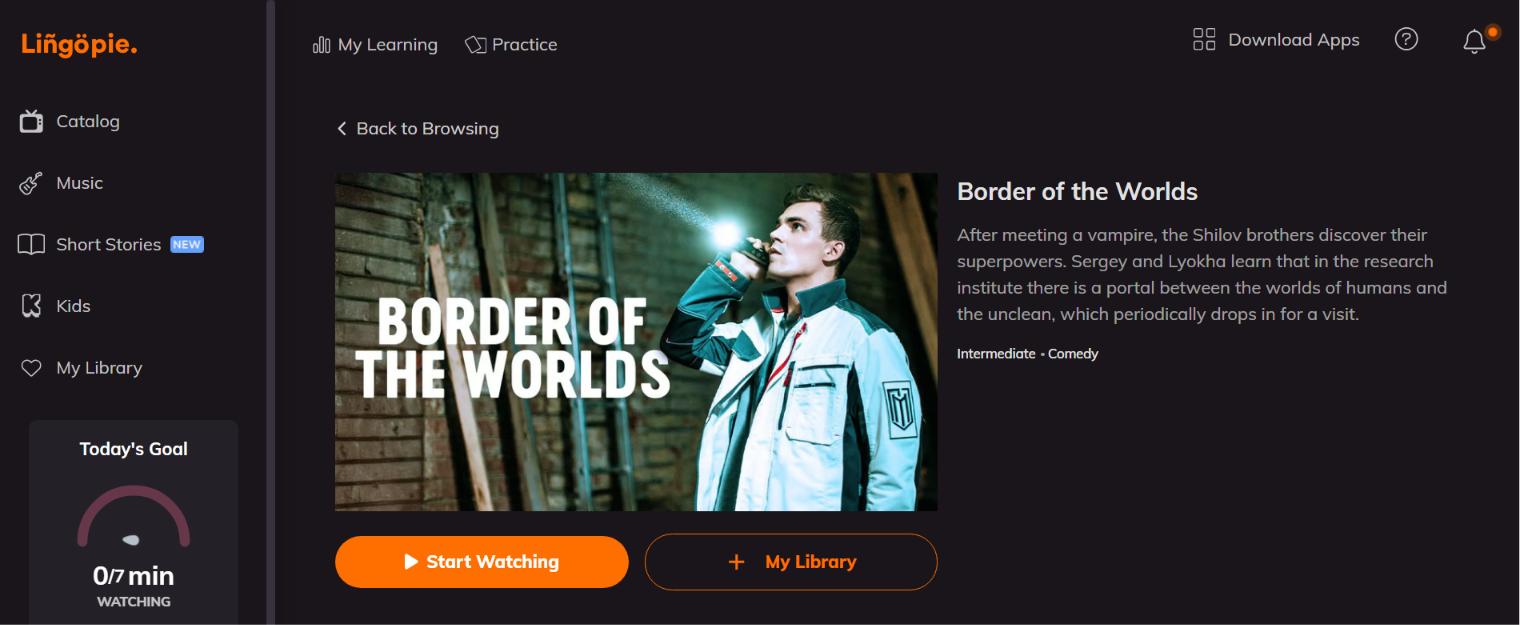
Border of the Worlds follows two brothers who discover they possess superpowers after stumbling upon a portal between humanity and the underworld. While the premise sounds dark, the show delivers its story with a distinct comedic edge. Because the characters constantly bicker, banter, and react with sheer disbelief to the supernatural chaos around them, intermediate students are exposed to an abundance of casual exclamations, everyday jokes, and rapid-fire informal phrasing.
Heirs: The Gift of Blood (Наследники. Дар крови)
Where to watch: Lingopie | Learner level: Intermediate
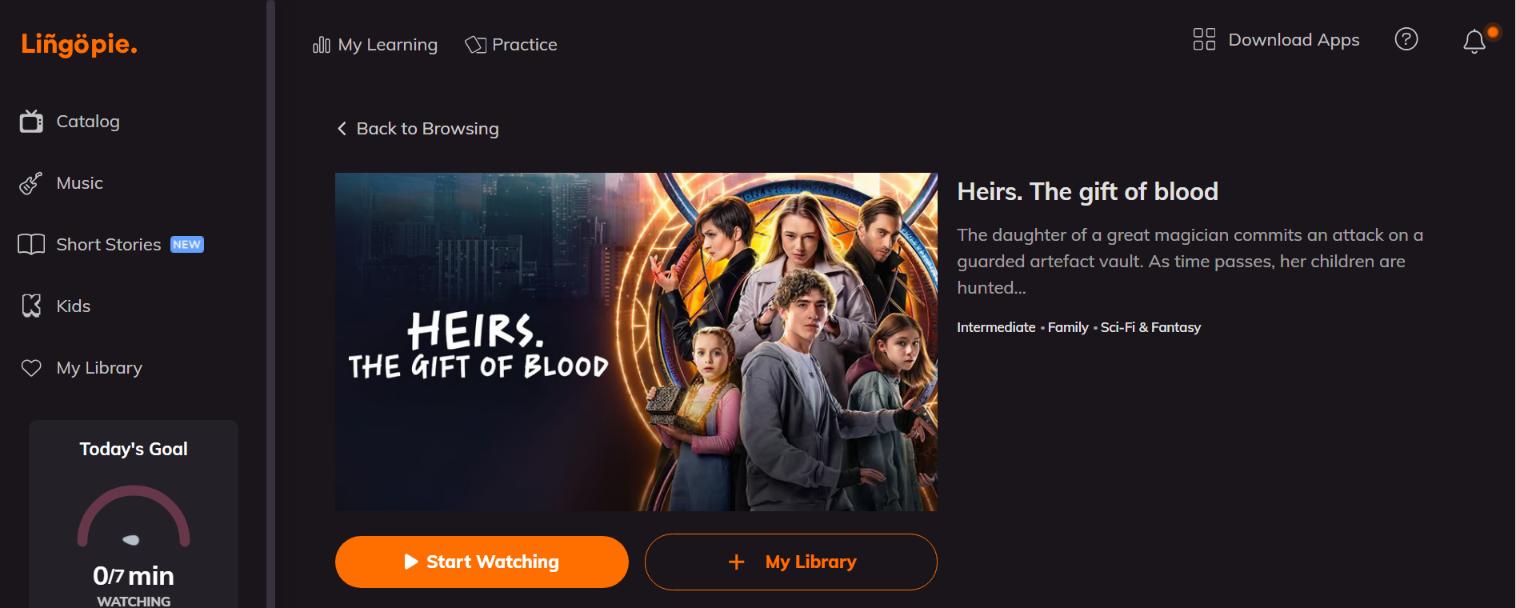
This urban fantasy drama follows three children who find themselves hunted by magic users after discovering they have inherited an ancient, supernatural bloodline. What makes this series uniquely valuable is its strong focus on family dynamics. Because a massive portion of the dialogue takes place within a household setting, you get to observe highly practical, everyday communication. It is a phenomenal way to build real-world listening skills because it demonstrates how native speakers argue, share secrets, and express affection naturally.
Survive After (Выжить после)
Where to watch: Lingopie | Learner level: Intermediate
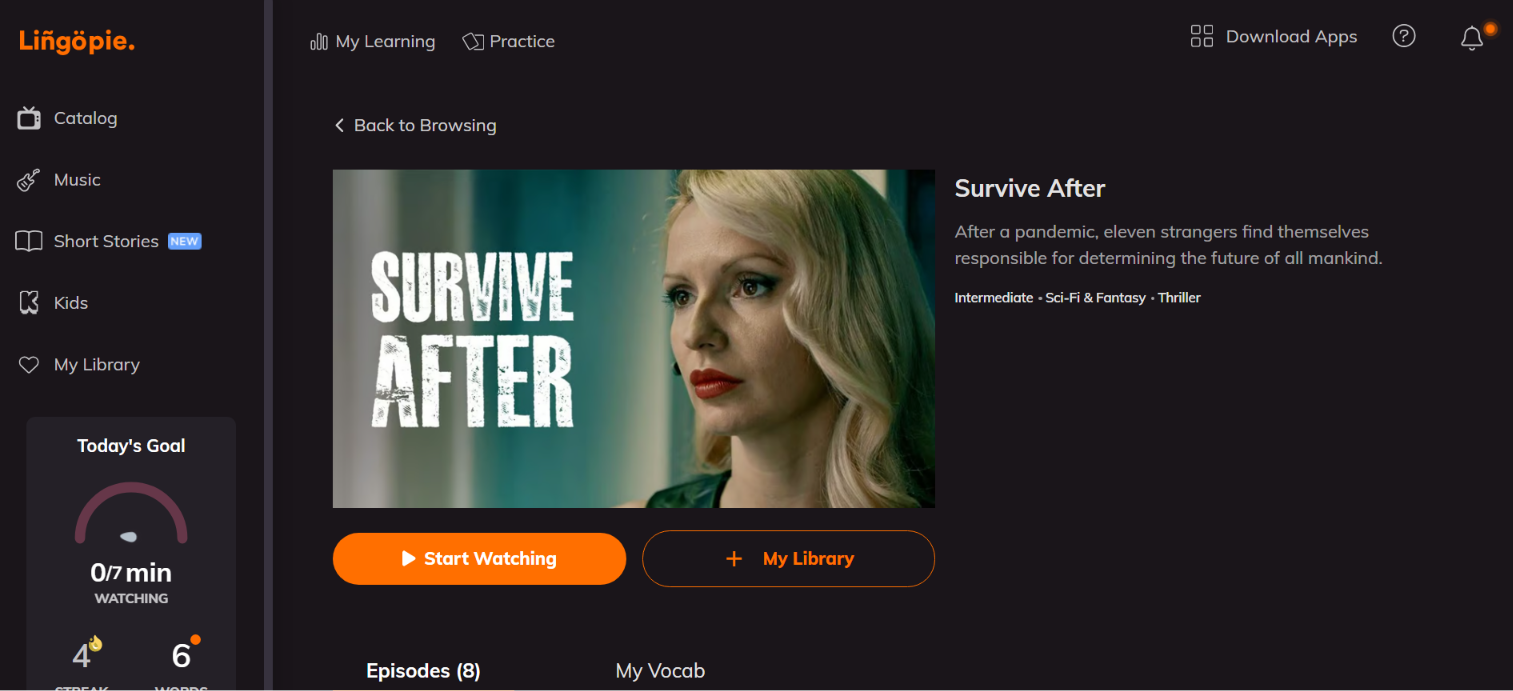
This high-stakes thriller drops eleven young strangers into an underground bunker, only for them to wake up and realize they are the isolated test subjects of a corporate bio-weapon experiment that has left Moscow paralyzed. The narrative is a goldmine for intermediate learners due to its heavy reliance on survival scenarios and group negotiations. Because the characters are forced to constantly debate logistics, formulate escape plans, and confront betrayals, the dialogue gives you non-stop exposure to imperative verbs and direct, goal-oriented speech styles.
Freud's Method (Метод Фрейда)
Where to watch: Lingopie | Learner level: Upper-Intermediate
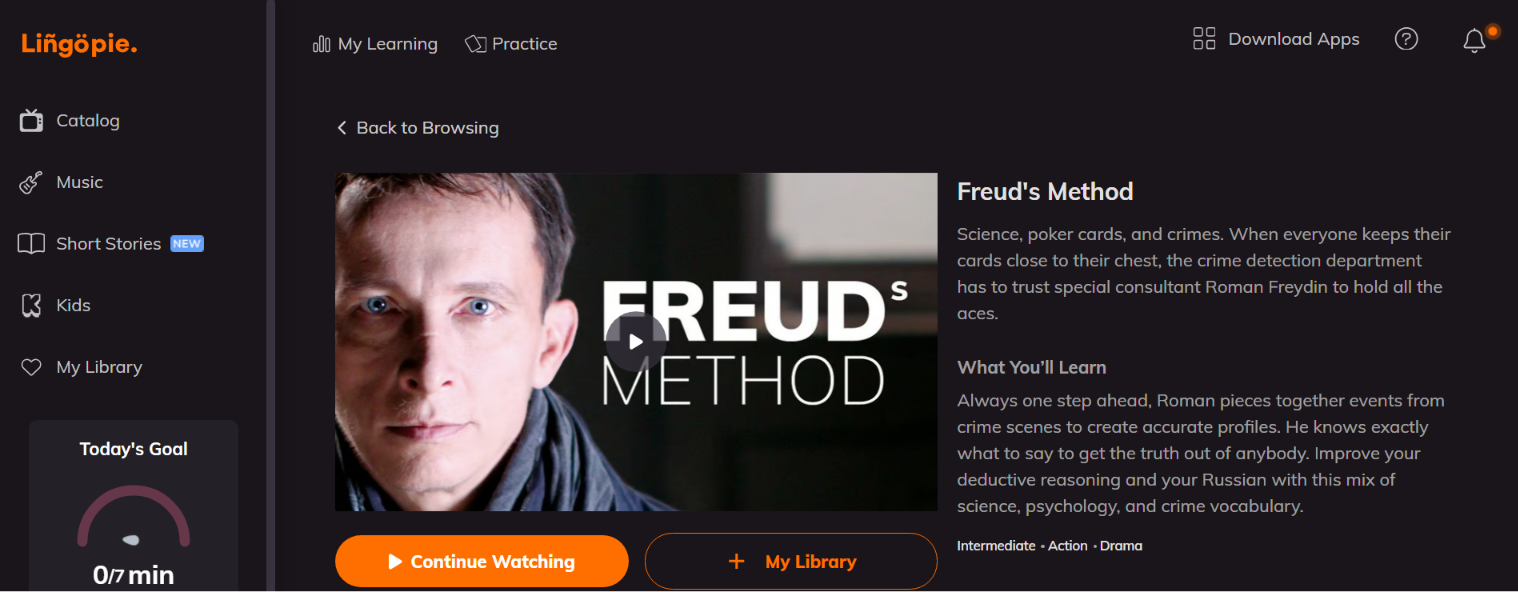
Freud's Method introduces Roman Freydin, an eccentric psychologist and professional poker player who joins a crime detection department as a special consultant. While investigators rely on traditional forensics, Freydin uses behavioral psychology and tells to hold all the aces. He speaks with a crisp, measured, and intellectually sharp cadence. This deliberate, precise articulation makes the show an outstanding tool for intermediate learners to expand their analytical vocabulary, isolate individual words, and observe the sharp contrast between formal police interrogations and casual workplace banter. It also serves as one of the best russian crime dramas for beginners, especially if you are willing to dive into investigative vocabulary just for the fun of it.
Masha and the Bear (Маша и Медведь)
Where to watch: Lingopie | Learner level: Absolute Beginner
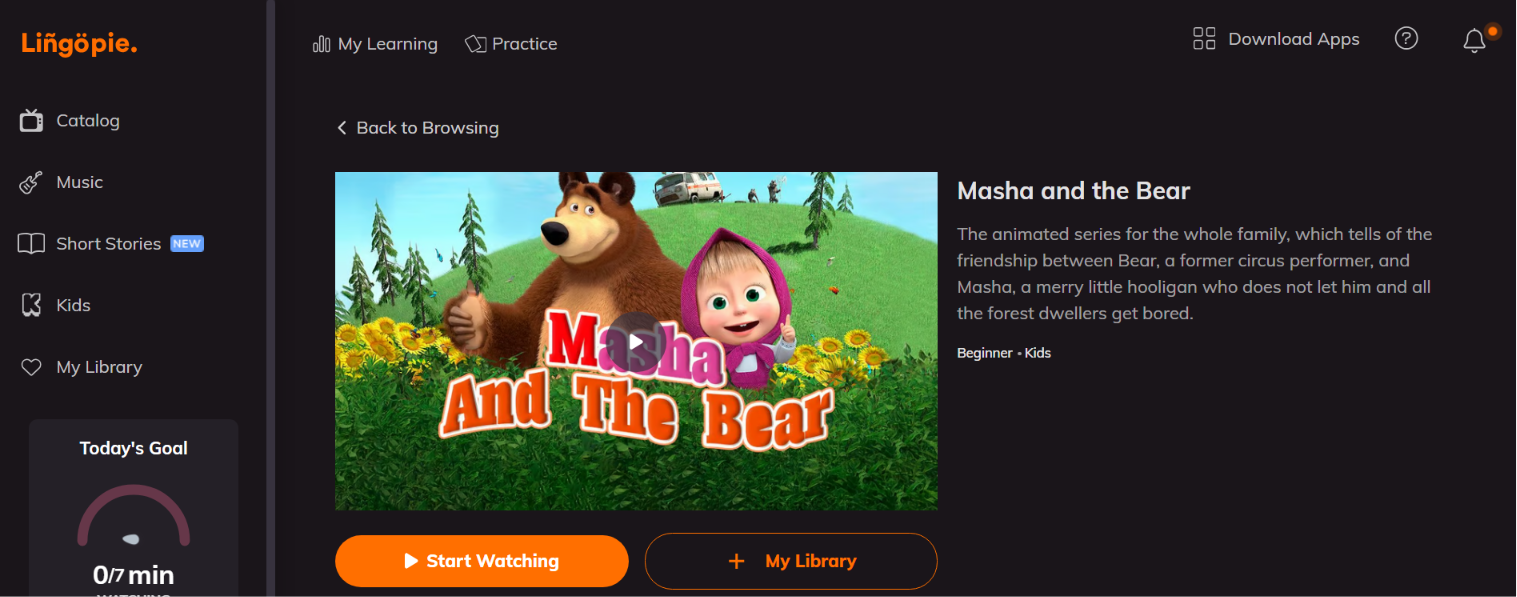
While you can stream this classic cartoon elsewhere, watching it here completely changes the learning experience. Instead of passively reading static text like you would on standard streaming platforms, streaming it on this platform allows you to learn russian cyrillic with subtitles using an interactive video player. If Masha uses a fast, casual expression, you can instantly click the words to pause the scene, look up definitions, generate flashcards, and loop the audio. This gamified approach turns simple children's repetition into an active vocabulary builder, making it far superior to regular binge-watching for absolute beginners.
How To Learn Russian With Russian TV Shows
Picking the right shows to learn Russian language is only half the work. How you actually watch makes a bigger difference than most Russian learners expect, so here are a few practical ways to get the most out of every episode.
1. Write Vocabulary Down
Every time you watch Russian TV shows or Russian movies, keep a dedicated word bank nearby and write down any new words or colloquial expressions you come across. Don't just write the Russian version — note the context it was used in, because that's what makes new vocabulary actually stick. Here are a few simple ways to build your word bank while watching:
- Pause when you hear unfamiliar words and write them down with the sentence they appeared in
- Use Russian subtitles first, then switch to English subtitles to check your understanding
- Group new words by episode or theme so reviewing them later feels manageable
- After each episode, pick five words and try using them in a sentence before your next watch session
2. Pick Shows that Interest You
Immersion only works when you actually want to keep watching. If you pick a Russian series purely because it's recommended for language learning but find yourself bored after one episode, you’re not going to stick with it long enough for the language to sink in. Choose Russian shows based on what genuinely interests you, whether that's crime dramas, historical series, or sci-fi, because enjoyment is what keeps you coming back.
If you're not sure where to start, Lingopie's catalog of Russian TV series is organized by language level, so you're not guessing whether a show is too advanced or too easy. You can find Russian series that match where you actually are in your learning process, which makes the whole experience less overwhelming and more effective from the very first episode.
3. Watch Russian Shows Daily
When it comes to watching Russian television shows, consistency matters more than duration. Even 15 to 20 minutes of watching Russian television daily does more for your listening comprehension than a three-hour binge once a week. Make it part of your routine the same way you would any other habit, and the progress will follow.
FAQ Section
What can I watch in Russian?
Explore a variety of content in Russian, including TV shows like "Masha and the Bear" for beginners, cfast-paced crime dramas such as "Silver Spoon" or "The Sniffer" for contemporary language, and dramas like "To the Lake" for a gripping narrative. Choose based on your interests, language level, and the desired learning experience.
Can watching Russian TV shows be effective for learning?
Yes, learning Russian through TV is effective. Choose shows aligned with your interests and language level. Regular viewing exposes you to authentic language, improves comprehension, and enhances vocabulary. Combine it with other learning methods for a holistic language experience, making TV a valuable tool in your Russian learning journey.
How can I learn Russian by myself?
Learn Russian independently by leveraging resources like russian language apps, online courses, and textbooks. Watch Russian TV shows and movies for language exposure. Practice with language exchange partners or tutors. Consistent self-study, vocabulary building, and immersion in Russian content contribute to a comprehensive and effective solo learning experience.
Are there any shows in Russian on Netflix?
Yes, Netflix offers a variety of shows in Russian, providing a great resource for Russian learners. Explore titles like "To the Lake," "Better Than Us," and "Fartsa" for an engaging linguistic experience. Turn on Russian audio and English subtitles to enhance your listening comprehension and language acquisition.
Ready To Learn Russian Right?
As you can see, learning Russian through TV shows works because you're hearing the language the way it's actually used, picking up language nuances, cultural insights, and real vocabulary that a textbook won't teach you. From Soviet Union period dramas to modern comedies, Russian TV shows give you a reason to keep showing up every day, and that consistency is what actually moves the needle.
If you want to get even more out of every episode, Lingopie lets you click on any word mid-show, save it, and review it later so nothing slips through. It's built for language learners who want to learn Russian through watching, not drilling. Try it free and see how fast things start clicking.



![17 Best Italian Series and Movies On Netflix [For Beginners]](/blog/content/images/size/w1200/2026/02/Italian-TV-Shows.jpg)
![Is Russian Hard to Learn? A No-Nonsense Guide [2026]](/blog/content/images/size/w300/2026/03/Is-Russian-Hard-To-Learn.jpg)