

If there's one Japanese food that even non-foodies want to try, it's sushi. The concept sounds simple enough. Fresh fish on perfectly seasoned rice. But walk into a sushi restaurant, and you're suddenly staring at a menu full of Japanese terms you can't pronounce.
Maybe you point at pictures. Maybe you stick with California rolls. Or maybe you're ready to actually order like someone who knows what they're doing.
Learning the Japanese names for different types of sushi isn't just about sounding cultured. It's practical. You'll know exactly what you're getting, avoid awkward ordering moments, and honestly, the whole experience becomes way more enjoyable when you understand what's on your plate.
This guide covers the main types of sushi you'll encounter, common toppings and fish varieties, and how to order in Japanese without feeling lost.
- 6 Best Japanese Language Apps Worth Trying [TESTED]
- 6 Best Japanese Translation Apps For Learners [RANKED]
- 7 Best Japanese TV Websites You Can Watch From Anywhere

Types of Sushi in Japanese
Sashimi (刺身/さしみ)
Here's where people get confused. Sashimi isn't actually sushi. There's no rice involved. It's just raw fish or seafood, sliced thin and served with soy sauce, wasabi, and maybe some garnish.
The quality of the fish matters even more here because there's nothing else to hide behind. You're tasting pure, fresh seafood. Common varieties include maguro (tuna), sake (salmon), and hamachi (yellowtail).
If you're testing out a new sushi spot, order sashimi first. It'll tell you everything you need to know about how fresh their fish is.
Nigiri (握り寿司/にぎりすし)
This is what most people picture when they think of sushi. A small mound of rice with a slice of fish draped over the top. Sometimes there's a thin strip of nori (seaweed) holding it together, especially with softer toppings. The rice gets hand-pressed into an oval shape, and a good sushi chef will season it with just the right amount of vinegar.
Nigiri is meant to be eaten in one or two bites, and traditionally, you'd dip the fish side into soy sauce, not the rice.
Maki Sushi (巻き寿司/まきずし)
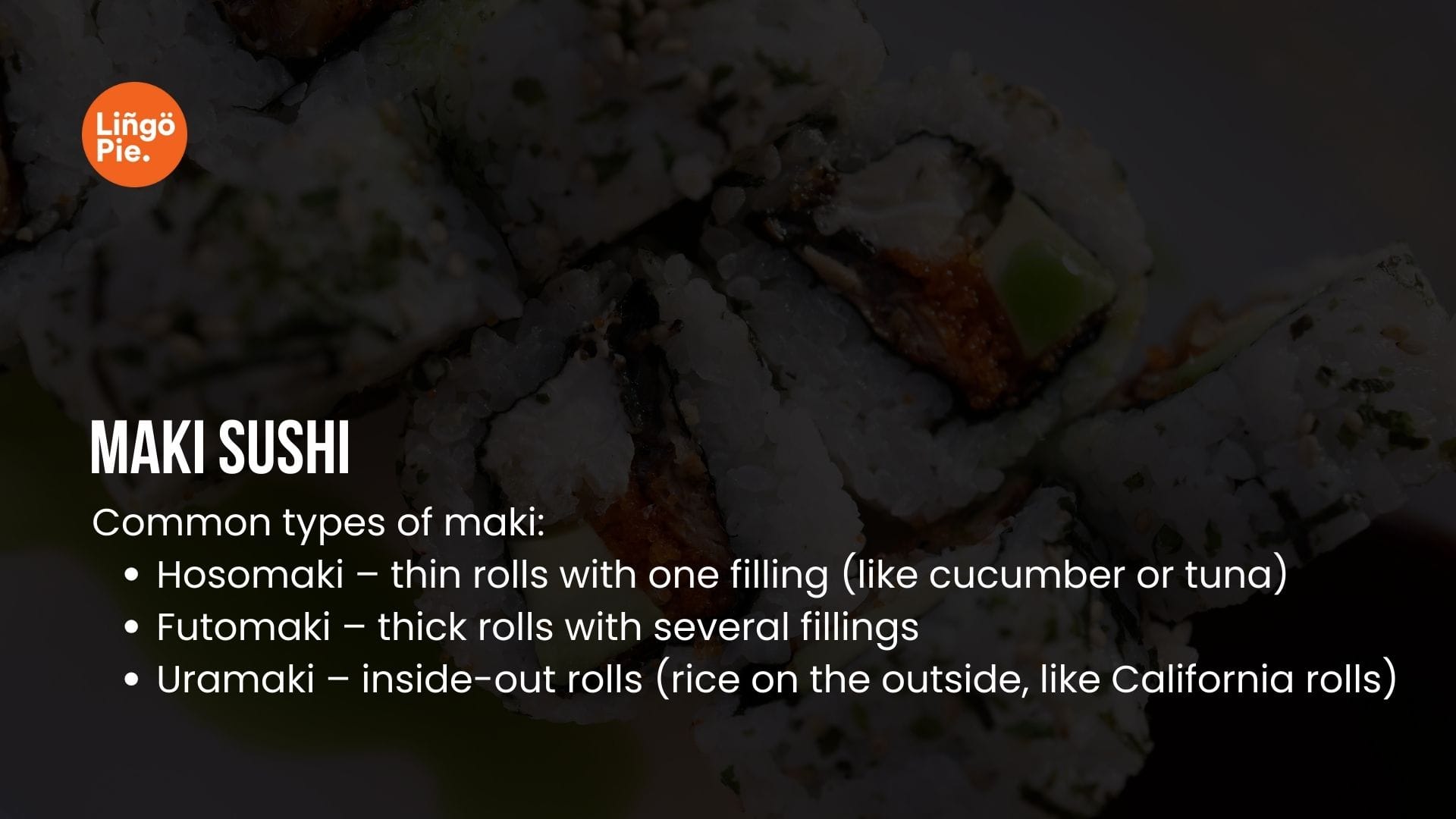
Maki means "roll." This is sushi rolled up in seaweed with rice on the outside or inside, depending on the style. The chef uses a bamboo mat to shape everything into a tight cylinder, then slices it into bite-sized pieces. You'll see plenty of varieties here. Cucumber rolls (kappamaki), tuna rolls (tekkamaki), and combinations with multiple ingredients.
Uramaki Sushi (裏巻き寿司/うらまきずし)
Uramaki flips the standard maki roll inside out. The rice is on the outside, and the nori wraps around the fillings on the inside. This style became popular in Western countries because some people found the seaweed texture off-putting.
California rolls are probably the most famous example. You'll often see sesame seeds, fish roe, or other toppings sprinkled on the rice exterior. These rolls tend to be a bit larger and more elaborate than traditional maki.
Temaki Sushi (手巻き寿司/てまきずし)
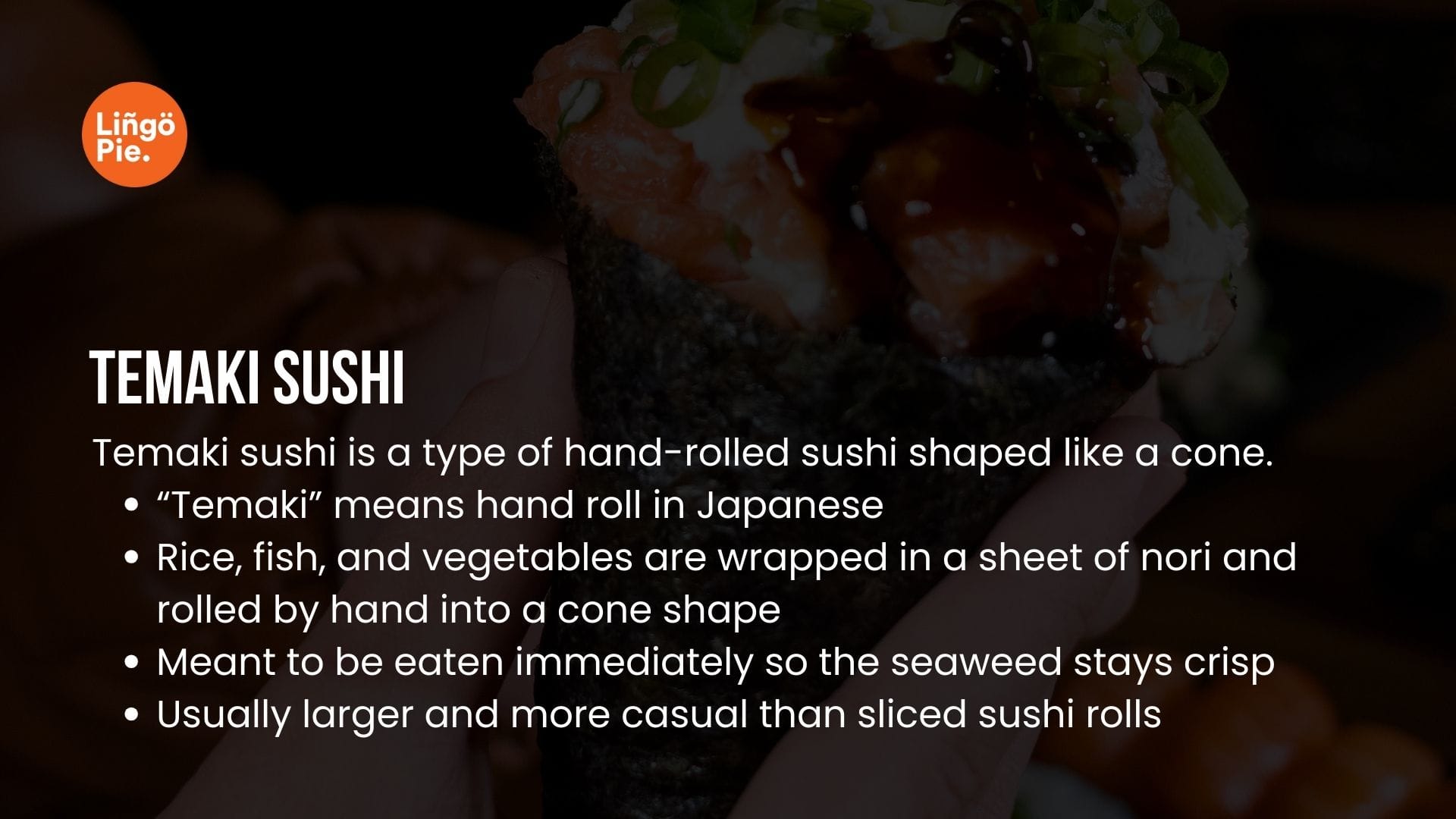
Temaki translates to "hand roll," and that's exactly what it is. A cone-shaped piece of nori filled with rice, fish, and vegetables. You hold it like an ice cream cone and eat it from the top down. These are bigger than other sushi types and meant to be eaten immediately while the seaweed is still crisp.
The texture contrast between the crunchy nori and soft rice is part of the appeal. Temaki is popular for casual home sushi-making because you don't need perfect rolling technique. Just grab a sheet of nori, add your ingredients, and wrap it up.
Chirashi (ちらし寿司/ちらしずし)
Chirashi means "scattered," which describes exactly how this dish works. It's a bowl of sushi rice topped with various pieces of sashimi, vegetables, and garnishes. Think of it as a deconstructed sushi platter. You get to try multiple types of fish in one order without committing to individual pieces of nigiri.
Chirashi bowls often include tamagoyaki (sweet egg omelet), cucumber, avocado, and pickled vegetables alongside the seafood. It's a solid choice when you want variety or you're eating with people who can't agree on what to order. The presentations vary widely, from casual lunch spots to high-end omakase experiences.
Types of Sushi Toppings in Japanese
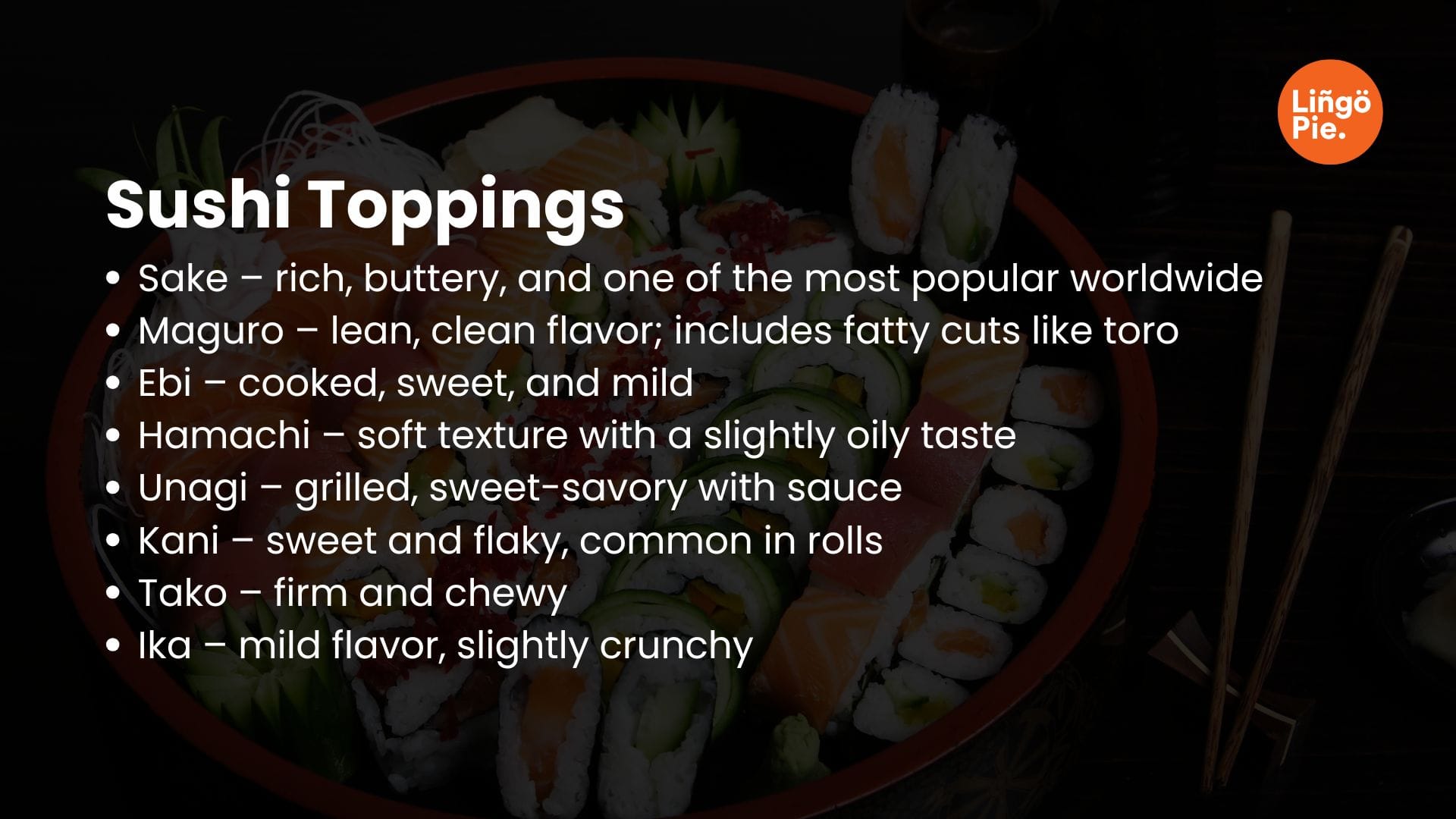
Once you understand the basic sushi formats, the next step is knowing what's actually on top of your rice or inside your roll. The Japanese names for fish and seafood toppings are what you'll see on menus at authentic sushi restaurants. Some are straightforward. Others sound nothing like their English equivalents.
Here are the most common toppings you'll encounter, from the familiar to the adventurous.
| Japanese Name | English |
|---|---|
| Ebi (海老/えび) | Shrimp |
| Maguro (鮪/まぐろ) | Tuna |
| Sake (鮭/さけ) | Salmon |
| Tako (蛸/たこ) | Octopus |
| Akagai (赤貝/あかがい) | Ark Shell Clam |
| Ikura (いくら) | Salmon Roe |
| Uni (雲丹/うに) | Sea Urchin |
| Ika (烏賊/いか) | Squid |
| Tsubugai (つぶ貝/ツブ貝) | Whelk |
| Kanpyoumaki (かんぴょう巻き) | Pickled Gourd Roll |
| Nattoumaki (納豆巻き) | Fermented Soybean Roll |
How To Order Sushi In Japanese
Walking into a sushi restaurant in Japan is different from ordering at your local spot back home. The staff expects you to know what you want, and fumbling through broken English translations wastes everyone's time. Learning a few key phrases makes the whole experience smoother and honestly, more enjoyable.
Starting Your Order
When you sit down, the server will usually ask "Nani ni shimasu ka?" (何にしますか?), which means "What will you have?" Your basic response structure is simple: item name + "kudasai" (ください), which means "please."
For example:
- Maguro nigiri kudasai (まぐろにぎりください) - Tuna nigiri, please
- Sake maki kudasai (さけ巻きください) - Salmon roll, please
If you want multiple pieces, add the number before the item. Japanese counters for sushi use "kan" (貫) for nigiri or "hon" (本) for rolls:
- Maguro nigiri ni-kan kudasai (まぐろにぎり二貫ください) - Two pieces of tuna nigiri, please
- Tekkamaki ip-pon kudasai (鉄火巻き一本ください) - One tuna roll, please
Asking Questions
Not sure what something is? Ask "Kore wa nan desu ka?" (これは何ですか?) while pointing at the menu or someone else's plate. It means "What is this?" The staff will explain, and you can decide from there.
Want to know what's fresh today? Try "Kyou no osusume wa nan desu ka?" (今日のおすすめは何ですか?) - "What do you recommend today?" Sushi chefs appreciate when you ask about their fresh catch. They'll steer you toward whatever came in that morning.
Ordering Omakase
If you're feeling adventurous or just want the chef to decide, order omakase (おまかせ). Say "Omakase de onegaishimasu" (おまかせでおねがいします). This translates to "I'll leave it up to you." The chef will serve you a selection based on what's best that day. Set a budget beforehand by saying "Yen de omakase kudasai" and inserting your price limit.
Additional Requests
Need more wasabi? "Wasabi motto kudasai" (わさびもっとください) - More wasabi, please. Want less rice? "Gohan sukuname de onegaishimasu" (ごはん少なめでおねがいします) - Less rice, please. No wasabi at all? "Wasabi nuki de kudasai" (わさび抜きでください) - Without wasabi, please.
Paying and Leaving
When you're ready for the check, catch the server's attention and say "Okaikei kudasai" (おかいけいください) or simply "Check, please." Before leaving, it's polite to say "Gochisousama deshita" (ごちそうさまでした) to thank them for the meal. The staff will appreciate the effort even if your pronunciation isn't perfect.
Speak Japanese Fluently With Lingopie
Knowing how to order sushi is useful, but it's just scratching the surface. If you want actually to understand Japanese beyond restaurant phrases, you need to hear how native speakers use the language in real situations. This is where Lingopie can help!
Lingopie teaches Japanese through TV shows, anime, and movies with interactive subtitles. Click any word to see what it means, hear the pronunciation, and save it for review later. You're learning from actual conversations instead of textbook dialogues that nobody uses in real life.
The approach works because you're engaged with content you actually want to watch. You'll pick up natural speech patterns, understand politeness levels, and see how context changes meaning. If you're serious about speaking Japanese confidently, start with content that shows you how the language actually works.

![10 Best Horror Anime For Learning Japanese [Guide]](/blog/content/images/2026/01/Japanese-horror-anime--1-.jpg)



![Japanese vs Korean: Which Language Should You Be Learning? [2026]](/blog/content/images/size/w300/2026/03/Japanese-vs-Korean.jpg)