

![How To Say “I Love You” In Korean [Guide]](/blog/content/images/size/w1200/2026/02/How-To-Say-I-Love-You-In-Korean.png)
Love month is basically knocking on the door, and if you didn't get played by a Hongdae boy, you probably have a Korean partner (or a crush 👀), this is your sign to step up your romance game. Saying “I love you” in someone’s native language hits different. It’s personal, it’s thoughtful, and it instantly shows effort — which Koreans really notice.
In this post, you’ll learn how to say “I love you” in Korean properly (yes, there are different levels, and yes, using the wrong one can be weird). We’ll also share natural Korean romantic phrases, commonly used terms of endearment, and real compliments Koreans actually say — whether you’re flirting, dating, or already locked in 💍.
Korean Terms of Endearment: 50 Ways to Express Love in Korean6 Romantic Korean Movies To Watch With Your OppaLearn a Language With Dating Sims Games

How To Say I Love You In Korean
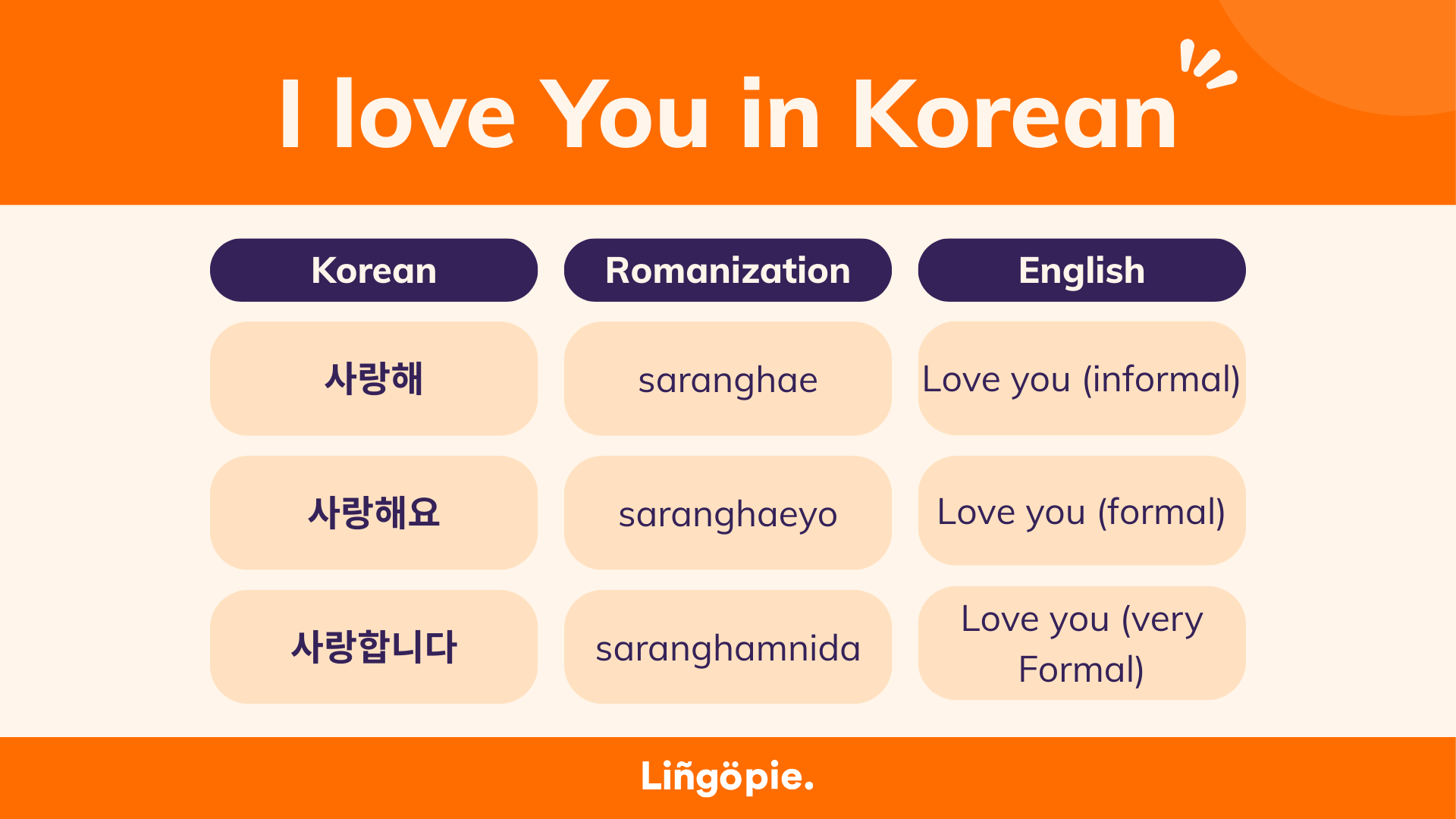
The most natural and commonly used way to say “I love you” in Korean is:
사랑해 (saranghae)
This is the casual, intimate version — perfect for couples, close relationships, and basically 99% of real-life romantic situations. If you’re texting your partner or whispering it during a cute moment, this is the one.
Need something a bit more polite or serious?
- 사랑해요 (saranghaeyo) – Polite but still romantic
- 사랑합니다 (saranghamnida) – Very formal, often used in speeches, letters, or dramatic confessions (not daily couple talk)
⚠️ Pro tip: 사랑합니다 can feel stiff or overly dramatic in normal relationships. Stick to 사랑해 / 사랑해요 unless the moment is really big.
Other Ways To Say “I Love You” In Korean
Sometimes “사랑해” feels too strong — or you just want more variety. Korean has tons of romantic expressions that range from soft affection to deep emotional commitment. These are super common in real conversations, texts, and K-dramas.
💖 Heartfelt & Natural Expressions
| Korean | Pronunciation | Natural English Meaning | Context / Vibe |
| 좋아해 | Jo-a-hae | I like you. | Simple, direct, and classic. |
| 많이 좋아해 | Man-i jo-a-hae | I really like you. | Adds warmth without being "too much." |
| 너한테 반했어 | Neo-han-te ban-hae-sseo | I'm into you / I've fallen for you. | Use this instead of 빠졌어 for a "crush" vibe. |
| 보고 싶다 | Bo-go sip-da | I miss you. | The standard, soft way to say you're thinking of them. |
| 자꾸 네 생각이 나 | Ja-kku ne saeng-gak-i na | I keep thinking about you. | Sounds more natural than "I always think about you." |
| 너 없으면 못 살아 | Neo eup-seu-myeon mot sal-a | I can't live without you. | Very romantic/dramatic (K-drama style). |
| 내 곁에 있어줘 | Nae gyeot-e it-seo-jwo | Stay by my side. | A very "deep" way to show commitment. |
| 너랑 있을 때가 제일 좋아 | Neo-rang it-seul ttae-ga je-il jo-a | I'm happiest when I'm with you. | Much more natural than "I feel comfortable." |
💡 Koreans often show love through implication, not direct declarations. Saying “보고 싶어” daily can be more intimate than saying “I love you” nonstop.
Korean Terms Of Endearment
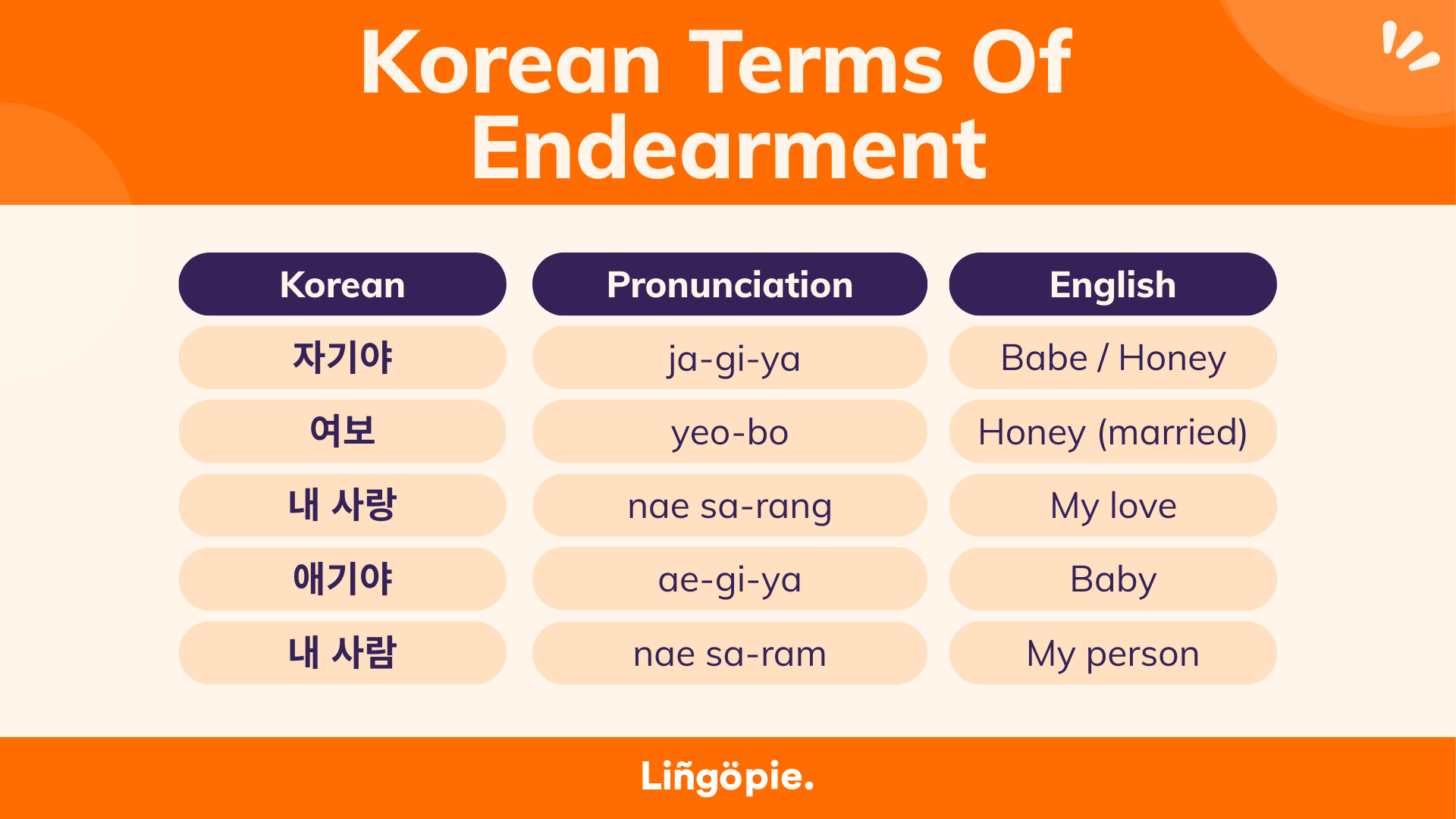
Korean pet names are simple but powerful — and yes, they’re used constantly. Instead of animals like in Polish, Korean focuses on relationship roles and emotional closeness.
| Korean Term | Meaning |
|---|---|
| 자기야 | Babe / Honey |
| 여보 | Honey (married or very serious couples) |
| 내 사랑 | My love |
| 애기야 | Baby |
| 내 사람 | My person |
| 오빠 / 누나 | Older boyfriend / girlfriend (VERY common) |
| 공주님 | Princess (cute/flirty) |
| 왕자님 | Prince |
| 내꺼 | Mine |
| 소중한 사람 | Precious person |
⚠️ Cultural note:
Using 오빠 / 누나 is normal only in romantic contexts where the age difference matches. Don’t force it — Koreans can smell fake usage instantly.
Korean Compliments For Your Partner
Korean compliments usually follow natural spoken patterns, not rigid grammar rules. These are phrases you’ll actually hear in real relationships.
| Korean Compliment | English Meaning | Notes |
|---|---|---|
| 예뻐 | You’re pretty | Casual |
| 잘생겼어 | You’re handsome | Casual |
| 너 진짜 매력 있어 | You’re really attractive | Gender-neutral |
| 오늘 되게 예쁘다 | You look really pretty today | Natural daily compliment |
| 너랑 있으면 행복해 | I’m happy when I’m with you | Emotional |
| 너 성격 너무 좋아 | I love your personality | Big green flag |
| 웃을 때 제일 예뻐 | You’re prettiest when you smile | Very common |
| 너밖에 없어 | There’s only you | Serious |
| 완전 내 스타일이야 | You’re totally my type | Flirty |
| 너 진짜 특별해 | You’re really special | Safe & sweet |
💬 Unlike Polish, Korean compliments don’t change by gender — way easier, zero grammar panic.
Learn Korean Through Romantic K-Dramas
Reading phrases is helpful, but hearing how Koreans actually say them is what makes everything click. Korean shows are gold for learning tone, timing, and emotional delivery — especially romance-heavy ones.
How to use K-dramas effectively:
- Start with romance-focused shows like Business Proposal, Crash Landing on You, or Nevertheless
- Watch first with English subs, then switch to Korean subs
- Pause and repeat emotional lines (yes, out loud)
- Watch 20–30 minutes daily instead of bingeing once a week
Learn Romantic Korean Naturally With Lingopie
You’ve got the phrases — now hear them used naturally. Lingopie lets you watch real Korean shows where couples flirt, fight, and fall in love while you learn the language in context.
You can:
- Click any phrase for instant translation
- Save romantic expressions to flashcards
- Replay scenes until pronunciation feels natural
After a few weeks, your Korean partner won’t ask “Did you use a translator?” — they’ll ask “When did your Korean get so good?”
That’s the goal 😉

![How to Learn Spanish with News in Easy Spanish [Guide]](/blog/content/images/2024/12/How-to-Learn-Spanish-with-News-in-Easy-Spanish.jpg)
![How To Say I Love You In Greek Like A Native Speaker [GUIDE]](/blog/content/images/size/w1200/2026/02/How-To-Say-I-Love-You-In-Greek.png)
