

Most English speakers confidently say "PAIR-iss" and move on. It rolls off the tongue easily, it sounds familiar, and frankly, everyone back home will know what city you mean. But the moment you're in France, talking to a native French speaker, that pronunciation sticks out immediately. It's not just an accent thing. It's a completely different set of sounds.
Getting "Paris" right in French means unlearning three habits at once: the way you say R, the way you say the final S, and the way you stress syllables. None of these works the same way in French as they do in English. This guide breaks it all down so you can say it correctly from your very first try.
- 30+ Beautiful French Words, Phrases, And Sayings
- 25 Modern French Text Slang and Chat Abbreviations
- 5 Best French Translator Apps Worth Using

Quick Answer: How to Pronounce Paris in French
In French, Paris is pronounced /paʁi/, which sounds roughly like "pah-REE" (with a guttural R from the back of the throat and no S at the end). The stress across both syllables is even. There is no heavy accent on either syllable, the way English speakers might expect.

However, do note that the anglicized version is the standard English pronunciation of the city’s name and works perfectly well in English conversation. This guide is specifically for when you want to say Paris in French, the way a native French speaker would, because the two pronunciations are genuinely different words in terms of sounds.
Sound-by-Sound Breakdown of Paris in French
The IPA notation for Paris in French is /paʁi/. Each sound is worth looking at individually, because each one differs from how English speakers would instinctively say it.
- /p/: the unaspirated P. In English, the P in words like "Paris" comes with a small puff of air. In French, that puff disappears. Think of the P in "spoon" (no puff) rather than the P in "pan" (strong puff). Subtle, but it contributes to the overall French sound.
- /a/: the open A vowel. This is the "a" in "father." It's a clean, open vowel with no glide at the end. English speakers tend to diphthong their vowels (turning one sound into two), but French vowels stay pure and tight. Just "ah," and done.
- /ʁ/: the French R. This is the big one. More on this in the next section.
- /i/: the close I vowel. This sounds like the "ee" in "machine." It's held at a consistent tongue height without any drift. The word ends here cleanly, on that "ee" sound.
And the final S: completely silent. It does not exist in the spoken word at all.
The French R: The Trickiest Part for English Speakers
The French R is produced at the back of the throat, near the uvula (that small tissue that hangs at the back of your mouth). This is about as far from the English R as you can get.
The English R is a retroflex or alveolar approximant, meaning it's made near the front of the mouth with the tongue curling or positioning near the ridge behind your upper teeth. The French R, by contrast, creates friction at the very back of the vocal tract. It sounds a bit like a gentle gargle or the sound you make when clearing your throat softly. That's why it's sometimes called a guttural R.
Think of it this way: if the English R comes from your tongue, the French R comes from your throat.
The technical name for it is a voiced uvular fricative, written as /ʁ/ in IPA. Parisian French uses this sound consistently. Some regional accents and older speakers in the south of France still use an alveolar trill (closer to the rolled R in Spanish), but in standard French, and especially in the capital, the uvular R is the norm.
To practice it:
- Relax your tongue (don't curl it)
- Open your mouth slightly and try to produce a soft friction sound at the back of your throat.
- Aim for a gentle gargling motion, without actual water, gets you close.
Why the Final S in Paris Is Silent
When it comes to speaking French, most final consonants are silent. The letter S is one of them. So "Paris" in French ends on the I sound, not an S. The letters that are typically pronounced at the end of a French word fall into the mnemonic CaReFuL (C, R, F, L). S is not on that list.
There is one exception called liaison. In French, when a word ending in a silent consonant is followed immediately by a word beginning with a vowel, that consonant can resurface in pronunciation.
A few examples of liaison in action:
- "les enfants" (the children): the S of "les" is normally silent, but here it sounds like a Z linking into "enfants" — "lay-ZON-fon"
- "vous avez" (you have): the S of "vous" links as a Z sound into "avez" — "voo-ZA-vay"
- "nous allons" (we are going): the S of "nous" links into "allons" — "noo-ZA-lon"

With "Paris" specifically, liaison is very rare in everyday speech. You might technically hear "Paris est..." connect as "Pari-zest" in a formal or poetic context, but this almost never comes up in casual conversation. In practice: no S, ever.
Paris in French: Example Sentences
Here are a few sentences that show Paris used naturally in French. Notice how the S stays silent in each case, and how the word flows into the surrounding speech:
- "Paris est la capitale de la France." (Paris is the capital of France.) — A simple, clean sentence. The final I of "Paris" connects softly into "est."
- "J'habite à Paris depuis trois ans." (I've lived in Paris for three years.) — The "à Paris" section shows how the word sounds in a preposition phrase.
- "Allons à Paris ce week-end." (Let's go to Paris this weekend.) — Good for practicing the flow of connected speech.
In each case: pah-REE, not "PAIR-iss." Even, smooth, with the guttural R in the middle and nothing at the end.
Common Mistakes English Speakers Make When Pronouncing Paris in French
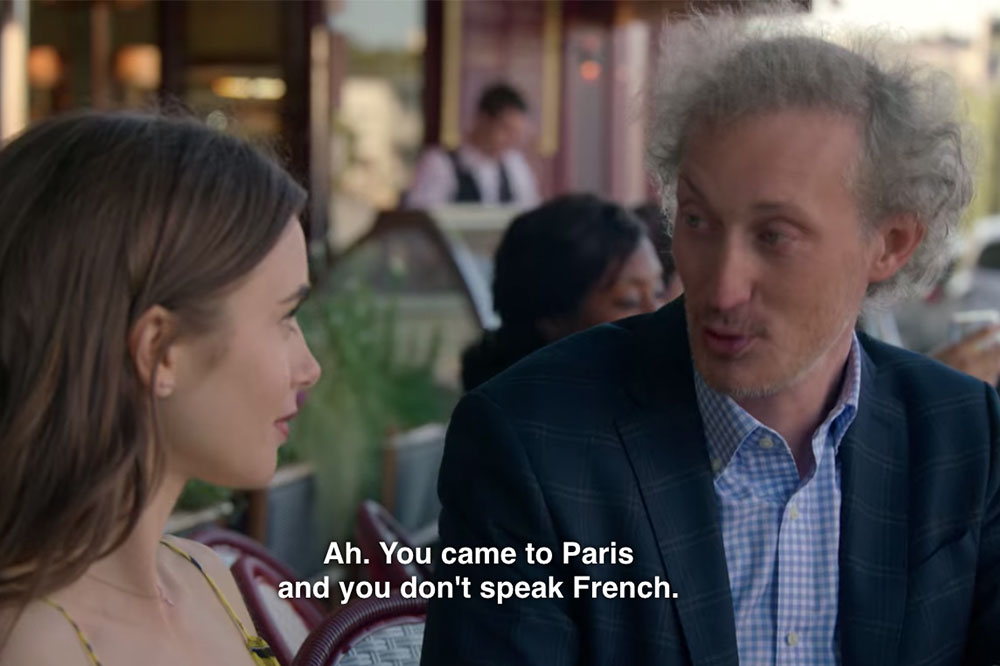
If you're coming from English, you're going to hit at least one of these without thinking:
- Pronouncing the final S. English speakers often add the S instinctively because the word is spelled with one. That turns /paʁi/ into "PAR-is," which is immediately recognizable as the anglicized version. Drop the S entirely.
- Using an English R. Substituting a retroflex or alveolar R for the French uvular R is the most noticeable giveaway of a non-native accent. The tongue-front English R sounds completely foreign in a French word. The R needs to come from the back of the throat.
- Stressing the first syllable. English speakers naturally land harder on the first syllable: PAIR-iss. French doesn't work that way. French is syllable-timed, meaning syllables are pronounced at a roughly even pace without strong emphasis on any one of them. Both syllables in "Paris" carry equal weight. It's "pah-REE," not "PAH-ree."
- Diphthonging the A. English speakers often turn the A into a gliding vowel, something like "ay-ee." In French, the A in "Paris" is a clean open vowel, like the "a" in "father." No glide. Hold it steady.
 Jonathan Del Prado
How to Practice Until It Sounds Natural
Knowing the rules is step one. Sounding like a native French speaker takes repetition and, more importantly, exposure to real French speech.
Shadowing technique
The shadowing technique is one of the most effective approaches: listen to a short clip of a native speaker saying "Paris" or a sentence containing it, and repeat immediately after. Not from memory. Immediately. This trains your ear and your mouth at the same time, helping you internalize the rhythm and intonation of natural French speech.
Gargling exercises
Gargling exercises help you find the uvular R. Gargle gently with water, then try to recreate that back-of-throat vibration without the water. It feels strange at first, but it isolates the right muscles.
Using audio tools and phonetic apps
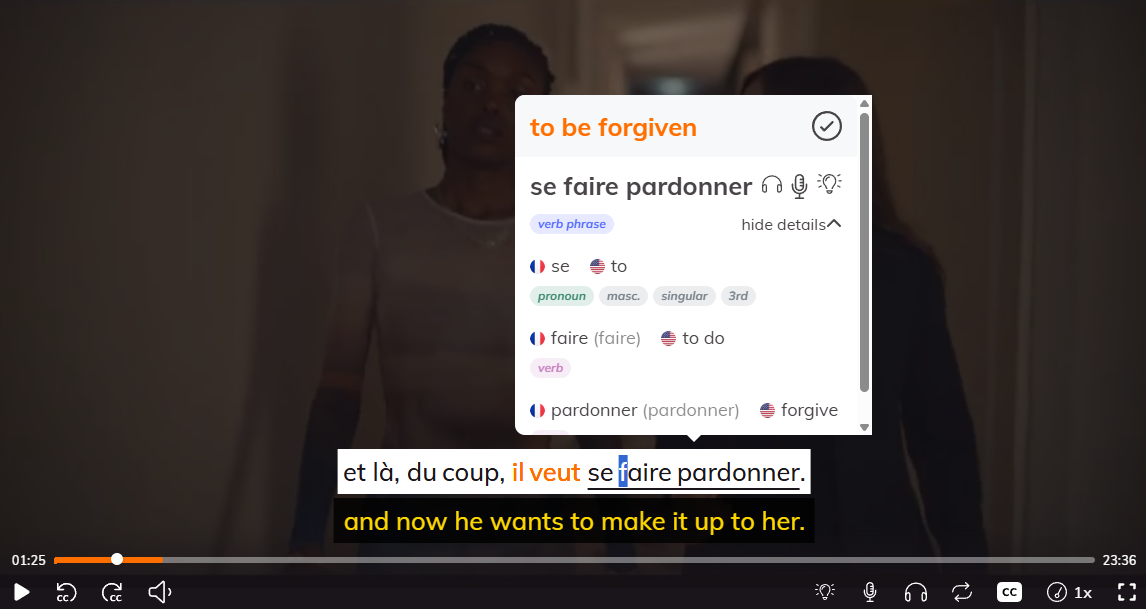
Audio resources like Lingopie let you hear dozens of native French speakers pronounce "Paris" in different sentence contexts. Lingopie alone has nearly 29,000 examples of Parisian French in natural spoken speech. That kind of repetitive, contextual exposure is what actually ingrains correct pronunciation.
And this is exactly where Lingopie becomes useful. Memorizing pronunciation rules from a post like this is a starting point. Hearing those same sounds in real French TV shows, spoken by native speakers in natural conversations, is what makes it stick. Lingopie lets you watch French-language shows with dual subtitles and vocabulary tools built in, so you’re hearing Paris, and words like it, in the kind of natural rhythm that no textbook can replicate.
Try Lingopie free and see how fast your ear adjusts.
Frequently Asked Questions
Is the S in Paris silent in French?
Yes. The final S in Paris is silent in standard French pronunciation. The word ends on the /i/ sound (like "ee"), making the correct pronunciation /paʁi/. The S may surface as a /z/ sound in rare formal liaison contexts when followed by a vowel-starting word, but in everyday speech, you won't hear it.
How do you say Paris in French correctly?
Paris in French is pronounced /paʁi/, which sounds roughly like "pah-REE" with a guttural R produced at the back of the throat. Both syllables carry roughly equal stress, and the final S is not pronounced.
Why do English speakers say Paris differently?
English speakers say "PAIR-iss" because English phonology includes a retroflex R (produced with the tongue), heavy syllable stress on the first syllable, and a default tendency to pronounce written final consonants. None of these patterns apply in French, where the R is uvular, syllables are evenly timed, and the final S is silent.
What does the French R sound like?
The French R, written as /ʁ/ in IPA, is a voiced uvular fricative. It's produced at the back of the throat, near the uvula, creating a soft friction sound similar to a gentle gargle. It is distinct from both the English retroflex R and the rolled Spanish R.
Is saying "PAIR-iss" wrong?
Not in English. "PAIR-iss" is the standard English pronunciation of the city's name and is completely accepted in English-language contexts. This guide covers the French pronunciation specifically, which is a different set of sounds used by native French speakers.
Is Paris spelled the same in French and English?
Yes, the spelling is identical in both languages: P-A-R-I-S. The difference is entirely in pronunciation. In French, /paʁi/. In English, "PAIR-iss."

![Is Portuguese Hard To Learn? Honest Opinion + Tips [2026]](/blog/content/images/2025/09/Portuguese-hard-to-learn.jpg)
![30+ Beautiful French Words, Phrases, And Sayings [GUIDE]](/blog/content/images/size/w1200/2026/03/30--Beautiful-French-Words--Phrases--And-Sayings-.png)



![30+ Beautiful French Words, Phrases, And Sayings [GUIDE]](/blog/content/images/size/w300/2026/03/30--Beautiful-French-Words--Phrases--And-Sayings-.png)
