
![How To Say Happy New Year In Hebrew [15+ Terms And Phrases]](/blog/content/images/size/w1200/2025/12/how-to-say-happy-new-year-In-hebrew.jpeg)
You've probably heard "Shanah Tovah" tossed around every September, maybe seen it on greeting cards or heard it at a friend's Rosh Hashanah dinner. But here's what most people don't realize about saying happy new year in Hebrew: there are actually two completely different new years to celebrate.
Jews observe Rosh Hashanah, the Jewish New Year that falls in September or October. Then there's the regular secular New Year on January 1st that Israelis also acknowledge. Each celebration has its own greetings, and mixing them up is like showing up to a birthday party with a "Merry Christmas" card.
If you've ever been curious about Hebrew or thought about studying it, these New Year greetings make a surprisingly good starting point. Let's break down both celebrations and what to say for each.
- 5 Best Hebrew Learning Apps For Total Beginners
- Cooking Shows In Hebrew: 6 Shows To Watch On Lingopie
- How Many Hebrew-Speaking Countries Are There? [Guide]

How To Say Happy New Year In Hebrew
The phrase you use depends entirely on which new year you're celebrating. Here's the breakdown.
| Hebrew | Transliteration | Pronunciation | Used For |
|---|---|---|---|
| שנה טובה | Shanah Tovah | shah-NAH toe-VAH | Rosh Hashanah |
| לשנה טובה | L'shanah Tovah | leh-shah-NAH toe-VAH | Rosh Hashanah |
| שנה טובה ומתוקה | Shanah Tovah U'metukah | shah-NAH toe-VAH ooh-meh-too-KAH | Rosh Hashanah |
| שתהיה לך שנה טובה | She'tihiye lekha shanah tovah | sheh-tee-HEE-yeh leh-KHAH shah-NAH toe-VAH | January 1st |
For Rosh Hashanah (Jewish New Year)
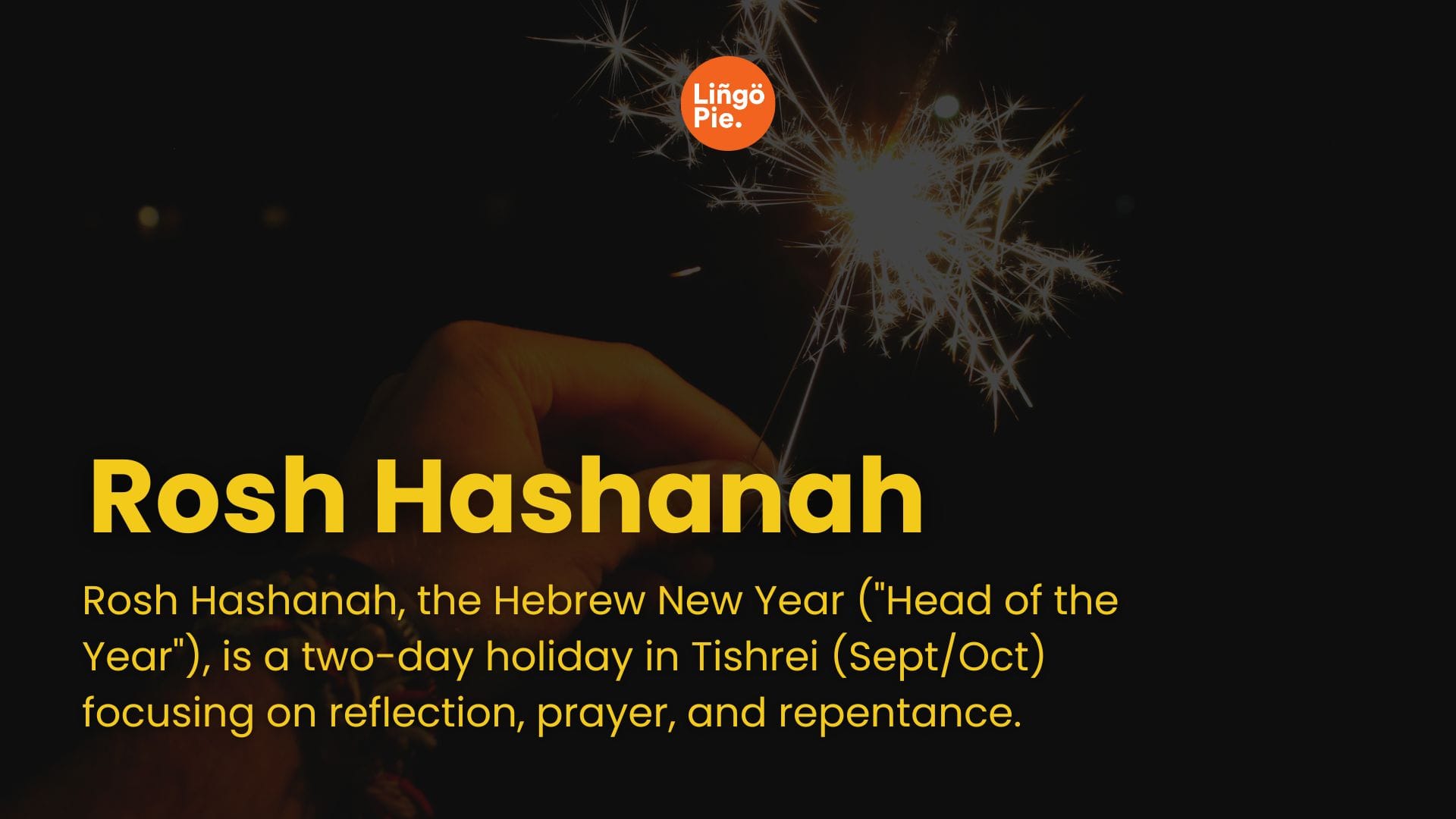
The most common greeting is Shanah Tovah (שנה טובה), pronounced shah-NAH toe-VAH. It literally translates to "good year" and works perfectly from Rosh Hashanah through the first few weeks of the Jewish calendar's Tishrei month.
You'll also hear L'shanah Tovah (לשנה טובה), which means "for a good year." Same sentiment, slightly more formal. Some people go with Shanah Tovah U'metukah (שנה טובה ומתוקה), which translates to "a good and sweet year." The "sweet" part references the tradition of dipping apples in honey.
For January 1st (Secular New Year)
When the secular calendar flips to January 1st, Israelis switch to She'tihiye lekha shanah tovah (שתהיה לך שנה טובה). This translates to "may you have a good year" and sounds way more casual than the Rosh Hashanah greetings. You might hear this at New Year's Eve parties in Tel Aviv or in texts between friends at midnight.
Other Hebrew Greetings For The New Year
Beyond everyday greetings, Hebrew includes formal holiday phrases that carry deep cultural and religious meaning. These expressions are typically used during the High Holidays, in synagogue settings, greeting cards, or when you want to acknowledge the spiritual weight of the season rather than just offer a casual wish.
| Greeting (Hebrew) | Translation | When It’s Used |
|---|---|---|
| Ketivah VaChatimah Tovah | A good inscription and sealing (in the Book of Life) | During Rosh Hashanah, expressing hope for favorable judgment |
| L’shanah tovah tikateivu v’teichateimu | May you be inscribed and sealed for a good year | Before or during Rosh Hashanah |
| G’mar chatimah tovah | A good final sealing | Between Rosh Hashanah and Yom Kippur |
| Tizku l’shanim rabot | May you merit many years | Common in Sephardic communities; wishes long life |
New Year’s Resolutions In Hebrew
Since we're talking about new beginnings, let's cover how to discuss resolutions in Hebrew. The phrase is Hachlata leshanah chadasha (החלטה לשנה חדשה), which literally translates to "a decision for a new year."
Hebrew treats resolutions more flexibly than English does. You might say Kabalat hachlata lashanah hachadasha (קבלת החלטה לשנה החדשה), meaning "making a decision for the new year," or conjugate it based on who's making the resolution. The language doesn't lock you into one fixed phrase the way "New Year's resolution" does in English.
Here are some common resolutions and how they translate:
| English | Hebrew | Transliteration |
|---|---|---|
| To eat healthy | לאכול בריא | Le'ekhol bari |
| To quit smoking | להפסיק עישון | Lehafsi'ach ishun |
| To exercise regularly | להתאמן רגולרית | Lehitamel regularit |
| To learn something new | ללמוד משהו חדש | Lilmod mashehu chadash |
| To save money | לחסוך כסף | Lachsoch kesef |
| To travel more | לטייל יותר | Letayel yoter |
If you're discussing resolutions with Hebrew speakers, you might hear "Ma hahachlata shelcha lashanah?" (מה ההחלטה שלך לשנה?), which means "What's your resolution for the year?" It's a pretty standard question during both Rosh Hashanah and the secular New Year, though the spiritual weight shifts depending on which celebration you're talking about.
Traditional New Year's Foods In Hebrew
Food plays a huge role in both Jewish and secular New Year celebrations, but what you'll see on the table depends entirely on which holiday you're celebrating.
Here's a quick reference table for the Rosh Hashanah Foods:
| Food | Hebrew | Transliteration | Symbolism |
|---|---|---|---|
| Apple | תפוח | Tapuach | Sweet year (with honey) |
| Honey | דבש | Devash | Sweetness and blessing |
| Pomegranate | רימון | Rimon | Good deeds (613 seeds) |
| Round challah | חלה עגולה | Challah agulah | Cycle of the year |
| Fish head | ראש דג | Rosh dag | Being at the head |
| Dates | תמרים | Tmarim | End of enemies (word play) |
| Carrots | גזר | Gezer | Decree (gezar = decree) |
Secular New Year's Foods (January 1st)
When Israelis celebrate the secular New Year on January 1st, the food gets way less symbolic and way more party-focused. You're looking at typical celebration fare rather than ritualistic meals.
Think champagne (shampanya, שמפניה), appetizers (mazalim ktanim, מזלים קטנים), and whatever desserts people feel like making. There's no traditional "you must eat this" list for secular New Year's in Israel. Some families might do a nice dinner, others just snack through the night at parties.
The phrase "aruchat chag" (ארוחת חג) means "holiday meal," and you could technically use it for both celebrations. But when someone says they're preparing an aruchat chag in September, you know it's Rosh Hashanah with all the symbolic foods. When they say it on December 31st, it's just a nice dinner with none of the religious weight.
Hebrew Words And Phrases For The New Year
If you're hitting a New Year's Eve party in Tel Aviv or Jerusalem, you'll need more than just "Shanah Tovah" to navigate the night. Here's the vocabulary that actually gets used when Israelis are celebrating.
| English | Hebrew | Transliteration |
|---|---|---|
| Party | מסיבה | Mesibah |
| Champagne | שמפניה | Shampanya |
| Fireworks | זיקוקים | Zikukim |
| Cheers! / To life! | לחיים | L'chaim |
| Music | מוזיקה | Muzika |
| Dance | לרקוד | Lirkod |
| Countdown | ספירה אחורה | Sfirah achorah |
| Midnight | חצות | Chatzot |
| Friends | חברים | Chaverim |
| Fun | כיף | Kef |
| Awesome/Cool | אחלה | Achla |
| Let's go! | יאללה | Yalla |
Looking for cool party phrases to pair with these words? Check out the list below!
- "Bo'u nirkod!" (בואו נרקוד!) means "Let's dance!" You'll hear this when someone's trying to drag their friends onto the dance floor.
- "Eizeh kef!" (איזה כיף!) translates to "What fun!" or "This is great!" People say this when they're genuinely having a good time.
- "Yalla, chatzot!" (יאללה, חצות!) means "Come on, it's midnight!" Yalla is one of those borrowed Arabic words that Israelis use constantly—it basically means "let's go" or "come on."
- If someone offers you a drink and you want to accept, just say "Bevadai" (בוודאי), which means "definitely" or "for sure."
- If you're done drinking, "Dai li" (די לי) means "I've had enough."
Want To Go Beyond Hebrew Greetings?
Knowing how to say happy new year in Hebrew gets you through Rosh Hashanah pleasantries. But if you want to actually follow conversations at holiday dinners, understand Israeli TV shows, or catch the jokes your Hebrew-speaking friends are making, you need more than a few festive phrases.
That's where Lingopie comes in. Try Lingopie free and see if learning through binge-watching beats whatever method you're using now.


![How To Say Happy New Year In Dutch [Plus 10+ Useful Words]](/blog/content/images/size/w1200/2025/12/how-to-say-happy-new-year-In-dutch.jpeg)

![How To Say I Love You In Hebrew [Guide]](/blog/content/images/size/w300/2026/02/How-To-Say-I-Love-You-In-Hebrew-.png)