
Family is often one of the first topics people learn when studying a new language. Words like mother, father, brother, and sister come up in everyday conversations, making them essential for beginners. Even simple terms like grandma in different languages can reveal interesting cultural differences in how families are addressed around the world.
If you’re starting to learn Italian, knowing how to talk about your family is a great place to begin. In this guide, you’ll learn 30 family members in Italian, what they mean, and how to use them in simple conversations.
- 17 Best Italian Series and Movies For Beginners
- 8 Best Apps To Learn Italian As A Beginner [RANKED]
- 6 Best Italian Translator Apps For Learners [TESTED]

How Italian Family Words Work
Before diving into vocabulary, you need to understand one rule that applies to every family word in Italian: every noun has a gender, either masculine or feminine, and this changes the article (the word for "the" or "a") that goes with it.
Male relatives use il in the singular form. Female relatives use la. When you talk about a mixed group, for example, brothers and sisters together, Italian always uses the masculine plural form. So i fratelli can mean brothers specifically, or it can mean brothers and sisters together. This is standard Italian grammar, not an exception.
The plural forms follow a predictable pattern. Masculine words ending in -o change to -i (fratello becomes fratelli). Feminine words ending in -a change to -e (sorella becomes sorelle). Most Italian learners pick this up quickly because it is consistent across the whole language.
How to Say "My" With Family Members
Italian usually puts a definite article before possessive adjectives. You would say il mio libro (my book) with the article il before mio. But family members are the main exception to this rule. When you refer to a single, unmodified family member, you drop the article entirely.
- You say mio fratello (my brother), not il mio fratello.
- You say mia sorella (my sister), not la mia sorella.
The same applies to mio padre, mia madre, mio figlio, mia figlia, and all other singular immediate family terms.
Immediate Family In Italian
These are the words you will use most often as a beginner. Italian has both formal and informal versions for parents, and the informal ones are far more common in everyday speech.
One regional note worth knowing: babbo is another word for dad, used mainly in Tuscany and central Italy. If you are watching Italian TV or films set in Florence, you will hear babbo constantly. In Rome or Milan, papà is more standard. Neither is wrong.
For the Italian word "i figli," note that it means sons when used in a strictly masculine context. However, in everyday use, it means children in general, including both boys and girls. So if an Italian says "ho due figli," they mean they have two children, not necessarily two sons.
Grandchildren And Grandparents In Italian
Italian grandparents hold a central place in family life because they're often involved in raising grandchildren, cooking Sunday meals, and keeping extended family connected.
Aunts, Uncles, and Cousins In Italian
These extended-family terms follow the same masculine-feminine pattern as the immediate family. Lo zio (uncle) uses lo rather than il before it because zio starts with a z, and Italian uses lo before nouns beginning with z, s followed by a consonant, gn, ps, and a few other combinations.
When you refer to your aunts and uncles together as a group, the masculine plural gli zii is used even if the group includes women.
In-Laws In Italian
In English, you simply add "in-law" to any family term: father-in-law, brother-in-law, sister-in-law. Italian does not work that way since every in-law relationship has its own dedicated word that you need to learn individually.
Stepfamily Members In Italian
Italian has formal terms for stepfamily members, but in practice, many Italians avoid using them. The suffixes attached to these words carry a historically negative tone rooted in old Catholic Italian culture, where remarriage and blended families were stigmatized. Because of this, modern Italian families often describe these relationships descriptively rather than using formal terms.
That said, the formal terms are still used and understood, and you will encounter them in writing, legal contexts, and sometimes in conversation. It is worth learning them even if you personally opt for the descriptive approach.
Godparents In Italian
In Italian culture, particularly in Catholic families and in southern Italy, godparents hold a role that goes well beyond ceremony. The padrino (godfather) and madrina (godmother) are chosen at a child’s baptism and are expected to be active participants in that child's life. They are considered part of the extended family unit, invited to major family events, and in many regions treated with the same respect as biological relatives.
Affectionate and Diminutive Forms
Italian uses diminutive suffixes to express affection and closeness within families. The most common are -ino for masculine words and -ina for feminine words. Adding these to a family term makes it sound warmer and more intimate, similar to saying mommy instead of mom in English.
Italian Family Culture Every Learner Should Know
Vocabulary is easier to remember when you understand the culture behind it. These four cultural facts will help you use these words in context rather than just recognizing them on a list.
Sunday Lunch Is the Center of Family Life
La domenica (Sunday) is family day across Italy. Extended families gather for pranzo (lunch) that typically runs from early afternoon into the evening, involving multiple courses and everyone from grandparents to young children at the same table. These gatherings are usually expected, planned around, and taken seriously.
If you are invited to a Sunday pranzo at an Italian family's home, you are being included in something genuinely important to them. Knowing how to refer to every person at the table, from the suoceri to the cugini, will help you participate naturally in the conversation.
The Mammone Phenomenon
The stereotype of the Italian man who maintains an unusually close relationship with his mother reflects a real cultural pattern. The word mammone, which roughly translates as "mama's boy," does not carry the same pejorative weight in Italian that it does in English. Living with parents into adulthood, calling your mother daily, and seeking her advice as an adult are all common and socially accepted behaviors in Italy.
This is partly economic (housing costs in Italian cities are high), partly cultural, and partly structural. Understanding this helps explain why mamma is such a charged and important word in Italian beyond its literal meaning.
Italy Has One of Europe’s Lowest Birth Rates
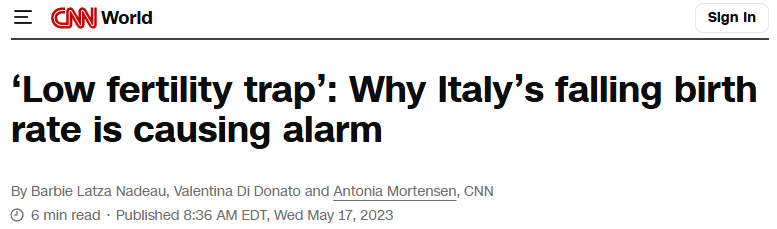
Despite family being central to Italian identity and culture, Italy has one of the lowest fertility rates in Europe. Fewer children are being born, households are smaller, and multigenerational extended families living under one roof are less common than they were a generation ago, particularly in northern cities like Milan and Turin.
The south, especially in regions like Sicily, Calabria, and Campania, tends to maintain stronger extended family ties and more traditional family structures. This regional difference is worth knowing because it affects how often you will encounter broader family vocabulary in different parts of the country.
Godparents Have Real Social Weight
In many parts of Italy, especially in the south, being asked to be a padrino or madrina is a genuine social honor with ongoing responsibilities. The relationship between godparent and godchild can last a lifetime and often comes with expectations around gift-giving, milestone attendance (confirmations, graduations, weddings), and general mentorship.
In some communities, the bond between a parent and a godparent, called a compare or comare relationship, is treated almost like an extended family tie in itself.
Useful Phrases for Talking About Your Family
Knowing individual words is one thing. Being able to use them in natural sentences is what makes vocabulary stick. Here are common phrases you can adapt for your own family.
Learn More Italian With Lingopie
Reading vocabulary lists is a good start, but the fastest way to make these words stick is to hear them used naturally by real speakers. That is where Lingopie comes in.
Lingopie teaches Italian through real TV shows and movies. Instead of textbook exercises, you watch native content with dual-language subtitles. When you hear a character say mia sorella or il mio cognato, you are getting the word in a full emotional and narrative context, which is exactly how your brain builds durable vocabulary. You can click any word in the subtitle to get an instant translation and save it to a flashcard deck for review later.
Family vocabulary is a constant in Italian drama and comedy. Shows built around multigenerational households, Sunday dinners, and family conflict give you natural repetition of words like nonna, suocera, and cognato without it feeling like a study session. You absorb the cultural context alongside the language.
Try Lingopie free and start building your Italian vocabulary through content you actually want to watch.



![17 Best Italian Series and Movies On Netflix [For Beginners]](/blog/content/images/size/w300/2026/02/Italian-TV-Shows.jpg)
![How To Say I Love You In Italian Like A Native Speaker [Guide]](/blog/content/images/size/w300/2025/01/I-Love-You-In-Italian.jpg)
![8 Best Apps To Learn Italian As A Beginner [RANKED]](/blog/content/images/size/w300/2026/01/Best-Apps-To-Learn-Italian.jpg)
