

![6 Best Japanese Language Apps Worth Trying [TESTED]](/blog/content/images/size/w1200/2025/12/best-apps-to-Learn-Japanese.jpeg)
Learning Japanese can feel overwhelming. For many beginners, a good language learning app becomes that reliable companion that makes the journey less intimidating. And can you blame them? Apps give you that structure when you need it, practice when you have five minutes to spare, and instant feedback when you’re not sure if you're saying something right.
In this post, you’ll discover six Japanese language apps that actually deliver on their promises. I've tested each one to see what they do well, where they fall short, and who they're best suited for. By the end, you’ll have a clear sense of which tool (or combination of tools) makes the most sense for your Japanese learning goals.
- Japanese Onomatopoeia: 70+ Words You’ll See In A Manga
- 28+ Japanese Phone Greetings And How to Use Them
- How To Write Your Name In Japanese: Guide + Examples

Can Japanese Language Apps Help
Apps work because they remove friction from the learning process. You don't need to schedule anything, commute anywhere, or wait for a teacher to be available. In fact, you just need to open your phone and start practicing. For Japanese specifically, apps excel at drilling the fundamentals: the Japanese alphabet, basic kanji recognition, and essential vocabulary.
Japanese language apps are also great for building habits. Even 10 minutes a day adds up when you’re consistent, and apps make that consistency easier to maintain than almost any other method. The instant feedback loop keeps you engaged, and the gamification elements (when done right) can genuinely motivate you to show up every day.
That said, apps have clear limitations...
- They won’t give you the natural flow, slang, and nuance you get from real conversations.
- They often teach a polished, textbook version of Japanese—not the everyday language you’ll hear from natives.
- You can master drills, but without hearing Japanese in context, real conversations will still feel tough.
To progress, pair apps with authentic input: Japanese shows, reading practice, and eventually talking to real people.
Best Japanese Language Apps
Lingopie
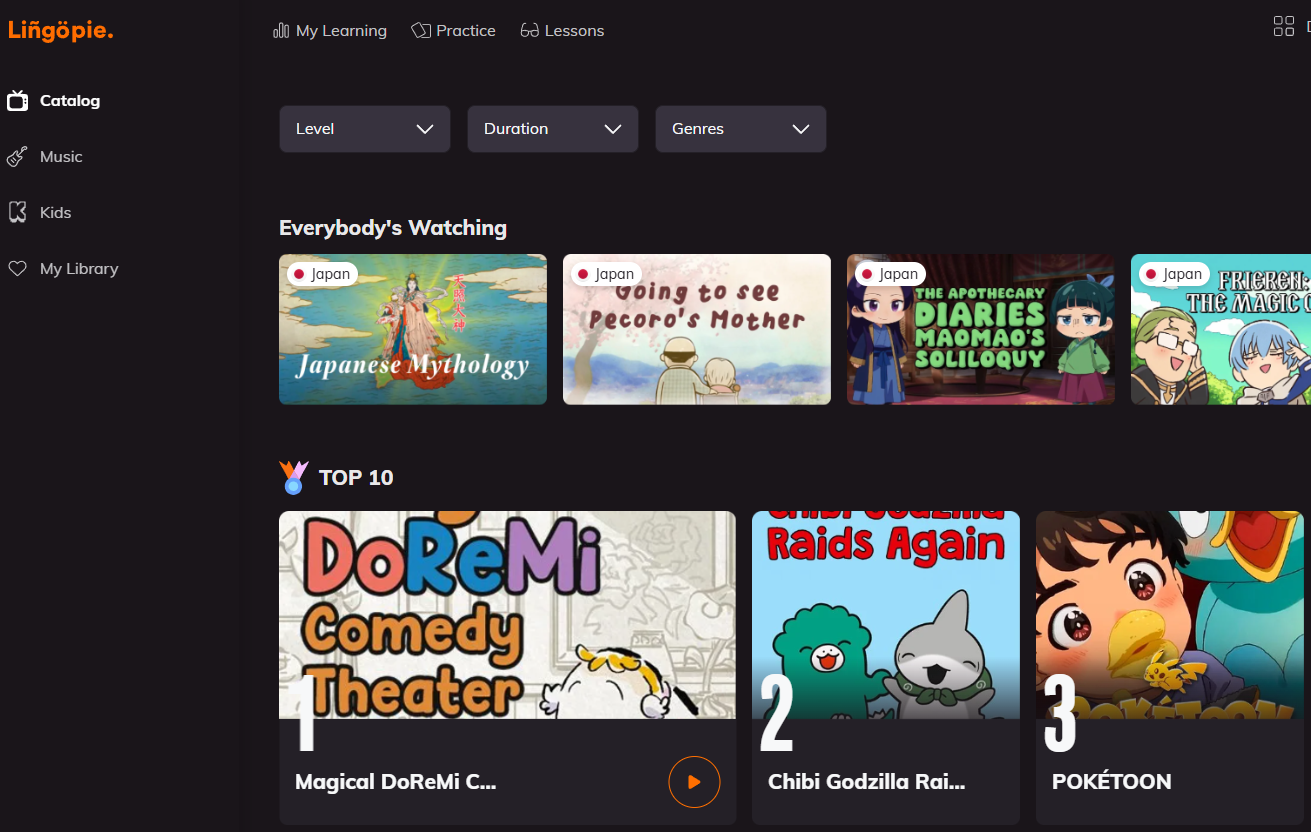
Lingopie teaches Japanese through real TV shows, movies, and music videos with interactive dual subtitles. Click any word you don't know for an instant translation, then add it to your flashcard deck with one more tap. It's engaging because you're watching content you'd choose anyway (whether that's anime, Japanese dramas, or music videos) while picking up vocabulary naturally.
Lingopie works best for late beginners and intermediate learners, though they offer simpler content like daily news for those just starting out. Everything syncs across devices, so you can watch on your TV, study flashcards on your phone, and pick up where you left off anytime.
| Pros | Cons |
|---|---|
| Learn through authentic, engaging content you actually enjoy | Works best with some foundation—absolute beginners may want to learn basics first |
| Interactive subtitles make vocabulary acquisition effortless | Japanese library is growing (currently smaller than more established languages) |
| Creates context-rich flashcards automatically with audio and screenshots | Learning happens through immersion rather than structured grammar lessons |
| Teaches natural speech patterns and cultural context | Most effective when you actively engage with the content |
| Works across all devices with progress syncing | Requires subscription after free trial (though worth the investment) |
| Develops listening comprehension organically | |
| One platform for TV, movies, music, and podcasts |
Pimsleur
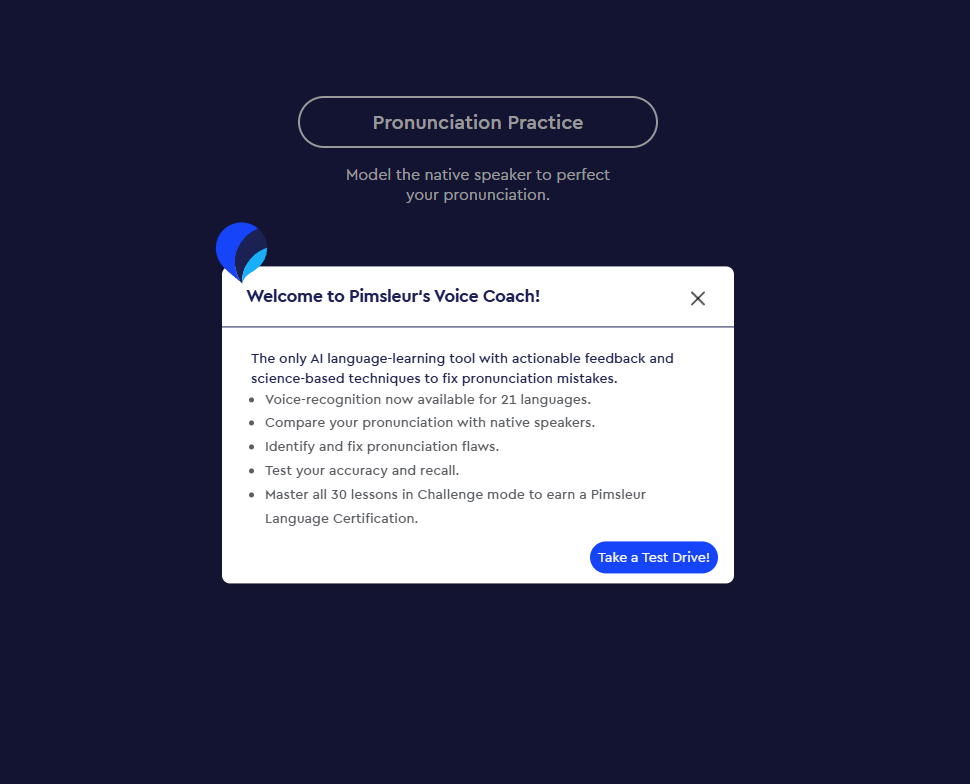
Pimsleur is all about audio immersion. You listen to 30-minute lessons that get you speaking from day one using spaced repetition and real conversation practice. The method breaks down pronunciation syllable by syllable, teaching you to sound natural before worrying about reading or writing.
It's hands-free, so you can learn while driving, exercising, or cooking. The app also recently added reading lessons and a "Voice Coach" feature for pronunciation feedback, though the core experience is still audio-first.
| Pros | Cons |
|---|---|
| Excellent pronunciation training with native speakers | Lessons are long (30+ minutes with drills) |
| Hands-free learning perfect for multitasking | Limited vocabulary—focuses on core words only |
| Scientifically-backed spaced repetition method | Weak on Japanese writing systems (hiragana/katakana/kanji) |
| Gets you speaking conversationally fast | Uses formal Japanese primarily |
| No textbooks or notes needed | Grammar explanations are minimal |
| 7-day free trial to test it out | More expensive than most apps |
JapanesePod101
JapanesePod101 is an audio-focused learning platform built around podcast-style lessons. Each lesson runs about 5-20 minutes and breaks down conversations, vocabulary, and grammar points with native speakers guiding you through everything. The content is organized by JLPT levels (N5 to N1), so you can jump in at your skill level and work your way up.
The platform's main strength is its massive library. There are thousands of lessons covering everything from basic greetings to business Japanese, and they release new content weekly.
| Pros | Cons |
|---|---|
| Massive lesson library with new content added weekly | Interface can feel overwhelming with so much content |
| Excellent for listening skills and pronunciation practice | Aggressive marketing and confusing pricing structure |
| Learn on the go with downloadable audio lessons | Grammar explanations lack depth |
| Organized by JLPT levels for clear progression | Limited speaking and writing practice |
| Vocabulary-heavy lessons with detailed breakdowns | Some lessons appear in multiple pathways (less unique content than it seems) |
| Flexible—study what interests you | Requires other resources for well-rounded learning |
| Free version available to test it out | Premium features can get expensive |
Takoboto
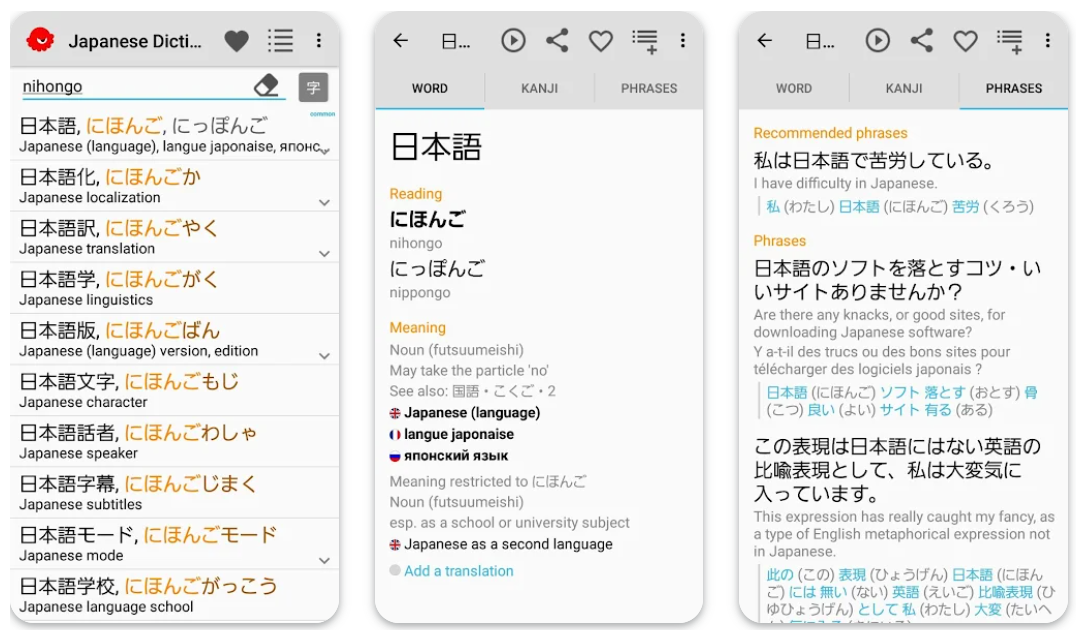
Takoboto is a comprehensive offline Japanese-English dictionary with over 200,000 words. This reference tool recognizes kanji, kana, romaji, full sentences, and conjugated verb forms. Search any word, and you'll get definitions, example sentences, kanji breakdowns, and text-to-speech audio.
Takoboto also has a flashcard feature and an Anki export, making it useful for review, and the radical search helps when you encounter unfamiliar kanji. It works completely offline, which makes it essential for travel or situations without internet.
| Pros | Cons |
|---|---|
| Works completely offline—no internet needed | It's a dictionary, not a learning course |
| 200,000+ word database with example sentences | Japanese-Japanese dictionary is limited |
| Recognizes conjugated forms and full sentences | Some premium features are expensive |
| Free basic version covers most needs | Text-to-speech audio quality varies |
| Exports to Anki for spaced repetition practice | Requires self-direction for study |
| Kanji search by radicals for unknown characters | |
| Essential reference tool for all levels |
Wanikani
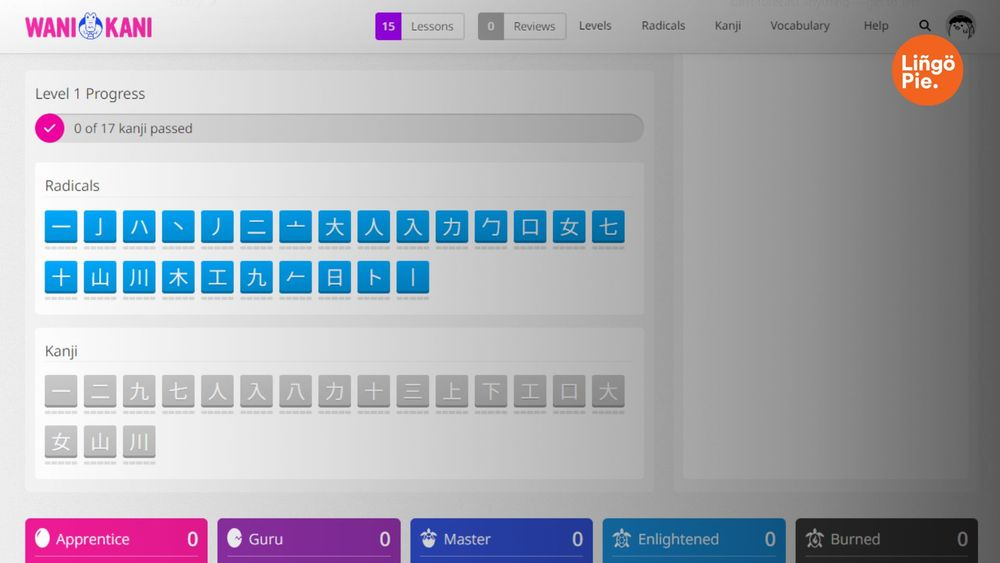
WaniKani is a kanji-focused learning platform that teaches you 2,000+ kanji and 6,000 vocabulary words through mnemonics and spaced repetition. You start by learning radicals (the building blocks of kanji), then use those to construct actual kanji, then learn vocabulary that uses those kanji.
The mnemonics in WaniKani are memorable (sometimes bizarre) stories that help you remember meanings and readings. As you progress through 60 levels, items move through stages (Apprentice → Guru → Master → Enlightened → Burned) until they're permanently locked in your memory.
| Pros | Cons |
|---|---|
| Structured path through 2,000+ kanji systematically | Only teaches reading—no writing, speaking, or grammar |
| Memorable mnemonics make kanji stick | Rigid level progression (can't skip ahead) |
| Spaced repetition optimized for long-term retention | Reviews can pile up if you miss a few days |
| Clean gamified interface tracks your progress | First 3 levels free, then requires paid subscription |
| Active community and user-created scripts | Takes 1-2 years to complete all levels |
| Covers ~92% of Joyo kanji | Vocabulary prioritizes kanji reinforcement over frequency |
| Proven effective for JLPT preparation | Not a standalone course—needs grammar/speaking resources |
Bunpo
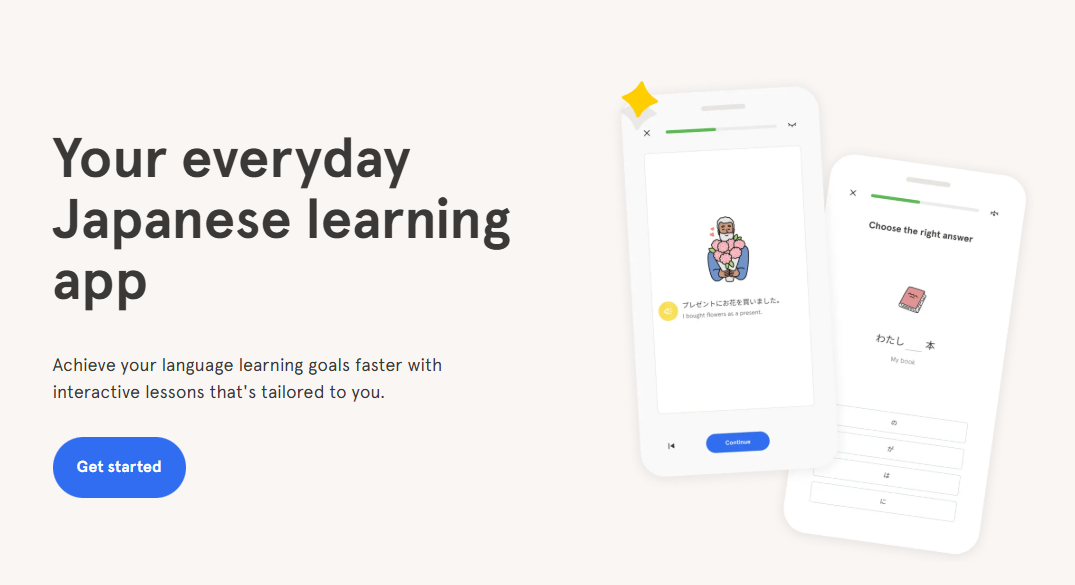
Bunpo is a grammar-focused app organized by JLPT levels (N5 to N1) that teaches through explanations and interactive quizzes. Each grammar point comes with example sentences, audio, and exercises that test your understanding immediately.
The app also uses spaced repetition to reinforce what you've learned, and recently added AI features—including a chat tool for conversation practice and a scan feature that explains grammar from any textbook or worksheet.
| Pros | Cons |
|---|---|
| Excellent JLPT-focused grammar coverage (N5-N1) | Limited vocabulary compared to dedicated vocab apps |
| Clear explanations with example sentences and audio | Unforgiving with typos during reviews |
| AI chat tool for practice with mistake corrections | Doesn't cover speaking or cultural context deeply |
| Scan feature explains grammar from any textbook | Spaced repetition timing can feel delayed |
| Works offline with clean, easy-to-navigate interface | Grammar-only focus means you need other resources |
| Free version available to try | Some mnemonics don't resonate with everyone |
| Structured path prevents overwhelm |
Which Japanese Language App Is Best for You?
The right app really depends on how you learn and what you need most. Some people thrive with audio lessons during their commute, while others need visual content to stay engaged. The key is recognizing that no single app does everything.
If you want to actually learn Japanese in a way that feels natural and keeps you engaged, try Lingopie. You'll develop listening comprehension, pick up vocabulary in context, and learn how Japanese is really spoken—all while watching content you'd enjoy anyway. It's the difference between drilling flashcards and actually experiencing the language.
Start your free trial today and see how much more motivated you feel when learning doesn't feel like studying.



![Japanese Honorifics: 10+ Titles You’ll Actually Use [GUIDE]](/blog/content/images/size/w300/2026/03/Japanese-honorifics.jpg)


![Japanese vs Korean: Which Language Should You Be Learning? [2026]](/blog/content/images/size/w300/2026/03/Japanese-vs-Korean.jpg)
