


Language learning apps today are dopamine factories. Most Russian language apps sell you on streaks and cartoon mascots, but what you actually need are tools that teach Russian vocabulary, drill Russian grammar, build listening comprehension, and force you into real speaking practice with native Russian speakers.
In this post, I’ll break down the 11 best apps for learning Russian quickly, depending on the job you need to do. Some nail the Cyrillic alphabet for complete beginners, others prioritize conversational Russian with native speakers, and a few actually test whether you can speak under pressure instead of just recognizing Russian words. I’ll tell you what each Russian app specializes in, who it’s designed for, and one practical move to make with it without wasting time.
- How To Learn Russian Fast: Easy Step-by-Step 2026 Guide
- Russian Instrumental Case: How To Use And Form One
- Russian Alphabet: Everything You Need to Know [2026]

Best Apps To Learn Russian Language
Using apps to learn Russian makes the language learning process far more practical than textbooks or random online resources. A good Russian app combines listening, reading, and speaking into one platform, helping you build your Russian vocabulary, understand Russian grammar, and become accustomed to real Russian pronunciation.
Whether you’re a complete beginner or working toward conversational Russian, these tools let you practice every day in short, focused sessions.
Lingopie
Availability: Android | iOS
Best For: Learning Russian through TV shows and movies with interactive subtitles
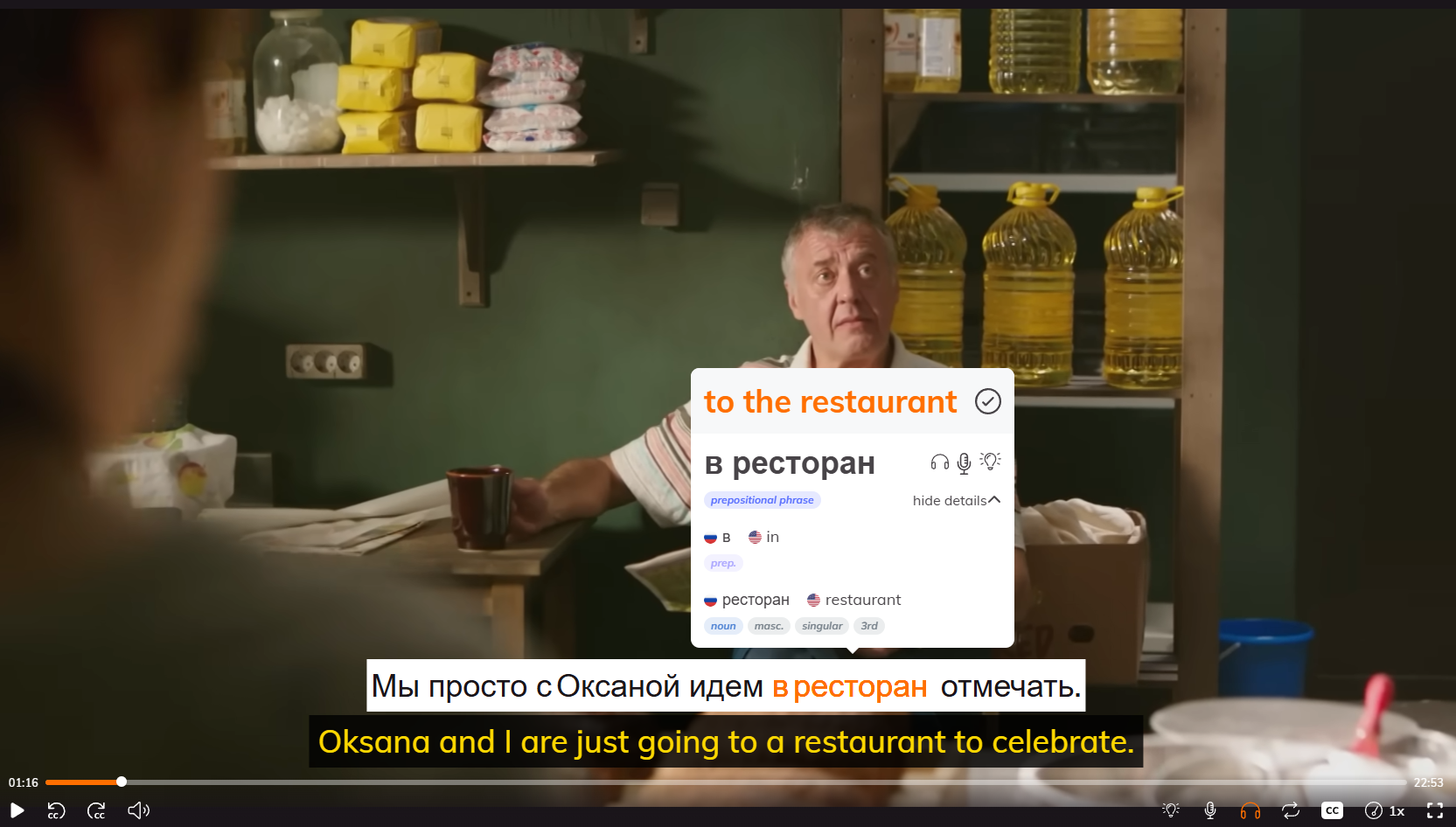
Lingopie is a streaming platform for Russian TV shows, movies, and podcasts with interactive subtitles for active learning. The premise is that you can select any content you like from its catalog, watch it, and click on any Russian word for instant translation, grammar details, and case information. Once clicked, the Lingopie app auto-saves it to spaced repetition flashcards. It also has built-in controls so you can adjust the playback speed, and everything syncs across web, mobile, and smart TV.
This Russian language app solves the problem of learning from real content without constant pausing to look up words. You're building listening comprehension and Russian vocabulary by hearing native Russian speakers in authentic contexts—the kind of real-world conversations and cultural immersion that traditional Russian lessons miss. The SRS drills words from the shows you chose, which beats memorizing random lists disconnected from actual usage.
Pros | Cons |
|---|---|
Stream authentic Russian content with clickable, interactive subtitles | Comprehension-focused—won't push speaking skills |
Auto-generates flashcards from shows with spaced repetition review | Easy to watch passively without actively drilling |
Grammar breakdowns (case, gender, word class) on every word | Best as a supplement, not a standalone course |
Adjustable playback speed for tricky pronunciation sections | |
Works across all devices (web, mobile, smart TV) |
Russian Cyrillic In 3 Hours
Availability: Android | iOS
Best For: Complete beginners who need to master the Russian alphabet fast
Russian Cyrillic in 3 Hours is a free video-based app that teaches the Russian alphabet through contextual learning in roughly three hours total. The app uses bite-sized video lessons that connect Cyrillic letters to English cognates and familiar patterns, showing you how to read and pronounce Russian characters in context rather than through rote memorization. It's originally part of the paid Russian course called RussianAccelerator, but is available free to app users.
Just note that this is strictly an alphabet tool with zero interaction. You watch, you learn, then you delete it after a few days and move on to actual Russian lessons. If you’ve been avoiding Russian because the Cyrillic alphabet feels impossible, this removes that excuse in one afternoon.
Pros | Cons |
|---|---|
Free and delivers on the 3-hour promise to learn the Russian alphabet | Video-only format with no interactive exercises or drills |
Contextual learning connects Cyrillic to familiar English patterns | Limited to alphabet—no vocabulary, grammar, or speaking practice |
Perfect lesson length with effective repetition pacing | Requires storage space and download time for video content |
Best first step for complete beginners intimidated by Russian Cyrillic | Strictly supplemental—you'll need other apps after mastering the alphabet |
Write It! Russian
Availability: Android | iOS
Best For: Learners who want to practice handwriting Russian Cyrillic script
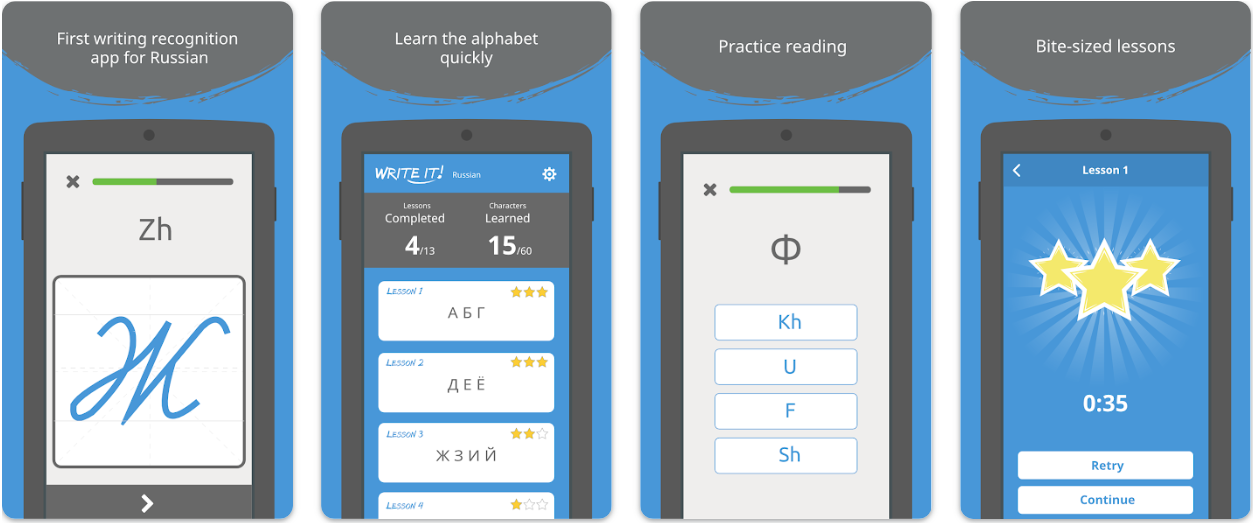
Write It! Russian teaches you to physically write all 33 letters of the Russian Cyrillic alphabet using handwriting recognition technology. The app provides stroke-by-stroke guidance in practice mode, then tests your muscle memory through timed challenges. It includes progress tracking, customizable review modes, and works fully offline.
However, knowing the Russian alphabet visually is one thing; developing the muscle memory to write Russian words quickly is another. In fact, Write It! Russian only drills individual letters, not how letters connect in actual Russian words or basic vocabulary. Handwriting recognition can be frustratingly strict, especially with marks above letters like ё and й. Some Russian learners report missing letters (ъ, ь, ы) in certain versions.
So, for me, I recommend using this to master individual Russian characters only. You'll still need other Russian language apps to learn how those letters actually link into conversational Russian or grammar lessons.
Pros | Cons |
|---|---|
Builds muscle memory for writing Russian Cyrillic by hand | Only teaches individual letters—no word or sentence practice |
Stroke-by-stroke guidance develops proper writing technique | Handwriting recognition often fails on letters with marks (ё, й) |
Timed test mode makes practice engaging | Doesn't teach how Russian letters connect in actual writing |
Works offline with bite-sized lessons that fit busy schedules | Some letters reportedly missing or glitchy (ъ, ь, ы) |
Free version available for learning Russian alphabet basics | Limited to writing skills—no Russian vocabulary or grammar |
Babbel Russian
Availability: Android | iOS
Best For: Beginners wanting structured 10-15 minute lessons with grammar explanations
Babbel Russian delivers 10-15 minute lessons balancing Russian vocabulary, Russian grammar, listening comprehension, and speaking practice. The app teaches the Cyrillic alphabet and everyday phrases while explaining grammar concepts like cases and verb conjugation directly. It uses spaced repetition to drill Russian words into long-term memory and includes speech recognition for practicing Russian pronunciation with native Russian speakers.
While it's good, the speech recognition marks nearly everything incorrectly, even for native speakers, and lessons repeat the same Russian phrases five times until it's busywork. Babbel Russian caps at the intermediate level, so you’ll need other Russian language programs once you master conversational Russian basics.
Pros | Cons |
|---|---|
Explains Russian grammar directly (cases, conjugation, agreement) | Speech recognition frequently marks correct answers wrong |
Balanced lessons covering vocabulary, listening, speaking, and writing | Repetitive drills that feel like unnecessary busywork |
Spaced repetition builds long-term Russian vocabulary retention | Limited to beginner/intermediate—no advanced content |
Affordable ($8-18/month) with structured learning path | Odd lesson priorities (pollution over groceries) |
Audio from native Russian speakers across lessons | No live conversation practice with real speakers |
Memrise
Availability: Android | iOS
Best For: Visual learners who need vocabulary boost through native speaker videos
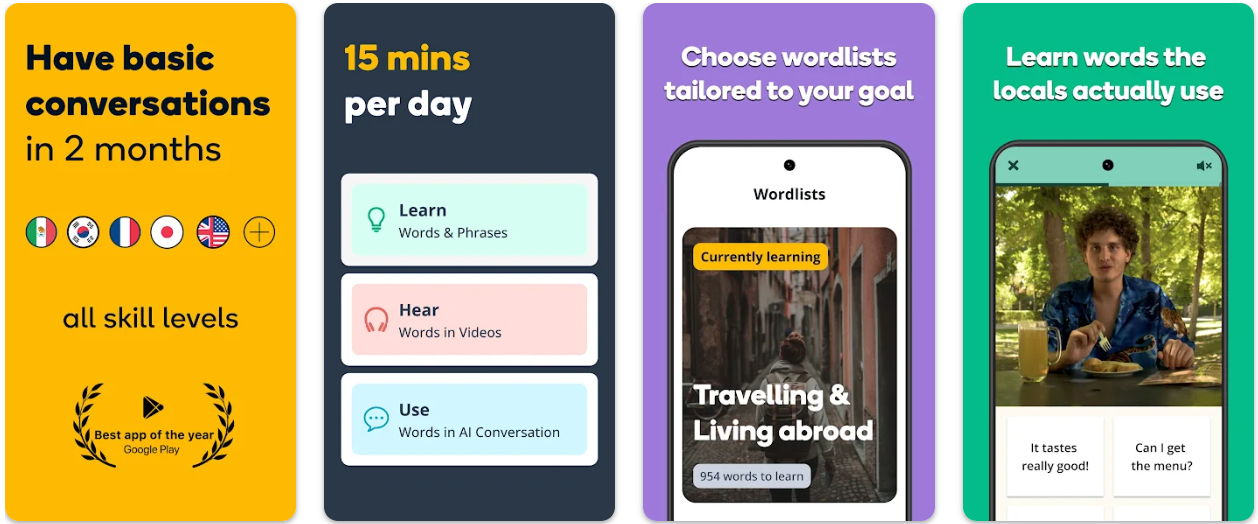
Memrise is a vocabulary-focused app using spaced repetition, mnemonic devices, and 48,000+ videos of native Russian speakers in real contexts. You learn Russian words through funny images, watch native speakers use those phrases in video clips, then practice speaking with MemBot, an AI language partner. The app covers the Cyrillic alphabet, theme-based Russian vocabulary, and scenario-based learning.
Want to improve your grammar with Memrise? Well, the bad news is that grammar is locked behind a paywall, so you're memorizing Russian words without understanding how they work. Lessons auto-advance so fast you can't even think before the next question slams you. Navigation is deliberately annoying, constantly showing Pro features you can't access.
Worst of all, recent updates removed community courses from mobile entirely, erasing streaks and progress for thousands of Russian learners.
Pros | Cons |
|---|---|
48,000+ native speaker videos show authentic Russian usage | Grammar explanations locked behind paywall |
Mnemonic images make Russian vocabulary retention faster | Lessons auto-advance too fast |
MemBot AI for unlimited speaking practice | Pushy navigation constantly shows locked Pro features |
Spaced repetition builds long-term memory | Community courses removed from mobile (progress lost) |
Free version available for basic learning | Vocabulary-only |
Drops
Availability: Android | iOS
Best For: Busy learners wanting 5-minute daily Russian vocabulary sessions
Drops is a Russian vocabulary app that limits you to 5-minute daily sessions filled with fast-paced mini-games and visual associations. The app uses 100% illustrated pictures so you connect Russian words directly to images through rapid swipes and taps. It covers 2,700+ Russian words across 150+ topics, including the Cyrillic alphabet, everyday phrases, and practical vocabulary with pronunciations from native Russian speakers.
The 5-minute limit sounds gimmicky, but it actually works. You can't procrastinate when sessions are this short, and the forced constraint keeps you coming back daily instead of burning out on hour-long grinds. Visual learners will love the mnemonic illustrations that make Russian vocabulary stick without English intermediaries.
But here's the deal: Drops is vocabulary only—zero Russian grammar, zero conversational practice, zero sentence structure. The free version caps sessions at 5 minutes (premium unlocks unlimited time), which is fine for casual Russian learners but frustrating if you want to push harder. Use this as a quick daily Russian vocabulary booster, not as your main language learning app.
Pros | Cons |
|---|---|
5-minute sessions make daily Russian vocabulary practice effortless | Zero grammar instruction—just vocabulary isolation |
Visual associations with images (no text translation) aid memory | Free version locks you to 5 minutes/day |
2,700+ Russian words with native speaker pronunciations | No conversational skills or sentence practice |
Fast-paced mini-games keep learning addictive | Recent update made topic selection confusing and nonlinear |
Teaches Cyrillic alphabet alongside vocabulary | Not comprehensive—strictly a supplemental tool |
Duolingo
Availability: Android | iOS
Best For: Testing commitment to Russian before investing in paid courses
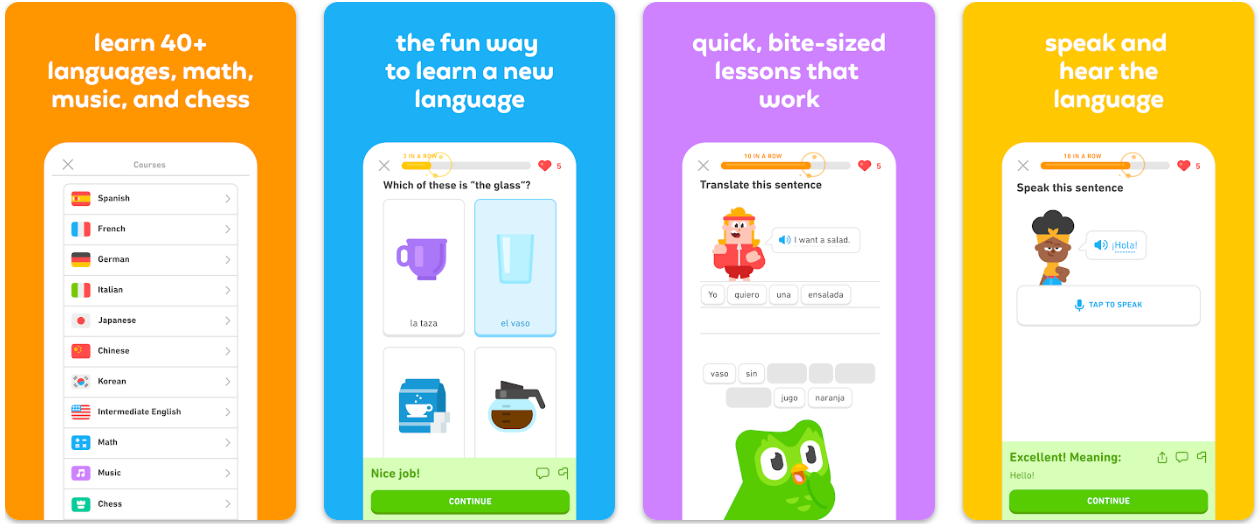
Duolingo offers a free Russian course with 6,500+ words, 350 lessons, and gamified exercises covering the Cyrillic alphabet, basic vocabulary, and grammar. You earn XP points, compete on leaderboards, and build streaks to stay motivated through bite-sized daily lessons. The app includes a special writing-system tool that teaches Russian Cyrillic characters through tracing exercises and sound associations.
Duolingo works if you want to test whether Russian is worth your time before spending money on serious courses. The gamification hooks you—streaks, points, and that pushy owl actually keep you showing up daily, which matters more than perfect lessons. The writing-system tool makes learning the Cyrillic alphabet less painful for complete beginners.
Pros | Cons |
|---|---|
Completely free Russian course with 6,500+ words | Grammar explanations are shallow and incomplete |
Gamified streaks and leaderboards build daily learning habits | Robotic audio quality harms Russian pronunciation learning |
Writing-system tool makes Cyrillic alphabet less intimidating | Minimal speaking practice—won't develop conversational skills |
Great for testing commitment before paying for courses | Plateaus at intermediate—can't reach advanced fluency |
Interactive exercises with instant feedback | Doesn't teach real-world conversations with native speakers |
Simply Learn Russian
Availability: Android
Best For: Travelers needing survival phrases for short trips to Russia
Simply Learn Russian is a free phrasebook app with Russian words and phrases recorded by native Russian speakers, presented in both Cyrillic and phonetic writing. You learn survival phrases for travel situations—ordering food, finding directions, dealing with taxis—through flashcards using spaced repetition. The app includes quizzes to test Russian vocabulary retention and lets you save favorite phrases for quick access.
This Russian app works if you need emergency phrases for a trip to Russia, not if you want to actually learn the language. The phrasebook approach gets you through basic situations fast, but calling this a "language learning app" is generous. Zero Russian grammar instruction, zero sentence structure, zero path to conversational Russian beyond tourist scenarios.
Pros | Cons |
|---|---|
Native Russian speakers provide authentic pronunciation | No Russian alphabet or Cyrillic instruction |
Survival phrases perfect for travel emergencies | Just isolated phrases, no language structure |
Spaced repetition flashcards for quick memorization | Won't teach conversational Russian or real language skills |
Free with optional paid upgrade | Limited to tourist scenarios |
Phonetic writing helps complete beginners pronounce words | Phrasebook approach creates dependency, not fluency |
Pimsleur Russian
Availability: Android | iOS
Best For: Auditory learners committed to daily hour-long speaking practice
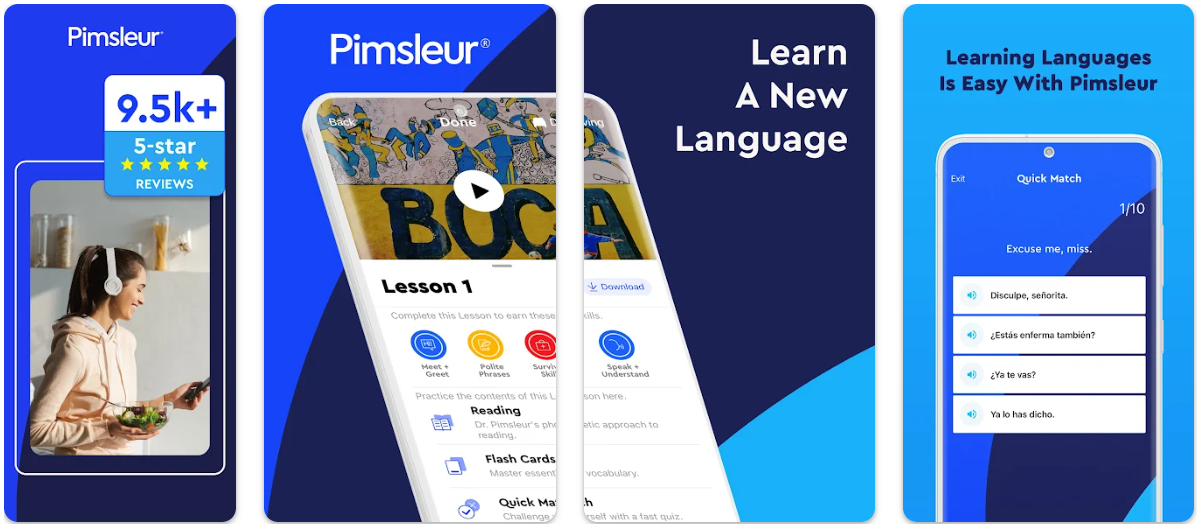
Pimsleur Russian delivers 150 30-minute interactive audio lessons (75 hours total) with native Russian speakers in real conversations. You learn through active listening through repeating phrases, answering prompts, and building conversational skills—all hands-free. The app includes Cyrillic alphabet reading lessons, Voice Coach AI for Russian pronunciation, flashcards, and quizzes. Built for auditory learners who prefer listening over visual learning.
Just note that this Russian language app has lessons that take 50-60 minutes each, which kills anyone with only 10-minute windows. And the drills? Well, they can get boring fast around the 25-minute mark. Speaking practice is just robotic repetition without real conversation, and Pimsleur teaches stiff formal Russian instead of how native speakers actually talk.
Pros | Cons |
|---|---|
75 hours of audio lessons with native Russian speakers | Lessons take 50-60 minutes |
Hands-free learning perfect for auditory learners | Drills get monotonous after 25 minutes |
Spaced repetition builds long-term vocabulary retention | Teaches formal Russian, not conversational language |
Voice Coach AI for Russian pronunciation feedback | Speaking practice is robotic repetition only |
Learn while driving, cooking, or exercising | Expensive at $20/month compared to other apps |
HelloTalk
Availability: Android | iOS
Best For: Intermediate learners wanting free conversation practice with native speakers
HelloTalk is a free language exchange app connecting you with native Russian speakers who want to learn your language in exchange for teaching you Russian. You chat via text, voice, or video calls with built-in translation, transliteration, and correction tools that let partners fix your Russian mistakes on the fly. The app includes Moments (social feed), Voicerooms, and livestreams where you practice conversational Russian in group settings.
However, finding quality language exchange partners is a lottery. Many users treat this as a dating app despite warnings, and language learners report getting hit on more than actually practicing Russian. Conversations often devolve into basic small talk because matching is based only on languages spoken, not shared interests.
Pros | Cons |
|---|---|
Free language exchange with native Russian speakers worldwide | Many users treat it as dating app, not language learning |
Instant correction tools for grammar and Russian pronunciation | Finding quality partners is hit-or-miss based on language only |
Practice conversational Russian in real world contexts | You teach your language half the time |
Text, voice, video options plus Voicerooms and livestreams | Conversations often stay shallow without shared interests |
Built-in translation and transliteration for Cyrillic alphabet | Best for intermediate learners, overwhelming for complete beginners |
RussianPod 101
Availability: Android | iOS
Best For: Podcast lovers who want cultural context with comprehensive audio lessons
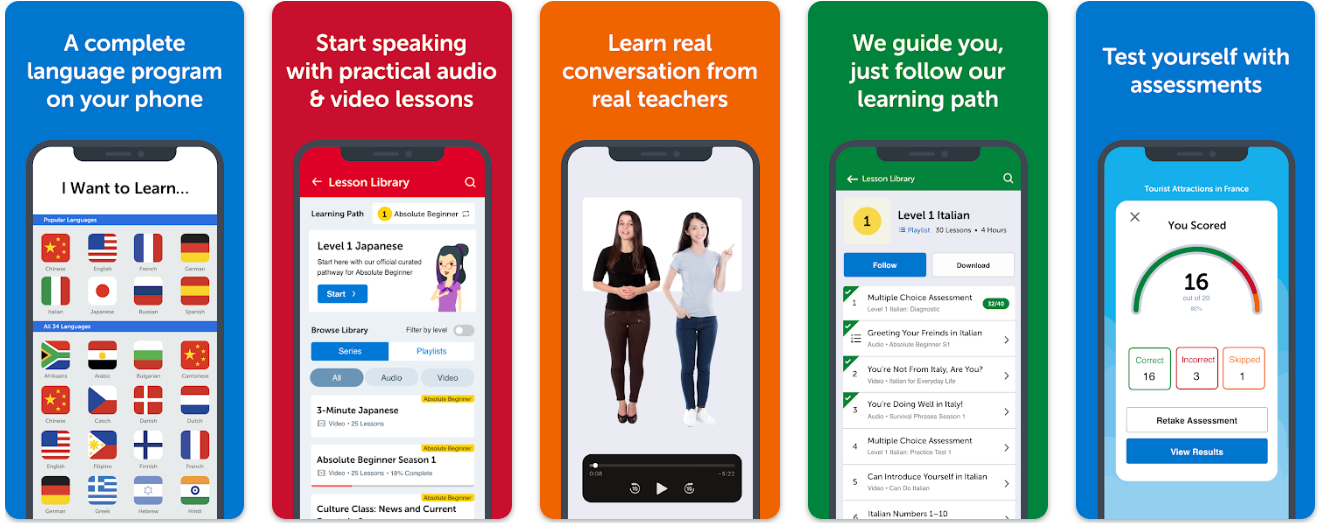
RussianPod101 delivers hundreds of podcast-style audio and video lessons (beginner to advanced) featuring native Russian speakers in real conversations with detailed breakdowns. Each lesson includes PDF transcripts, line-by-line audio, vocabulary lists, and cultural context taught by Russian teachers who explain every word and phrase. The app offers pathways based on goals, plus flashcards, voice recording tools, and a grammar bank with 56+ Russian grammar lessons.
After using it for years, I still believe that RussianPod can be overwhelming with its numerous features. Worse, there's zero actual speaking practice; you just repeat after teachers, which won't give you conversational Russian skills. Grammar lessons exist, but they're buried in the "More" section instead of being integrated into lessons.
Pros | Cons |
|---|---|
Hundreds of podcast-style lessons with native Russian speakers | Too many features |
Weekly new lessons provide endless learning content | No real speaking practice |
Cultural context and real conversation breakdowns | Grammar lessons buried and hidden in platform |
PDF transcripts, line-by-line audio, vocabulary lists included | Aggressive email marketing after signing up |
Free version gives access to first 3 lessons per pathway | Better as supplement |
Ready To Learn Russian?
The apps to learn Russian that actually work make you uncomfortable. They correct your Russian pronunciation immediately, test whether you can produce language under pressure, and cut through the passive review nonsense that keeps you stuck. If your Russian app never makes you speak, never shows you why you're wrong, or lets you coast on recognition drills, you're wasting time.
If you want the best features in one Russian language app without juggling five different tools, try Lingopie. Lingopie lets you learn Russian on your own by watching real Russian shows with built-in translations and instant word lookups. You can pause, replay, and save anything you don’t understand so nothing slips past you. Try Lingopie and experience what it feels like when Russian finally starts to make sense.




![Is Russian Hard to Learn? A No-Nonsense Guide [2026]](/blog/content/images/size/w300/2026/03/Is-Russian-Hard-To-Learn.jpg)