
![7 Best Apps To Learn German On Your Own [REVIEWED]](/blog/content/images/size/w1200/2026/01/best-apps-to-learn-german-on-your-own.png)
Learning German is exciting right up until the moment you realize how many apps, courses, and “best app to learn” lists are fighting for your attention. From free apps and flashcard apps to full German language learning programs with video lessons, audio lessons, and detailed grammar instruction, today’s German learners have more options than ever.
But having more choices doesn’t always make the learning process easier, especially when you’re trying to build real German language skills like speaking, listening comprehension, and using German words and phrases in conversation with native speakers.
That’s why this guide cuts through the noise. Whether you’re starting with basic vocabulary, wrestling with complex German grammar rules, or looking for a German language learning app that fits your learning style, I have listed below the German learning apps that actually move you forward. Read on!
- 6 Best German Translator Apps For Beginners [TESTED]
- 7 German Documentaries to Stream This 2026
- How Long Does It Take To Learn German? [Guide]
Best Apps To Learn German Language
Learning German through an app just makes sense in real life. You can practice German words, grammar, and listening skills while commuting, waiting in line, or taking a quick break, instead of needing long study sessions. That kind of flexibility is what keeps the learning process moving forward, especially when you’re trying to build real conversational German.
Below are the German learning apps that turn those small moments into steady progress.
Lingopie
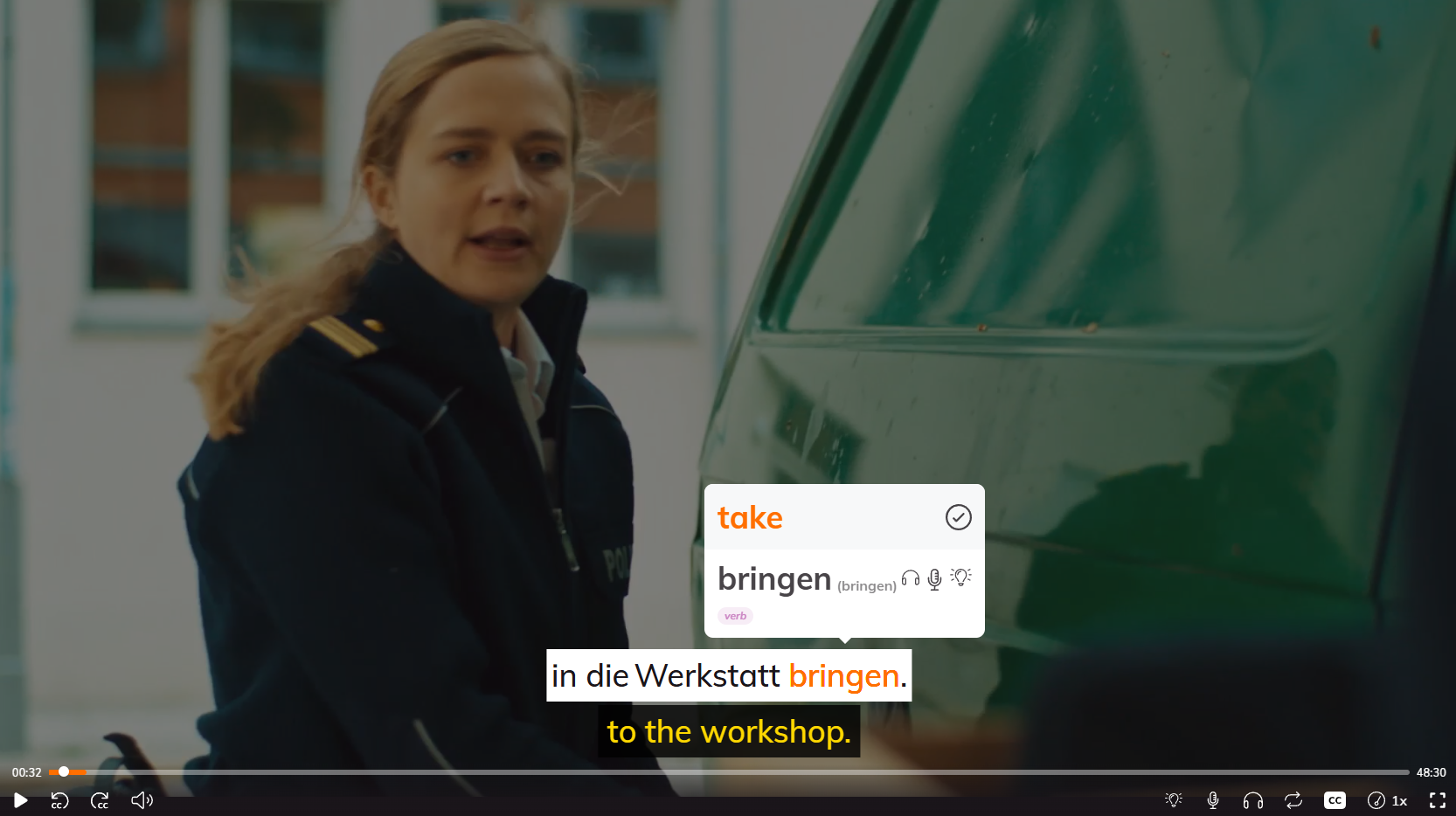
Lingopie is a German language learning app built around something most language learners already enjoy: watching TV. It's the kind of language app that exposes you to real language and culture through real German shows, movies, and documentaries with interactive subtitles. You can click any German word to see its meaning, save it to your own vocabulary list, and replay lines from native speakers as many times as you want.
If your goal is to understand native speakers, improve listening comprehension, and develop real conversational skills, Lingopie's approach accelerates progress in a way traditional language apps can’t. Lingopie also fits a wide range of learning styles. Visual learners get context from video, audio learners hear real pronunciation, and active learners can pause, repeat, and practice speaking aloud.
Pros
- Learn German through real TV shows and movies
- Interactive subtitles with instant translations
- Save German phrases and words into your own flashcards
- Excellent for listening comprehension and conversational German
- Works for beginners and advanced learners
- Great for learning German slang and cultural context
Cons
- Requires a subscription after the free trial
- Focuses more on immersion than step-by-step grammar lessons
DW Learn German
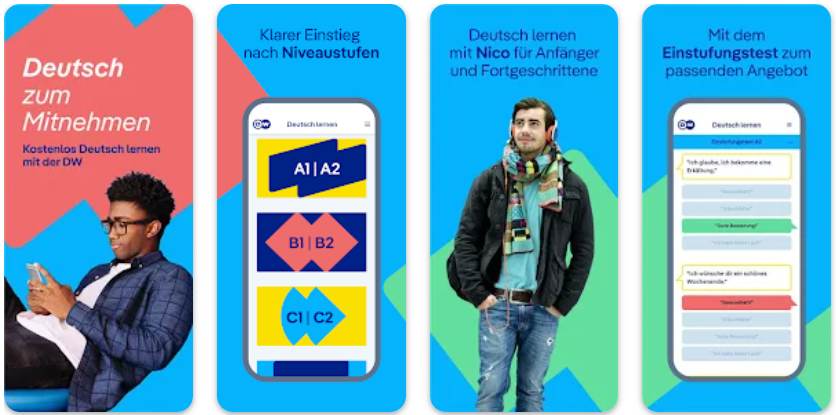
DW Learn German is a free German language learning app and course from Germany’s international broadcaster, designed to guide learners from absolute beginner to advanced with a clear, structured path. Instead of raw immersion or gamey exercises, it offers well-sequenced lessons that build vocabulary, introduce grammar concepts, and strengthen reading and writing skills step by step. You’ll find videos, audio lessons, worksheets, and interactive exercises that help you internalize German words and grammar rules in a systematic way.
This makes DW Learn German ideal if you want a linear learning path — the kind that takes you from basic vocabulary and simple phrases up through more complex grammar and conversational topics. While it may not be as flashy as some paid German apps, its strength lies in its comprehensive, classroom-style approach without any cost.
For learners on a budget, or anyone who wants solid foundation work before diving into immersive listening practice, this app delivers real value.
Pros
- Completely free with a full range of lessons
- Structured progression from beginner to advanced
- Includes videos, audio, and written exercises
- Great for grammar and reading comprehension
Cons
- Less focus on conversational speaking practice
- Design and interface feel more educational than entertainment-driven
Readle
Readle is a German language app designed for learners who want to grow their vocabulary and grammar through reading. Instead of isolated word lists, you learn German by working through short stories, news articles, and adapted texts that match your level. Every German word can be tapped for instant translation, and you can save new vocabulary as you go, turning reading into an active part of your learning process rather than a guessing game.
This makes Readle ideal if you’re the kind of learner who prefers learning in context. Seeing German grammar rules, sentence structure, and new German words inside real paragraphs helps them stick far better than memorizing them alone. It’s especially helpful for learners who want to improve German reading comprehension while quietly strengthening grammar and writing skills in the background.
If Lingopie is about hearing German in real life, Readle is about seeing how it works on the page.
Pros
- Learn German through real and adapted texts
- Tap-to-translate German words and phrases
- Excellent for vocabulary growth and grammar awareness
- Supports different reading levels
Cons
- Focuses more on reading than speaking or listening
- Not designed for full conversational practice
Der Die Das
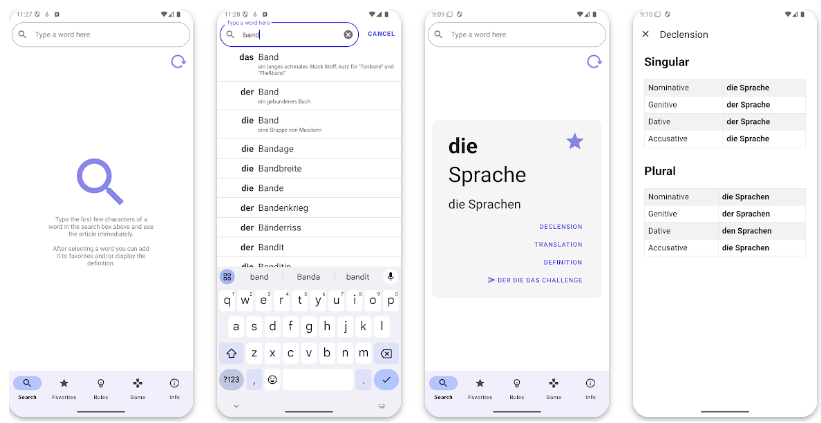
Der Die Das is a German language app built around one core challenge most learners face early on: German grammar and articles. If you’ve ever stumbled over when to use der, die, or das, this app turns that struggle into a game-like, drill-style experience that actually sticks. With quizzes, repetition exercises, and targeted practice, it reinforces the rules behind gender, cases, and sentence structure in a way that feels purposeful rather than random.
This makes Der Die Das especially useful if you’re past the absolute beginner stage and want focused work on grammar accuracy and confidence with everyday sentence patterns. Many language learners can speak simple phrases but still feel unsure about which article to use or how cases affect meaning — this app helps close that gap.
While it won’t replace a full German language course, it’s a great companion to your study routine, especially when paired with apps that teach vocabulary and listening skills.
Pros
- Highly targeted grammar practice
- Fun, repetition-based quizzes
- Helps internalize articles and case usage
Cons
- Narrower focus than all-in-one learning apps
- Limited conversational content
Duolingo
Duolingo is one of the most popular German learning apps in the world, and for good reason. It turns learning German into a game, using short lessons, streaks, and quick challenges to keep you coming back every day. You’ll practice German words, basic grammar, and simple phrases through bite-sized exercises that fit easily into even the busiest schedule.
Duolingo is especially effective for beginners and casual learners who need motivation more than structure. If your main challenge is consistency, the good news is that this app keeps you engaged.
This app won’t give you deep grammar explanations or fluent conversational German on its own, but it’s a strong way to build basic vocabulary and get comfortable seeing and hearing the German language every day.
Pros
- Very easy to use and completely free to start
- Great for building daily learning habits
- Covers a wide range of basic German vocabulary
- Fun, gamified experience
Cons
- Limited grammar explanations
- Not designed for real speaking or conversation practice
Learn German AI
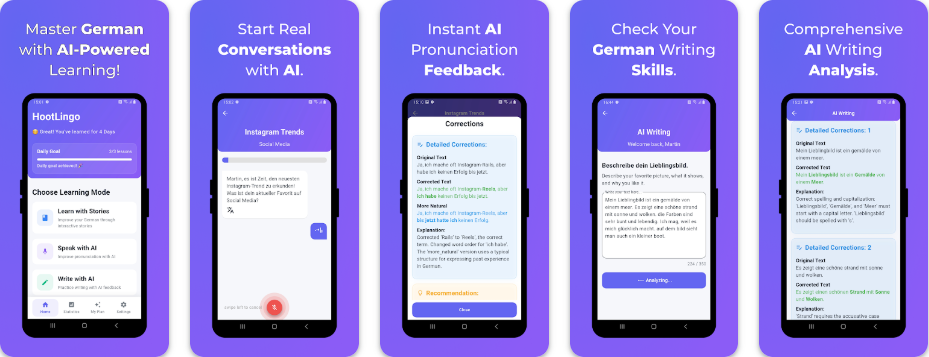
Learn German AI is a German language learning app that uses artificial intelligence to make your practice feel like real conversation. Instead of just tapping through fixed exercises, you talk with the app — getting instant feedback as you speak, listen, and respond. It adapts to your level, focuses on what you struggle with, and gives you interactive speaking practice that feels closer to talking with a tutor than a flashcard drill.
This makes Learn German AI especially useful if your goal is to go beyond passive learning and actually practice speaking aloud with confidence. For many learners, this is the bridge between knowing German words and actually using them in real conversations with native speakers.
Pros
- AI-driven speaking and listening practice
- Personalized feedback and adaptive lessons
- Feels like having a conversation partner
- Great for improving pronunciation and listening skills
Cons
- Limited deep grammar instruction
- Requires subscription for full access
Drops
Drops is a German language app laser-focused on vocabulary — especially if you want to quickly expand the number of German words and phrases you recognize and recall. Instead of long lessons or grammar drills, Drops uses vibrant visuals, word games, and short, time-boxed sessions that make memorizing new German vocabulary feel light, fun, and surprisingly effective. You’ll touch, match, and swipe your way through basic to more advanced German words designed to stick.
This app is ideal if you find yourself forgetting new words or struggling to keep German vocabulary fresh in your mind. Many language learners hit a wall not because they can’t build sentences, but because they lack the words to fill them — and Drops helps fix that fast.
Pros
- Highly engaging, game-style vocabulary practice
- Great for visual learners and memory retention
- Short daily sessions — perfect for busy schedules
Cons
- No deep grammar lessons or conversation practice
- Free version has limited time per day
Learn German With Apps Today
If your goal is to truly understand German when people speak it (not just recognize it in exercises), Lingopie is where everything starts to feel real. Watching authentic German shows and hearing native speakers in natural conversations trains your ear, builds your vocabulary in context, and helps you absorb grammar without overthinking it.
Most language apps teach you how to complete lessons, but Lingopie and its dual subtitles help you understand the language as it’s actually used. If you want to move beyond drills and start following real German stories, jokes, and everyday conversations, this is the app that makes that change happen.



![6 Best German Translator Apps For Beginners [TESTED]](/blog/content/images/size/w300/2026/01/Best-german-translation-apps-for-beginners-.jpeg)