


Did you know Japan has a national holiday just to celebrate turning 20? Seijin no Hi, or Coming of Age Day, is one of Japan’s most meaningful cultural celebrations. Every second Monday of January, young adults across the country dress in traditional attire and gather at local ceremonies to mark their official transition into adulthood.
In this article, we’ll take a closer look at what Seijin no Hi is all about — from the traditional kimono styles to the emotional family moments and modern twists. You’ll also find a handy list of related Japanese words with a smart method to start learning it right away.
- 7 Best Japanese TV Websites You Can Watch From Anywhere
- 6 Best Japanese Translation Apps For Learners [TESTED]
- 6 Best Japanese Language Apps Worth Trying

What's Seijin no Hi (Coming of Age Day)?
Seijin no Hi is a traditional Japanese holiday that takes place on the second Monday of January, where boys and girls who have turned 20 years old are the main protagonists.
In Japan, "20" is a special number since boys and girls become adults at that age. That's why in Japanese, that age is expressed with a special name and reading for the kanji: hatachi 二十歳. Normally, those kanji are read as nijuu-sai.
So, Seijin no Hi is held to congratulate those young adults and hope them the best for the future, and it's one of the most important holidays in Japanese calendar.
What Happens At A Coming Of Age Ceremony?
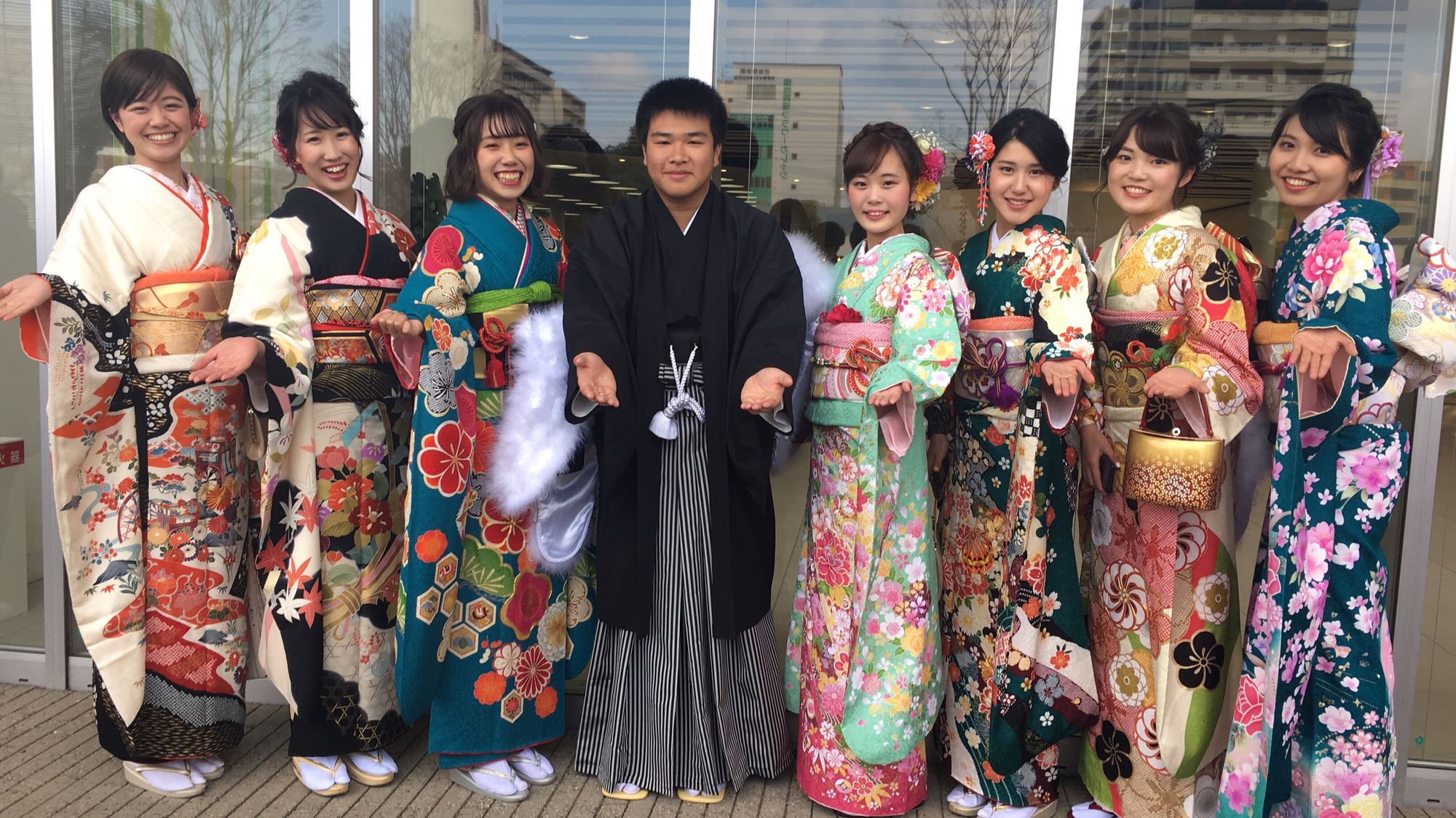
During this day, a ceremony (Seijin Shiki 成人式) is held in various regions of Japan where the new adults (shinseijin 新成人), their families and town authorities are present.
At the ceremony, town authorities congratulate the shinseijin and give them a souvenir to remember this important day in their lives. Also, a speech is given by a representative participant, hoping the best for the future of the new adults: success, good health, dreams to become true and accomplished goals.
What's also interesting is that participants from the previous year are also invited to attend the ceremony, giving them the chance to congratulate the new adults and remember their own ceremony from the previous year.
What Do People Wear On Seijin no Hi?
On Seijin no Hi (Coming of Age Day), new adults usually wear formal outfits that mark their transition into adulthood. The most iconic is the furisode (振袖), a long-sleeved kimono worn by young women. It features bright colors and elegant patterns, and is often paired with traditional accessories and carefully styled hair, making it one of the most visually striking parts of the celebration.
Young men traditionally wear the hakama (袴), a pair of loose-fitting trousers often matched with a kimono or jacket, but many now choose a modern suit and tie instead. Both styles reflect the same purpose: to show respect for the occasion and to present oneself as a new, responsible member of Japanese society.
What Gifts Are Given On Coming Of Age Day?
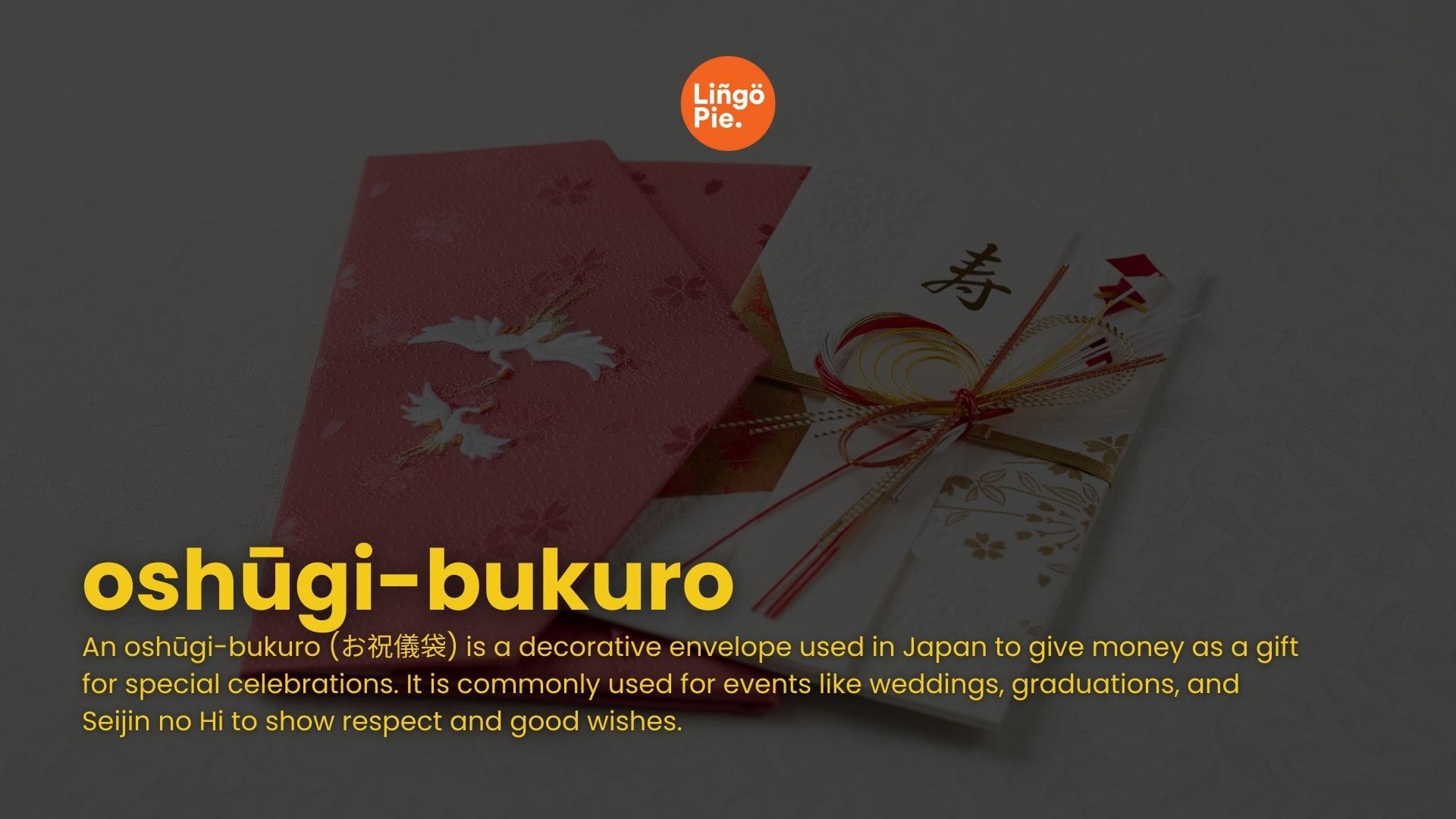
On Seijin no Hi (Coming of Age Day), the most common gift is money, usually given in a decorative envelope called an oshūgi-bukuro. Parents and relatives give this to help new adults with big life steps such as education, moving out, or starting a career.
In addition to money, some families give watches, jewelry, or formal accessories to mark the transition into adulthood. Others may offer traditional items, such as a keepsake related to the furisode or hakama worn that day.
What Food Do Japanese People Eat on Coming Of Age Day?
On this special day, food can't be forgotten. That's why, after the ceremony, the new adults go out to celebrate with their families and close friends by eating sekihan 赤飯, a special dish made of rice and red beans that's served on holidays and special occasions like the Coming of Age Day.
Japanese Words For The Coming Of Age Day
Here is a list of related words and phrases that you can use during Seijin no Hi.
| Japanese Term | Romaji | English Meaning |
|---|---|---|
| 成人の日 | Seijin no Hi | Coming of Age Day |
| 成人式 | Seijin Shiki | Coming of Age Ceremony |
| 振袖 | Furisode | Special kimono worn by young women for the ceremony |
| 袴 | Hakama | Loose-fitting trousers worn by men |
| 二十歳 | Hatachi | Twenty years old |
| お祝い | Oiwai | Celebration |
| 成人 | Seijin | Adult |
| 赤飯 | Sekihan | Festive rice dish with red beans |
| 羽織 | Haori | Traditional Japanese coat |
| スーツ | Sūtsu | Suit |
| 社会 | Shakai | Society |
| 責任 | Sekinin | Responsibility |
| 新成人 | Shinseijin | New adult |
| 夢 | Yume | Dream |
| 目標 | Mokuhyō | Goal |
| 希望 | Kibō | Hope |
| 感謝 | Kansha | Gratitude |
| おめでとうございます | Omedetō gozaimasu | Congratulations |
| スピーチ | Supīchi | Speech |
Learn Japanese Culture and Language with Lingopie
As we saw during this article, Seijin no Hi is a very important holiday not only for those who have turned 20 years old, but also for every region in Japan. As many other Japanese holidays, like Hina Matsuri (Girls' Day) or Kodomo no Hi (Children's Day), it's a time for hope and good vibes, especially for those people who are congratulated. In this case, the new adults.
There are many more Japanese holidays and related words and phrases to learn. But how can you learn them all? A great way to do it is by using Lingopie. Lingopie offers you real and great Japanese TV, including doramas and anime. Learn Japanese culture and language by watching your favorite shows! You can watch, make your own list of interesting vocabulary, learn and review it with flashcards and quizzes.
In addition to TV, you can also listen to your favorite music, watch the music videos and learn Japanese with the lyrics. Lingomusic includes J-Pop, J-Rock and Enka songs.
And if you're searching for a deeper experience, you can book group or 1-on-1 lessons with professional teachers. Learn more about the cultural background of the scenes and phrases that appear in your favorite doramas and anime shows!
My final advice is you to sign up for free and give Lingopie a go! Enjoy and start learning Japanese this year!

![7 Best Apps To Learn German On Your Own [REVIEWED]](/blog/content/images/2026/01/best-apps-to-learn-german-on-your-own.png)

![Japanese Honorifics: 10+ Titles You’ll Actually Use [GUIDE]](/blog/content/images/size/w300/2026/03/Japanese-honorifics.jpg)


![Japanese vs Korean: Which Language Should You Be Learning? [2026]](/blog/content/images/size/w300/2026/03/Japanese-vs-Korean.jpg)

