
![How To Say Happy New Year In Dutch [Plus 10+ Useful Words]](/blog/content/images/size/w1200/2025/12/how-to-say-happy-new-year-In-dutch.jpeg)
The Netherlands doesn't mess around when it comes to New Year's Eve. While the rest of Europe winds down after Christmas, Dutch cities light up with some of the continent's most impressive holiday markets and street celebrations.
If you're planning to ring in the new year at one of these celebrations, you'll want more than just a hotel reservation. Learning how to say happy new year in Dutch (and a handful of other festive phrases) can turn you from a tourist into someone who actually gets the vibe. Let's get to know some of these words below!
- 40+ Easy Dutch Phrases For Daily Life
- 6 Best Apps To Learn Dutch As A Total Beginner
- What’s The Best Way To Learn Dutch On Your Own?

How To Wish Someone A Happy New Year In Dutch
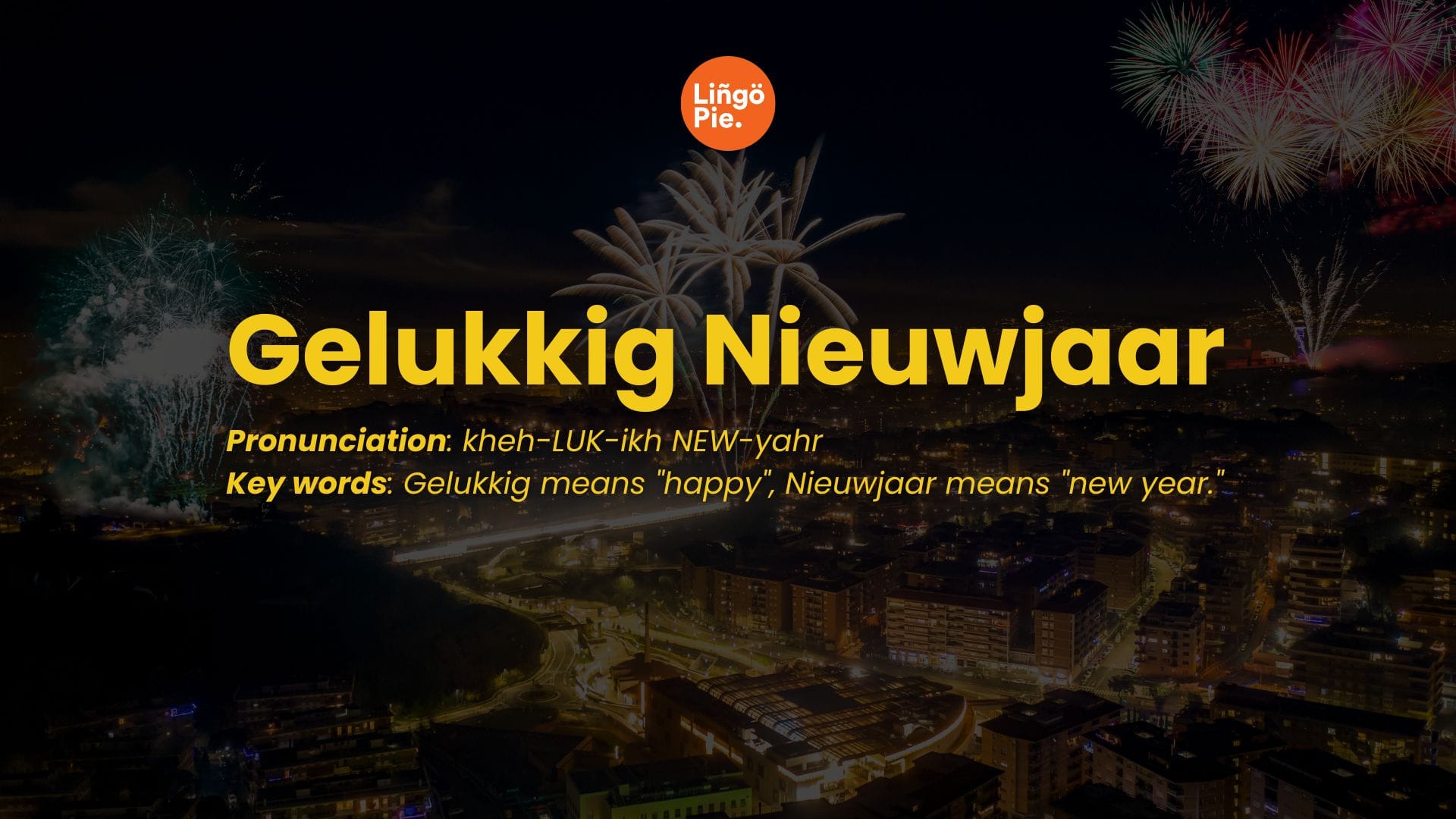
The standard way to wish someone a happy new year in Dutch is "Gelukkig Nieuwjaar" (pronounced roughly as "kheh-LUK-ikh NEW-yahr"). You'll hear this everywhere from midnight until mid-January.
Gelukkig means "happy" or "fortunate," and Nieuwjaar literally translates to "new year." Put them together and you've got the Dutch equivalent of "Happy New Year." It works in basically every situation, whether you're texting your Airbnb host or shouting it at strangers during the fireworks.
Other Ways To Say Happy New Year In Dutch
Here are a few variations you might encounter:
- "Prettig Nieuwjaar" - A slightly more formal version that means "pleasant new year." You'll see this on official cards and business emails.
- "Fijne jaarwisseling" - This one's interesting because it focuses on the actual transition moment. Jaarwisseling means "year change," so this phrase wishes someone a nice transition into the new year.
- "Een goed nieuwjaar gewenst" - The formal, written version you'd put in a card. It translates to "a good new year wished (to you)."
Most Dutch people keep it simple with Gelukkig Nieuwjaar, especially during Oud en Nieuw celebrations when everyone's had a few drinks and precision isn't the priority.
New Year’s Resolutions In Dutch
The Dutch take their New Year's resolutions seriously, even if they don't always follow through. (Sound familiar?) They call resolutions "goede voornemens" (literally "good intentions").
If someone asks, "Wat zijn je goede voornemens?" they're asking about your resolutions. Here's how to talk about common ones:
| English | Dutch | Pronunciation |
|---|---|---|
| I want to exercise more | Ik wil meer sporten | ik vil mare SPOR-ten |
| I want to learn Dutch | Ik wil Nederlands leren | ik vil NAY-der-lants LAY-ren |
| I want to save money | Ik wil geld besparen | ik vil khelt beh-SPAR-en |
| I want to eat healthier | Ik wil gezonder eten | ik vil kheh-ZON-der AY-ten |
| I want to travel more | Ik wil meer reizen | ik vil mare RAY-zen |
The phrase "Dit jaar ga ik..." ("This year I'm going to...") comes in handy when you're declaring your intentions. For example, "Dit jaar ga ik Nederlands leren" means "This year I'm going to learn Dutch."
Dutch Words And Phrases For The New Year
Beyond the basic greetings, these words and phrases will help you navigate Dutch New Year's celebrations like you actually know what's happening.
Oud en Nieuw (Old and New)
This is what the Dutch call New Year's Eve itself. When someone mentions Oud en Nieuw, they're talking about the whole celebration, not just the midnight countdown.
Vuurwerk (Fireworks)
You can't celebrate New Year's in the Netherlands without discussing fireworks. The Dutch buy an absolutely wild amount of them, and cities like Amsterdam look like war zones (in a festive way) come midnight. If someone asks "Heb je vuurwerk gekocht?" they're asking if you bought fireworks.
Oliebollen
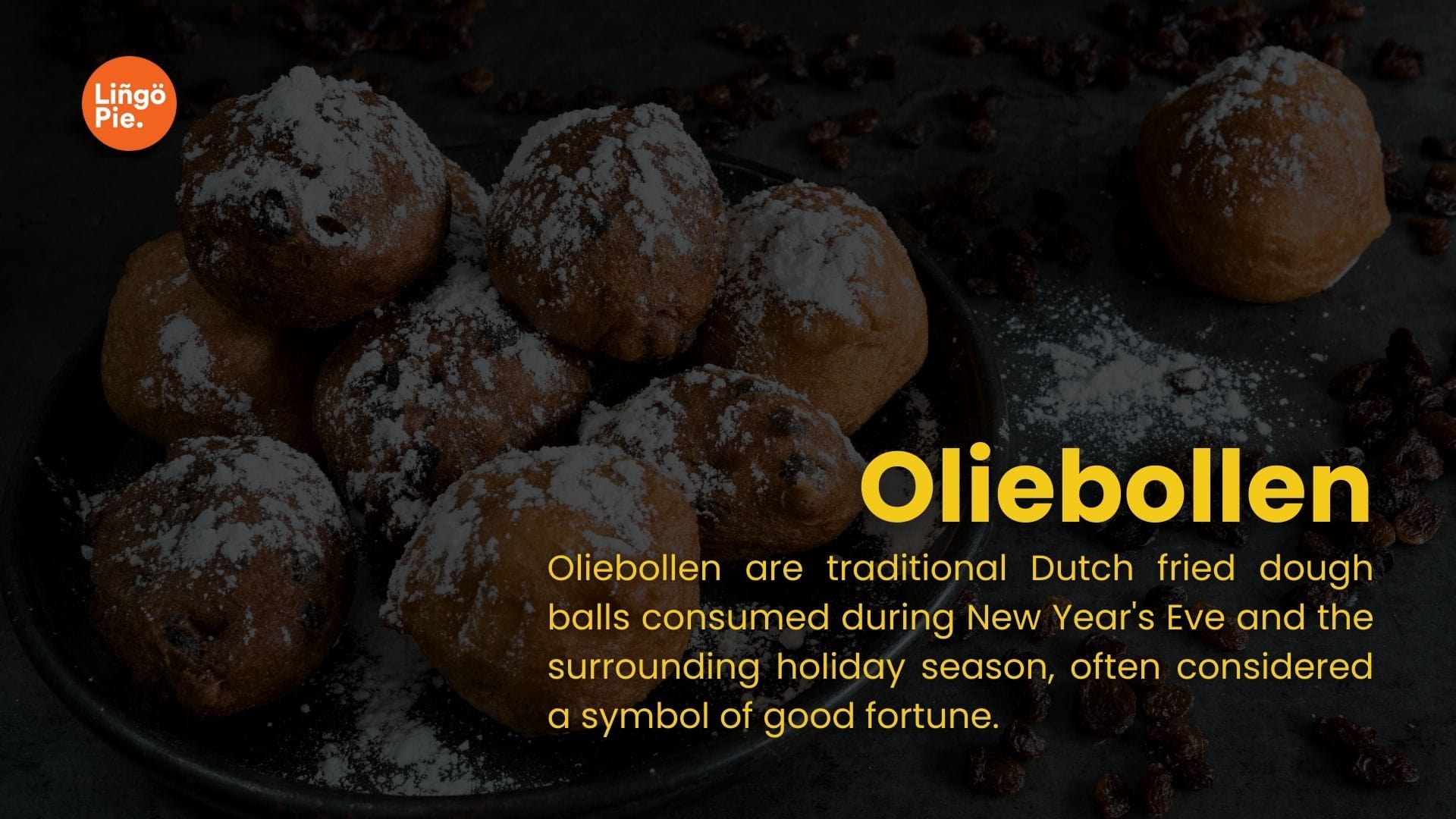
These deep-fried dough balls dusted with powdered sugar are the Dutch New Year's treat. Every street market and bakery sells them in December. They're basically Dutch donuts, and they're dangerously good. You'll see stands with signs saying "Verse oliebollen" (fresh oliebollen).
Champagne
Yes, it's the same word. But you'll hear Dutch people say "Proost!" (cheers) when clinking glasses at midnight. It's pronounced "prohst" and works for any drink, not just champagne.
Nieuwjaarsdag (New Year's Day)
The day after all the chaos. Most Dutch people spend it recovering and eating leftover oliebollen.
Other Useful Dutch Phrases
Here are a few more useful phrases for the celebration:
| Dutch Phrase | English Translation | When to Use It |
|---|---|---|
| Nog een goed oud! | Have a good old (year)! | Before midnight on New Year's Eve |
| Alle goeds! | All the best! | General well-wishing anytime |
| Tot volgend jaar! | See you next year! | Before midnight (often said jokingly) |
| Gezondheid! | Cheers! / Bless you! | When toasting or if someone sneezes |
One cultural note worth knowing—the Dutch love nieuwjaarsduik (New Year's dive), where people run into freezing ocean water on January 1st. Scheveningen beach near The Hague hosts one of the biggest. If someone invites you to join, they're either testing your commitment to Dutch culture or they've had too much champagne. Possibly both.
Want To Go Beyond Dutch Greetings?
Learning how to say Happy New Year in Dutch is great for one night of celebration. But if you actually want to understand what people are saying during Oud en Nieuw (or any other time in the Netherlands), you need more than a handful of phrases.
That's where Lingopie comes in.
We teach Dutch through actual Dutch TV shows, movies, and content that native speakers watch. You're not memorizing vocabulary lists or repeating after a robot voice. You're watching real conversations, picking up natural expressions, and learning how Dutch people actually talk when they're not reading from a textbook.
Want to understand the jokes at the New Year's party? The gossip at the oliebollen stand? The fireworks safety warnings that everyone ignores? Lingopie gets you there by making Dutch feel less like studying and more like entertainment you'd watch anyway.
Try Lingopie free and see if learning Dutch through binge-watching beats your current method.
FAQs
What is the most common way to say happy new year in Dutch?
The most common way is "Gelukkig Nieuwjaar", which you'll hear everywhere from midnight on December 31st through the first few weeks of January. The pronunciation is roughly "kheh-LUK-ikh NEW-yahr," though don't stress too much about getting it perfect. You can use this phrase in any context, from casual texts to face-to-face greetings during Oud en Nieuw celebrations.
When should I say "Gelukkig Nieuwjaar" in the Netherlands?
You can start saying it right at midnight on New Year's Eve and continue using it throughout the first couple weeks of January. Most Dutch people keep using it whenever they see someone for the first time in the new year, even if that's mid-January. It's perfectly acceptable to greet your barista, your Airbnb host, or random people at the holiday markets with this phrase during this period.
What are oliebollen and why are they important for Dutch New Year's?
Oliebollen are deep-fried dough balls covered in powdered sugar, and they're basically the official food of Dutch New Year's celebrations. You'll find them at every street market, bakery, and holiday stand throughout December and especially during Oud en Nieuw. They taste like a cross between a donut and a fritter, sometimes with raisins or apple pieces mixed into the dough.
Is it true that the Netherlands has crazy fireworks on New Year's Eve?
Yes, and "crazy" might be an understatement. The Dutch buy massive amounts of fireworks—vuurwerk—and set them off in the streets starting around midnight. Cities like Amsterdam, Rotterdam, and The Hague turn into absolute chaos with explosions going off everywhere you look. It's legal for individuals to buy and set off fireworks (within certain regulations), so it's not just professional displays

![How To Say Happy New Year In Hebrew [15+ Terms And Phrases]](/blog/content/images/2025/12/how-to-say-happy-new-year-In-hebrew.jpeg)
![How To Say Happy New Year In Polish [15+ Useful Words]](/blog/content/images/size/w1200/2025/12/how-to-say-happy-new-year-In-polish.jpeg)

![5 Dutch Translation Apps You Need To Install [RANKED]](/blog/content/images/size/w300/2026/01/Best-dutch-translation-apps.png)